FPT
“An emphasis on personalized learning and AI utilization are becoming key”
Vietnam’s FPT pioneers next-generation talent development through a university
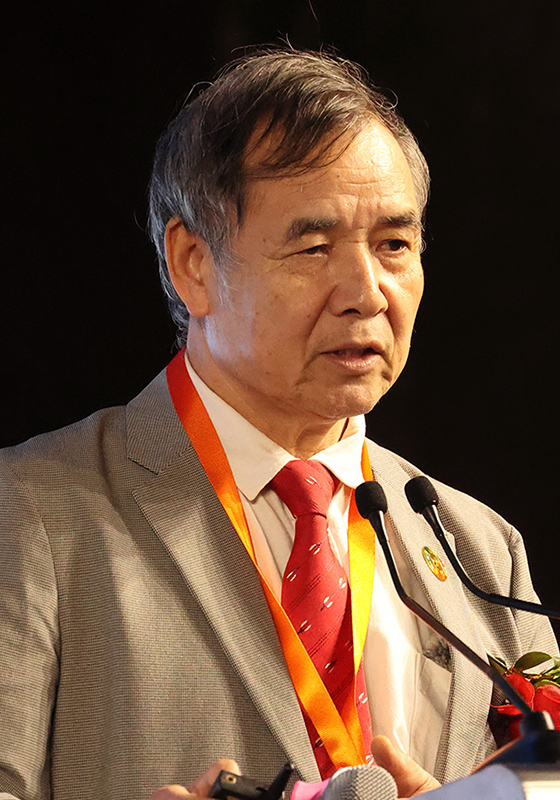
FPT University (FPTU) is a private university established in 2006 by FPT Corporation, Vietnam’s leading ICT firm. For the past two decades, FPTU has supported both Vietnamese industry and Japan’s offshore development by training numerous IT and digital technology experts. University Council Chairman Le Truong Tung spoke about FPTU’s approach to talent development and future directions.
FPT University
Le Truong Tung
Mr. Tung began by highlighting three major trends shaping university education and other forms of higher education in the 21st century.
The first, he said, is massification. “Driven by growing demand for talent in the service and knowledge industries, education has expanded from the province of the elite to mass access, with the global student population doubling in a very short period of time.”
The second is globalization. Mr. Tung argued that in addition to traditional knowledge and skills, global competence — the capability to work in diverse environments — has become critical. “This is driving greater compatibility of degrees and knowledge across universities, as well as the expansion of campuses into other countries,” he said.
The third trend is the advance of information technologies. “Digital transformation (DX) and the advance of AI in recent years have rapidly reshaped higher education.”
The great change occurring in higher education in the 21st century was the backdrop to the founding of FPTU in 2006. Mr. Tung described the university’s vision as “serving a broad population in close connection with global enterprises and underpinned by intelligent educational technologies.”
Intelligent educational technologies include the management of students’ self-directed learning. “Rather than students acquiring knowledge through lectures and then continuing to use that same knowledge throughout their lives, our goal is to enable them to update their knowledge through ongoing self-learning,” he explained.
Response to the three trends
FPTU currently operates campuses in five cities: Hanoi, Da Nang, Quy Nhon, Ho Chi Minh City, and Can Tho. “We have expanded our campus network at the regional level so as to serve industry and society more directly,” Mr. Tung said.
This expansion aligns with the massification trend. With 50,000 students enrolled, Mr. Tung noted that the university ranks among Vietnam’s top five by student population.
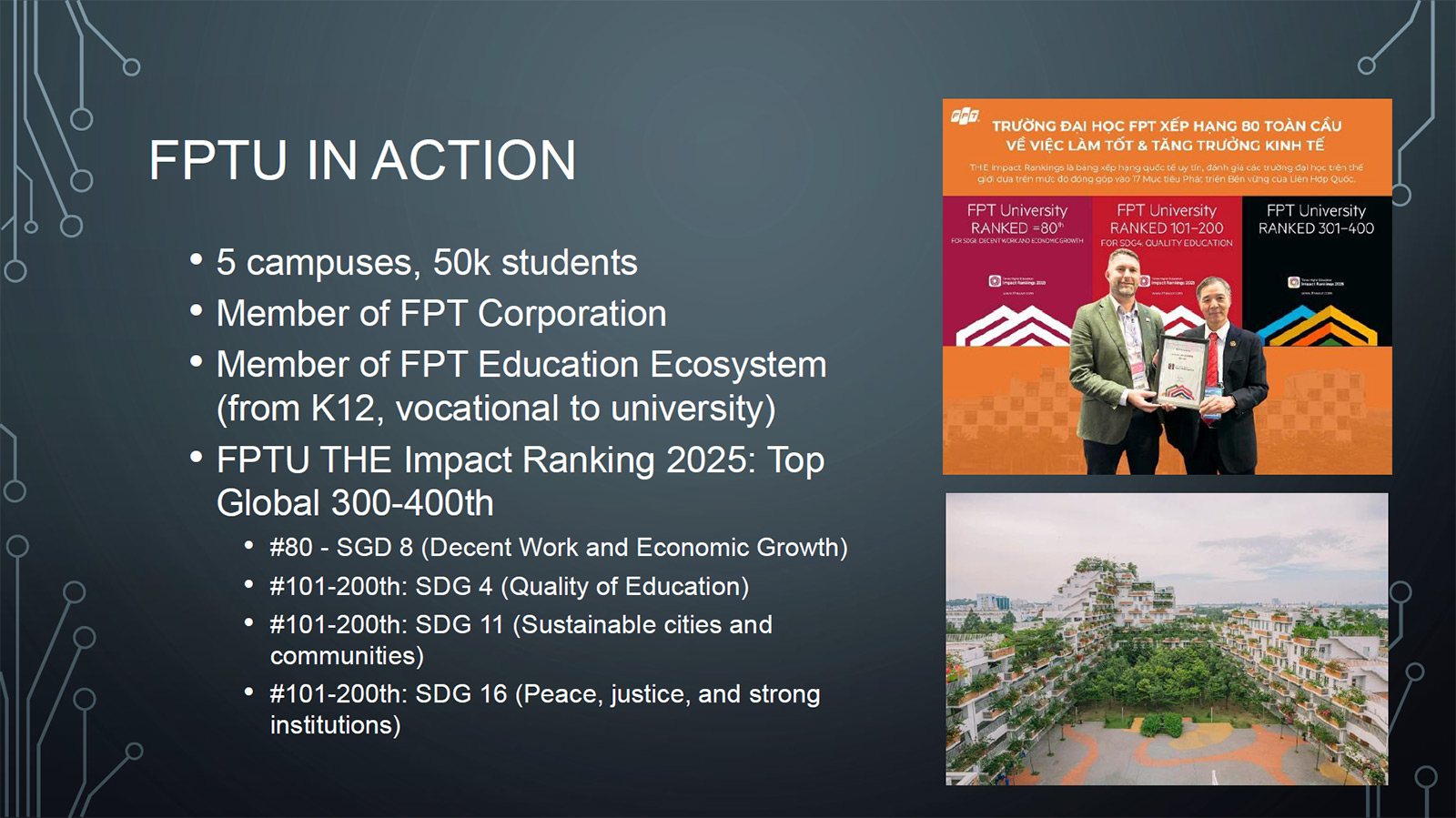
Overview of FPTU
One of FPTU’s unique features is its approach to foreign language education. Mr. Tung explained that in addition to making English the university’s working language, FPTU requires all students in technical disciplines to learn Japanese as a second language. This emphasis on Japanese language education reflects FPT Group’s active business presence in the Japanese market.
Traditional Vietnamese music and the Vietnamese martial art of Vovinam are compulsory, and students are also required to undertake a one-year corporate internship and study entrepreneurship.
FPTU has also implemented several initiatives to respond to the globalization trend. For example, unlike many Vietnamese universities where English is a graduation requirement, FPTU requires it for admission, with students using that foundation of English proficiency to take their classes and exams in English.
International exchange is another priority. In 2025, more than 2,000 international students participated in short-term courses at FPTU, which also works to ensure that its own students have the opportunity to study abroad. “Our aim is for all our students to have the chance to study overseas, even if only for a short period, while they’re at FTPU,” Mr. Tung explained.
FPTU is also setting up and operating international partnership programs in Vietnam with universities in countries such as the United Kingdom, Australia, Taiwan and South Korea.
To address the third trend — the advance of IT — FPTU combines in-person instruction with online learning, while also personalizing learning for each subject. “Students can choose whether to progress quickly or slowly, study at a standard or extended scope, and explore topics in greater or lesser depth,” noted Mr. Tung.
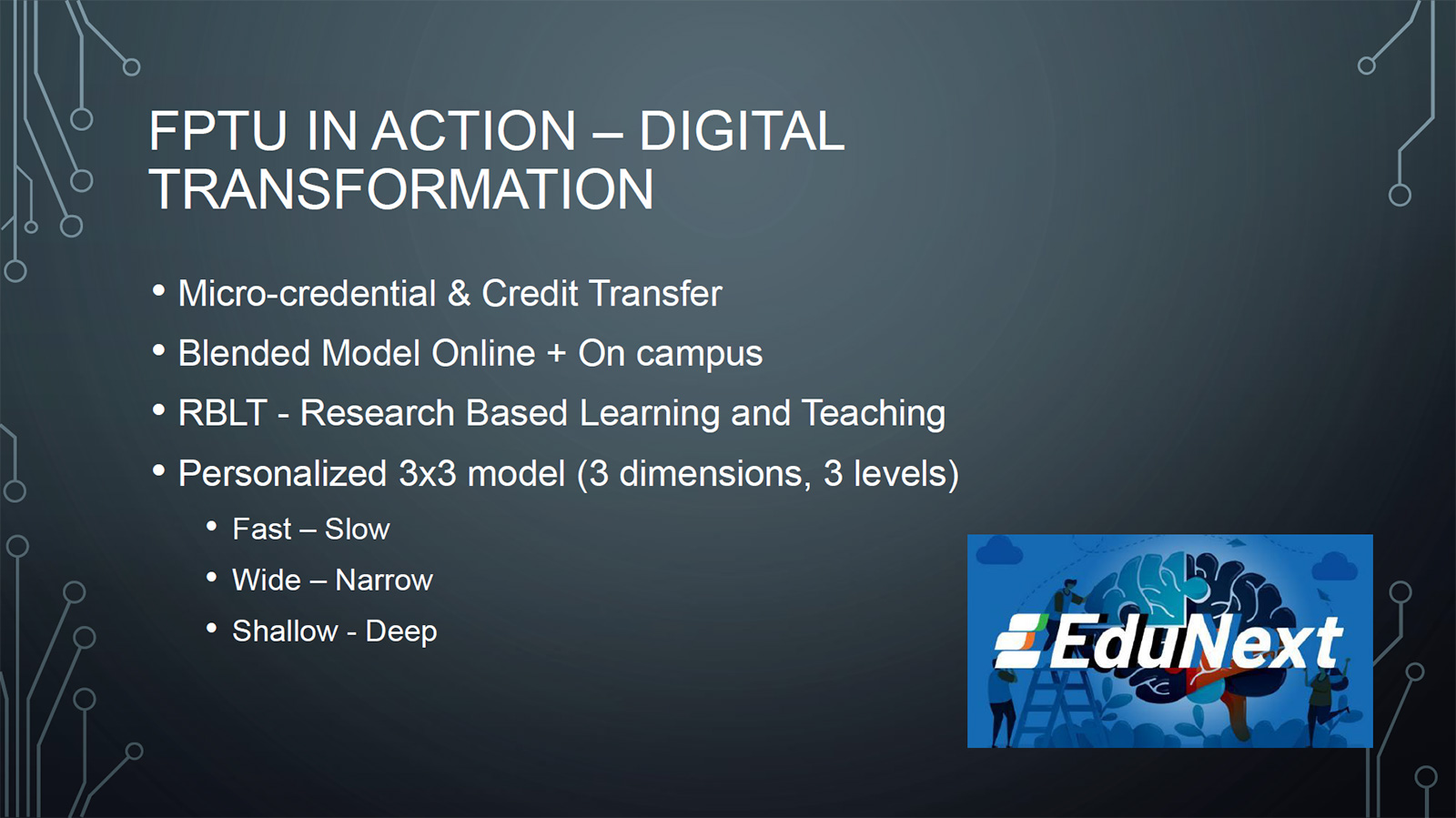
FTPU’s personalized 3x3 learning model
Vietnamese government too recommends FTPU initiatives
Mr. Tung emphasized that FPTU’s initiatives over the past 20 years have also been reflected in state policy-making in Vietnam. Examples include the 2025 resolution on the fundamental reform of higher education and provisions on university autonomy in the 2012 Higher Education Law and its subsequent amendments.
The government also followed FTPU’s long-standing requirement for students to complete a semester-long corporate internship when it mandated that certain local universities incorporate internships as part of their curriculum.
Mr. Tung pointed to the AI-powered real-time translation displayed at the forum as an example of the growing number of areas where AI is fully replacing humans. Naturally, he said, education must also change.
Looking ahead, he predicted that degrees, education and training will no longer be as tightly linked as they once were. Mr. Tung cited a “very front-running” 2025 initiative by the Philippine government that allows individuals with a high school diploma and five years of work experience to obtain a university degree by taking a number of exams, without ever attending university.
He also said that learners must be enabled to make the best choices for themselves and that more compatibility is needed between qualifications and credits. “Otherwise,” he warned, “university education will not keep pace with societal change.”
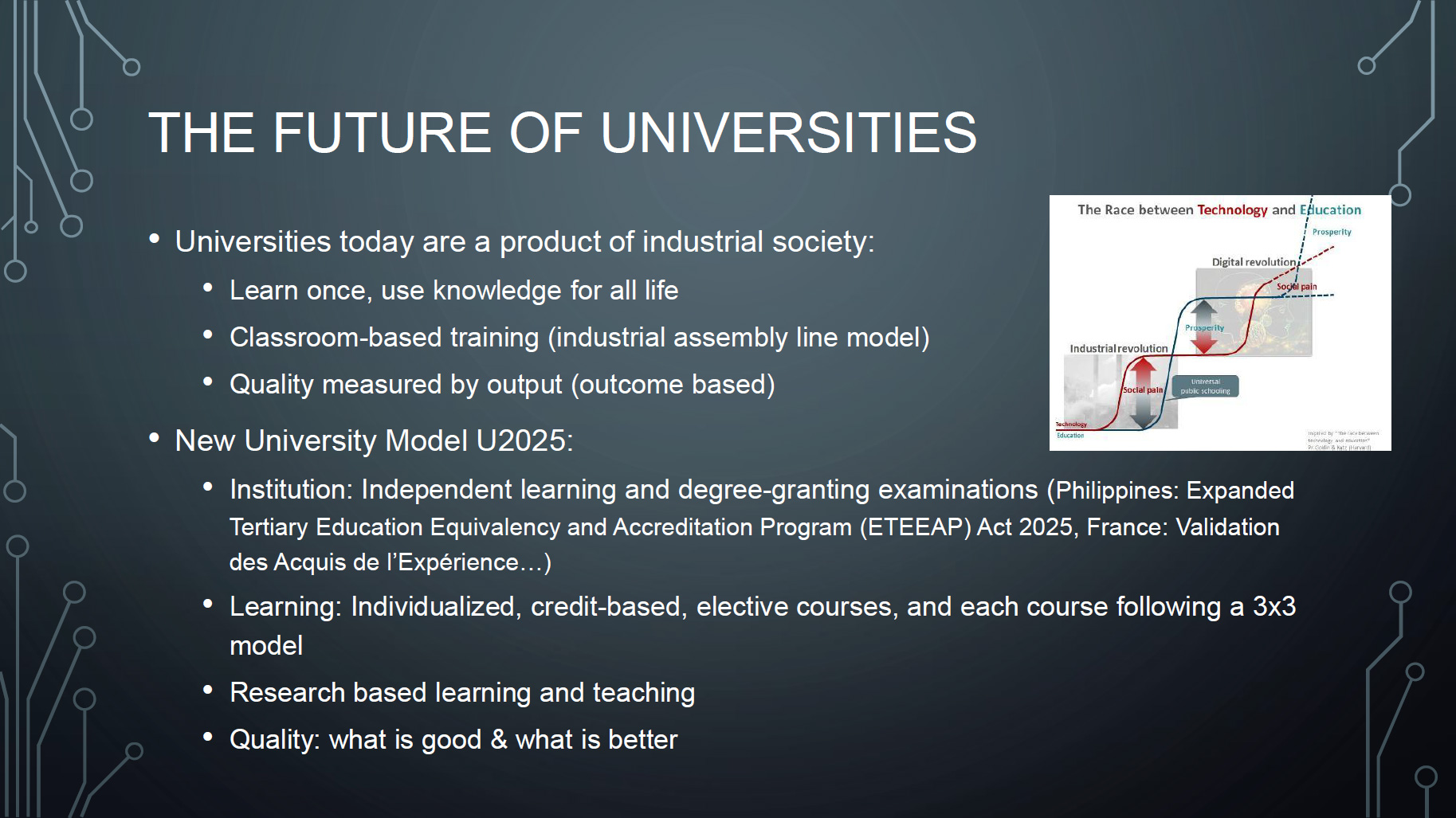
The new university model “U2025”