Opening Remarks, Keynote Speech,
Startups / Emerging Technologies(Nami Technology)
“The potential for cooperation between our two countries in the digital field is limitless”
Key figures driving DX in Japan and Vietnam take the stage
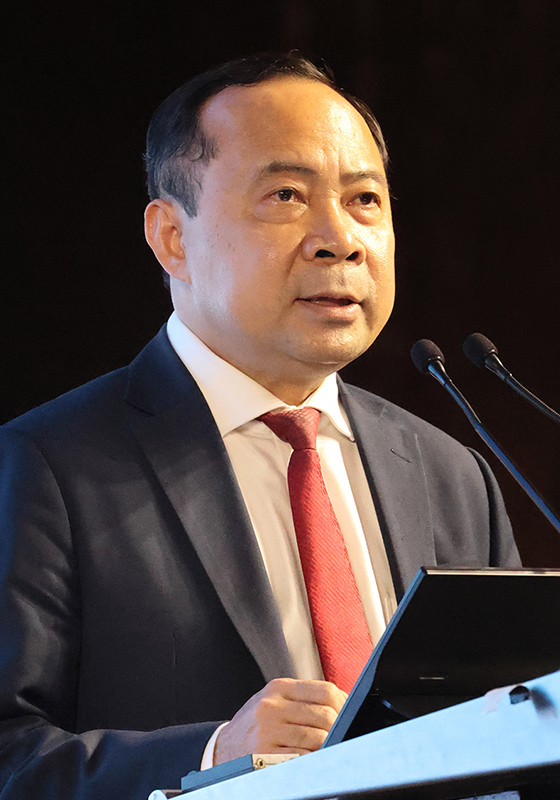
Ministry of Science and Technology of Vietnam
Vu Hai Quan
Mr. Quan outlined Vietnam’s evolving role in the global supply chain, stating that the country aims to transition over the coming years from its current position as a manufacturing base to a design and product development base. He proposed three areas for enhanced collaboration with the Japanese government, Japanese companies and Japanese universities and research institutes.
First, attracting Japanese companies to Vietnam. He encouraged Japanese firms to invest in sectors such as AI, semiconductors, digital transformation (DX), manufacturing and logistics, including establishing research and design centers and product testing centers. “We would like to see joint Japan-Vietnam innovation labs built, with the two countries working together on product development and market expansion,” he said.
Second, joint talent development. “Vietnam wants to team up with Japanese universities and companies to develop training programs for AI engineers, IC design specialists and data scientists,” he said.
Third, expanding Japanese investment in Vietnamese startups. Mr. Quan called for more investment in Vietnamese tech startups from Japanese investment funds, corporate groups and startup support organizations, adding that support for Vietnamese startups entering the Japanese market would also be appreciated.
Limitless potential for cooperation in the digital field
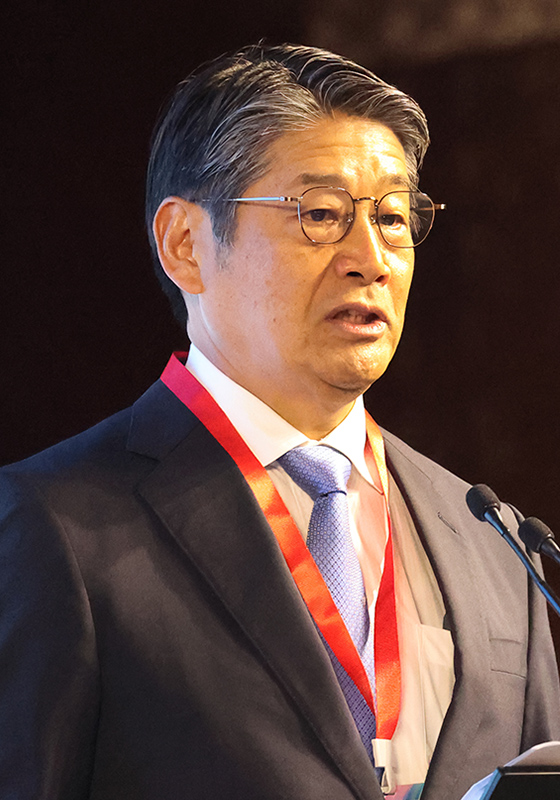
Naoki Ito
Ambassador Ito noted that Japan-Vietnam relations were elevated to the status of a Comprehensive Strategic Partnership (CSP) in 2023, describing the CSP as “a robust foundation for supporting and driving Vietnam’s dynamic growth and development in the years ahead.”
He also raised the January 2026 visit to Vietnam by the Japanese Minister of Internal Affairs and Communications Yoshimasa Hayashi, when the minister attended the Japan-ASEAN Digital Ministers’ Meeting in Hanoi and held bilateral talks with Vietnamese Prime Minister Pham Minh Chinh and Minister of Science and Technology Nguyen Manh Hung. Those talks included a lively discussion on partnerships between Japan and Vietnam in the digital sector, with Minister Hayashi calling for cooperation on ICT, 5G and AI, and Minister Hung proposing a jointly hosted Japan-Vietnam AI Business Forum.
“At the talks, there was a real shared recognition of the limitless potential for cooperation between our two countries in the digital field,” said the ambassador.
Using ecosystem data in decision-making
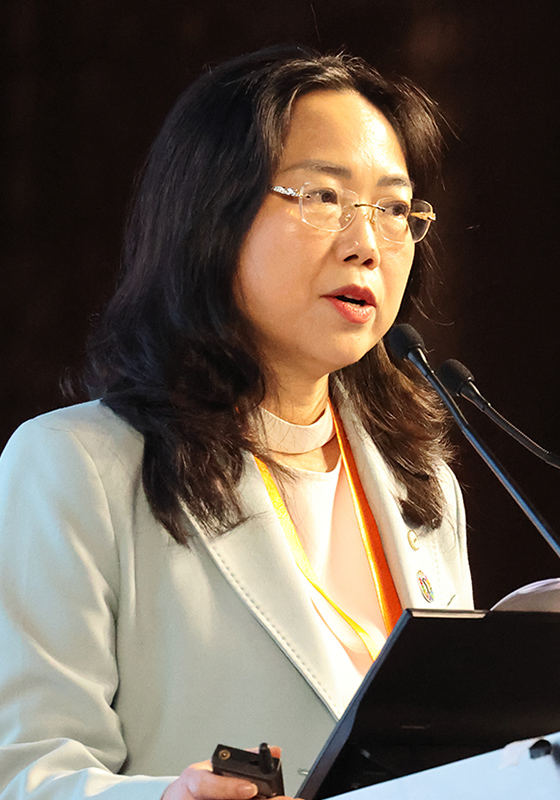
President, VinUniversity
Le Mai Lan
Vingroup’s Dr. Lan said that with Vietnam on the brink of rapid advance, Vingroup aims to contribute to national development and establish Vietnam’s presence in the global community.
She noted that Vingroup achieved record net revenue in 2025, accounting for 2.6% of Vietnam’s GDP. Alongside its large-scale real estate projects, one of Vingroup’s key growth drivers is the electric vehicle brand VinFast. Dr. Lan noted with pride that Vietnamese consumers’ experience with products like VinFast had been key to the increasing local confidence in using Vietnamese products.
Looking ahead, she outlined Vingroup’s ambition not only to grow domestically “but also to serve as a bridge connecting Vietnam with the world.”
Central to this strategy is the ecosystem that Vingroup has developed within Vietnam, spanning all 34 provinces and cities and including smart cities (Vinhomes), resorts (Vinpearl), healthcare services (Vinmec), the VinUniversity education system and the VinFast EV brand. “This ecosystem currently has 17 million users and generates vast amounts of data that will serve as fuel for future decision-making,” she said. Vingroup aims to combine its ecosystem with AI and other technologies to drive its global expansion.
She also pointed to talent development as a critical enabler of AI adoption. Referring to the Vietnamese government’s plan to train 100,000 AI professionals, Dr. Lan said that Vingroup and VinUniversity will take responsibility for developing 20,000 AI experts over the next five years.
Supporting corporate innovation from multiple angles
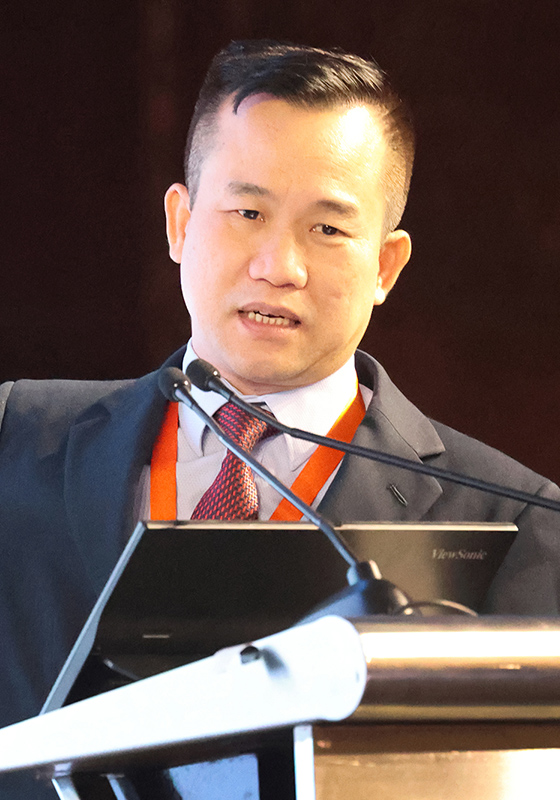
Ministry of Science and Technology of Vietnam
Chu Thuc Dat
Mr. Dat opened by referring to Vietnam’s Law on Science, Technology and Innovation, which went into force in 2025. He explained that its objective is to bring science and technology into everyday life and generate tangible products—“in other words, to realize innovation.”
He noted that while Vietnam has historically introduced many decisions, policies and mechanisms related to innovation, “the weakness has been at the implementation stage.” The new law addresses this gap by establishing a legal framework for innovation, along with clear rules for activities. Specific examples of these rules include evaluating innovation based on outputs rather than processes and conducting all stages of management and execution on digital platforms.
Efforts will also be made to provide financial support for companies pursuing innovation. This includes partial government subsidies on interest rates for loans to companies engaged in innovation activities, as well as support for both businesses and users of products officially designated as new and innovative.
In addition, Mr. Dat said, Vietnam will pursue initiatives to connect companies undertaking innovation, as well as linking them up with research institutions and universities.
Japan and Vietnam can compensate for each other’s shortfalls

Graduate School of Business and Finance, Waseda University
Akie Iriyama
Professor Iriyama foregrounded AI permeation as ushering human resource development into a period of profound transformation.
“In today’s highly uncertain world, companies worldwide now have to innovate if they want to maintain competitiveness,” he said. Generating innovation requires new ideas, and “it’s been clear for a century now that a great way of producing new ideas is to combine one’s own knowledge with knowledge from geographically distant regions.”
He emphasized that in terms of pairing companies from distant regions, “Japan and Vietnam are ideal.” AI permeation will eventually see AI handling all business process optimization, he suggested, but people will still operate right at the top of the value chain, driving innovation through trial and error, as well as in downstream roles that require a human presence, like face-to-face services. Japan and Vietnam are geographically distant, he pointed out, “but they can complement each other’s shortfalls, with Japanese companies with downstream knowhow facing labor shortages due to Japan’s ageing population, while Vietnamese companies have an abundance of young personnel but limited knowhow. We can help each other out both upstream and downstream.”
Strong on AI-based voice biometrics

Nami Technology
Nguyen Viet Truong
Mr. Truong introduced Nami Technology as a startup that focuses its intellectual resources and labor force on the development of AI products, delivering cutting-edge solutions.
One of the company’s key focus areas is AI-driven speech processing. The real-time translation system displaying speakers’ remarks in Japanese or Vietnamese on screen at the forum was in fact developed by Nami Technology.
Among the company’s extensive portfolio of voice-related technologies, Mr. Truong highlighted voice biometrics as a particularly distinctive capability. “When used during a call, if the other person’s voice has been pre-registered, our biometrics technology can identify them within the first few seconds—and can also detect AI-generated impersonation attempts,” he explained.
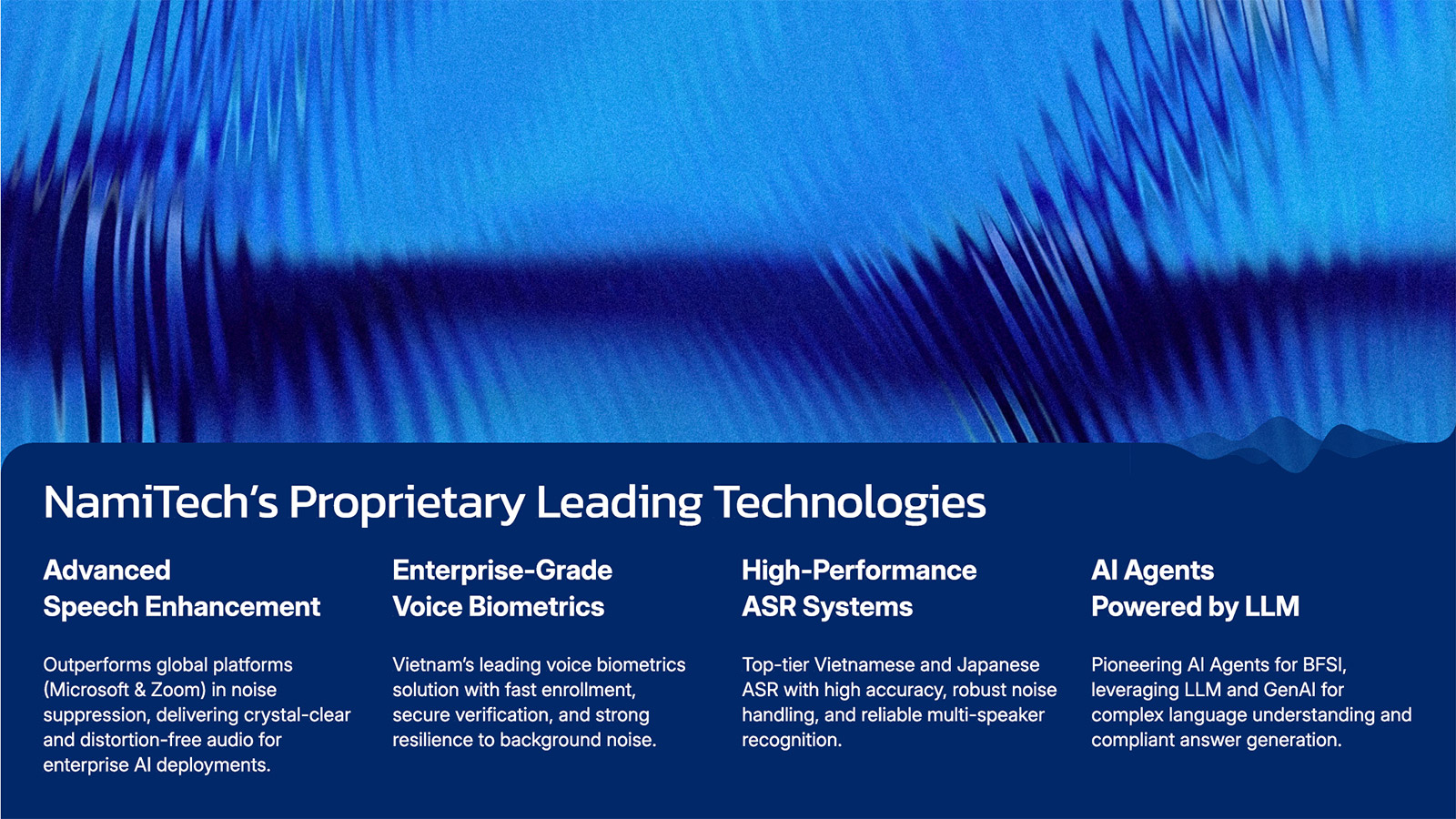
Nami Technology’s core voice AI technologies
These capabilities have led to strong uptake in Vietnam’s financial sector—banking and insurance, for example. Mr. Truong noted that Nami Technology has also set up an office in Tokyo, with the company set on boosting its presence in the Japanese market as well.