


India continues to achieve remarkable growth, backed by robust domestic demand driven by the world's largest and still expanding population. However, this growth story has not yet fully translated into a higher sovereign credit rating — a key reason why Japanese investors have historically shown some hesitation. In 2025, R&I upgraded India's sovereign rating to "BBB+". Strengthened by enhanced resilience to external shocks and an improved financial system, the country is now entering a new phase. The pivotal question going forward is whether India will continue on this upward rating trajectory or stagnate at its current level. Assessing the future path of the Indian economy and its creditworthiness requires a multidimensional perspective that spans not only economic indicators but also political, social and historical factors. To address these dynamics, R&I hosted a seminar for Japanese institutional investors in July 2026, providing key insights into evaluating India's credit landscape.
India’s Liberalization of ECBs and Efforts to Obtain Japanese Credit Ratings
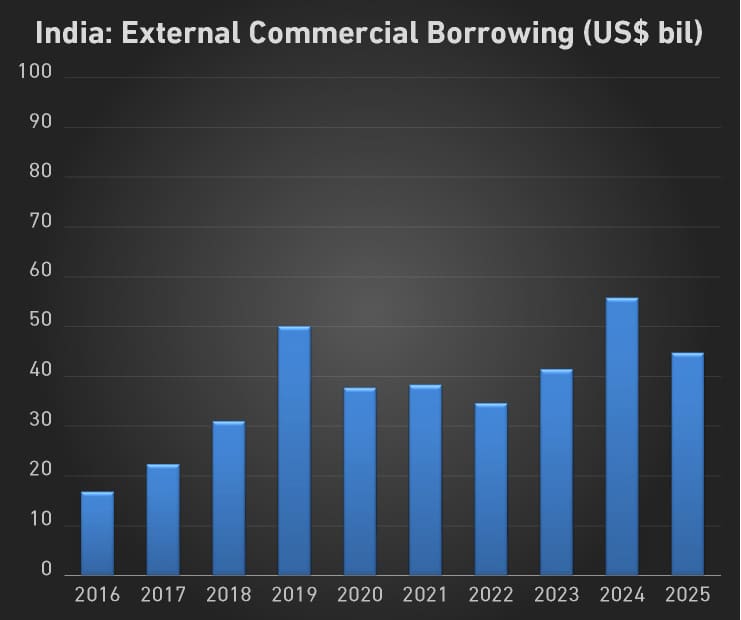
India has traditionally maintained strict control over overseas borrowing by domestic companies. Liberalization policies introduced following the 1991 balance of payments crisis established a framework under which Indian companies could obtain commercial borrowings from overseas, but these borrowings were subject to stringent conditions under the strict supervision of the Reserve Bank of India (RBI). In particular, detailed requirements were imposed on eligible borrowers, eligible lenders, borrowing limits, interest rate caps, minimum borrowing periods, restrictions on the use of funds, conditions for refinancing and other matters, and even minor deviations from these requirements necessitated individual approval from the RBI.
Source: Compiled by R&I based on CEIC Data
However, these restrictions had been seen as constraining growth, prompting the RBI substantially to ease its external commercial borrowing (ECB) regulations in February 2026. The changes were so extensive that they could be described as effectively liberalizing the ECB regime. For instance, borrowing limits were abolished altogether for companies in financial sectors regulated by the authorities.
Against this backdrop, a growing number of Indian companies are obtaining ratings from Japanese credit rating agencies. In December 2025, JSW Steel Limited, a major steelmaker, obtained an A-/Stable rating from R&I, followed in July 2026 by Piramal Finance Limited, a major non-bank financial institution, which obtained a BBB/Stable rating from R&I.
The primary reason for obtaining a rating from a Japanese credit rating agency is to address the information asymmetry faced by Japanese investors. Japanese investors that provide ECB financing are still unfamiliar with many aspects of India. They would like answers to questions such as: “Is the political situation stable?”, “Will growth continue?”, “Is there a risk of a currency or financial crisis?”, “Will the sovereign rating, which remains in the BBB range, be upgraded in the future?”, “Conversely, could it fall into the BB range and become non-investment grade?” Questions about individual companies also remain, such as, “What characteristics distinguish Indian companies from their Japanese counterparts?”.
Seminar Held for Japanese Institutional Investors: “The Outlook for India’s Credit Ratings”
R&I held a seminar in July 2026 to address these questions and concerns among investors. Together with experts based in India, R&I provided a multifaceted, in-depth analysis of India’s creditworthiness and the context behind it. This article briefly introduces the seminar’s main points.
Kazuki Hara, Chief Analyst, Head of Sovereigns & International Issuers Department, Credit Rating Division, R&I, began by examining the historical trajectory of the Indian economy from a macroeconomic perspective.

Kazuki Hara
Chief Analyst, Head of Sovereigns & International Issuers Department, Credit Rating Division, R&I
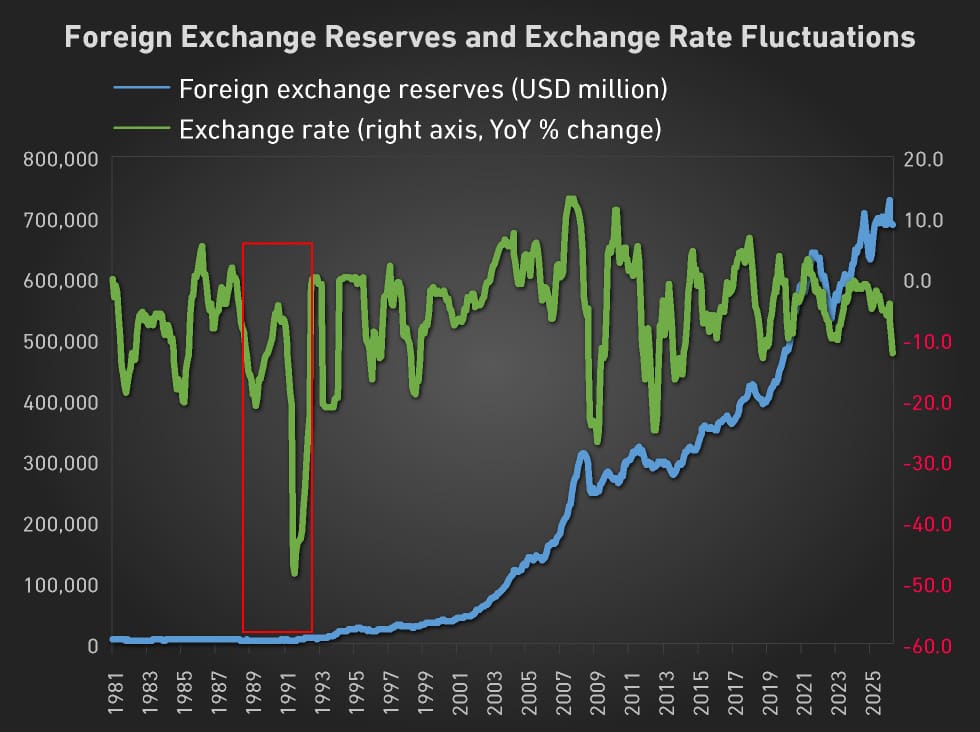
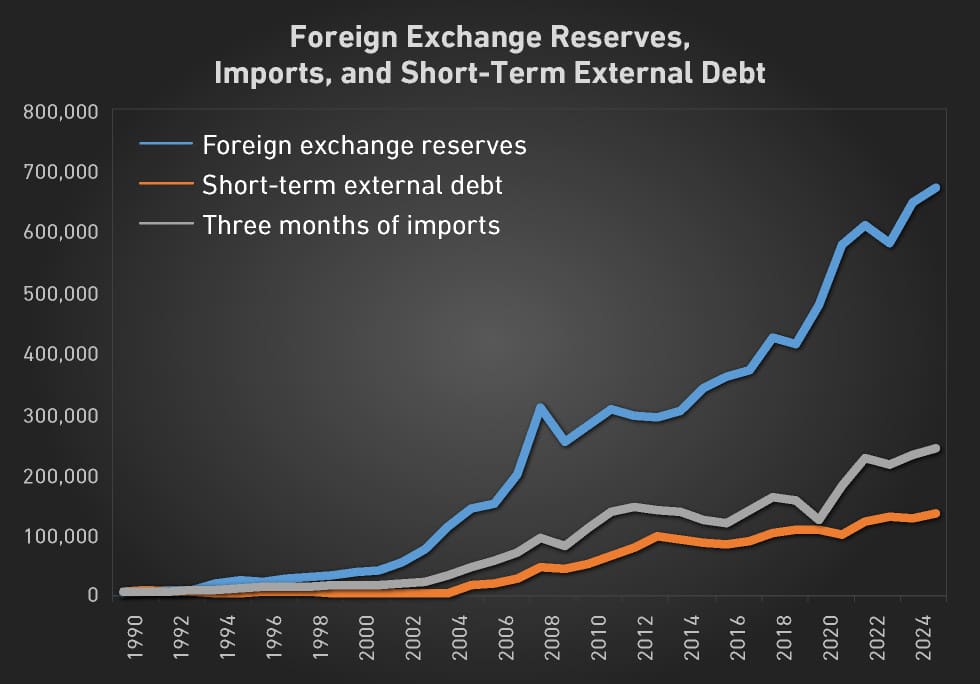
In 1991, India faced a severe foreign exchange shortage and received emergency assistance from the International Monetary Fund (IMF). However, the crisis also marked the starting point for the structural reforms that followed. India was also able to weather the 1997–98 Asian financial crisis relatively unscathed thanks to reforms based on the lessons learned from the 1991 crisis, together with restrictions on short-term capital flows. Hara believes that “at present, the risk of a recurrence of a 1990s-style crisis is low.” This is because foreign exchange reserves far exceed both short-term external debt and the volume of three months’ worth of imports, while the ratio of external debt remains contained at just under 20% of the nation’s GDP. These indicate that India’s resilience to external shocks has steadily strengthened.
Source: Compiled by R&I based on CEIC Data
Source: Compiled by R&I based on CEIC Data
In response to these improvements, R&I upgraded India’s sovereign rating from BBB to BBB+ last year. The upgrade was based primarily on R&I’s assessment of the sustainability of India’s high growth. The demographic dividend from its young population, structural reforms such as the introduction of the Goods and Services Tax (GST), improvements to the nation’s digital public infrastructure and expanded public investments have bolstered the economy’s supply capacity. In addition, the financial system has been further stabilized through progress in addressing non-performing loans, bank recapitalization measures and the development of insolvency legislation.
Now, nearly 10 months after the upgrade, R&I’s fundamental assessment remains unchanged. Even though escalating tensions in the Middle East have recently led to higher crude oil prices and mounting inflationary pressures, Hara maintains that “if these developments prove temporary, they will have no impact on the rating.”
However, a number of challenges remain. Government debt exceeds 80% of the nation’s GDP, a relatively high level among emerging economies, and fiscal consolidation will be a central factor in future rating assessments. Hara identifies the following four key points to watch going forward:
(1) Eliminating growth bottlenecks to achieve “Viksit Bharat”
(2) Progress in fiscal consolidation through a stronger revenue base
(3) Managing the impact of increased foreign capital inflows resulting from ECB liberalization and other measures
(4) The political stability of the Modi administration and the continuity of its economic policies
Lastly, Hara recalled the words of a senior official at India’s Ministry of Finance, paraphrasing them as saying that “India has 5,000 years of history and does not change easily, yet has continued to evolve throughout those 5,000 years. India’s growth and transformation will likely continue at a steady yet unceasing pace, like the timeless flow of the Ganges.”
Credit Ratings as a Bridge to Credit
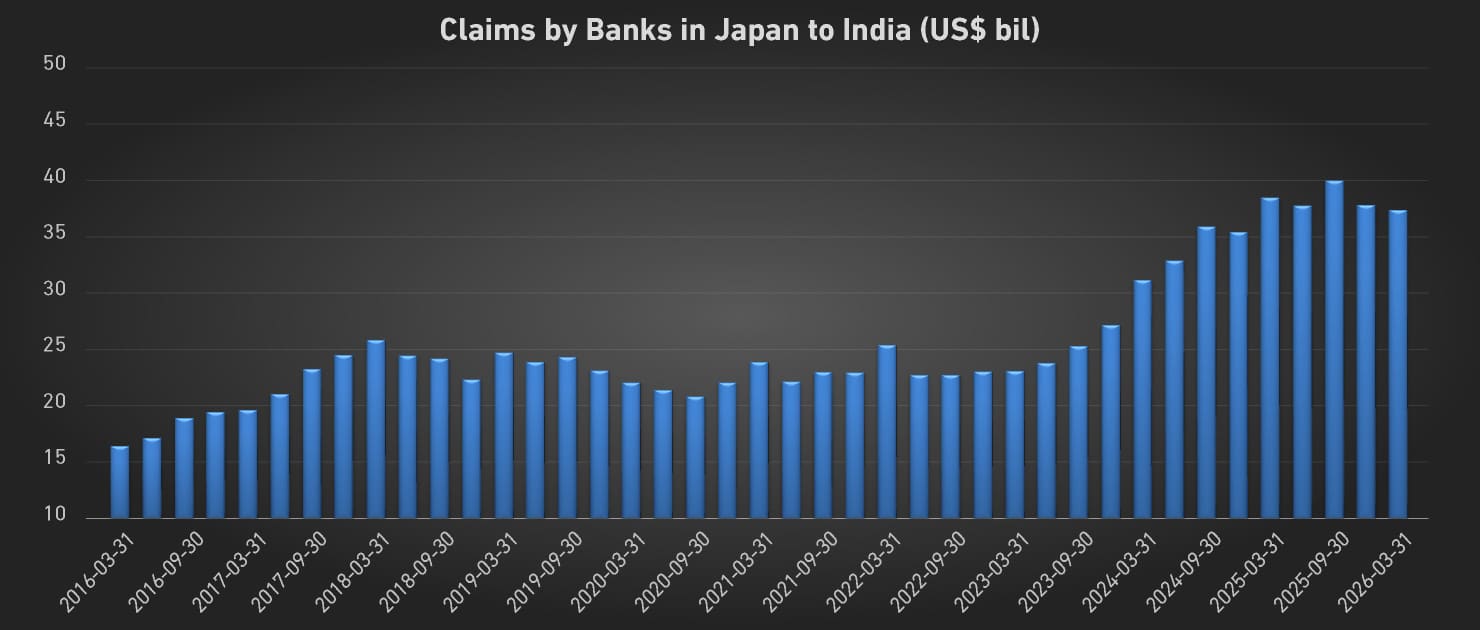
India continues to grow gradually and steadily. With ECB regulations eased, there is now greater potential for Japanese investments to support India’s growth. Japanese investors are gradually increasing their lending to India. Japanese investments should enable India to accelerate its growth, while Japan, in turn, will be able to share in the benefits of that growth by supporting India.
Source: Compiled by R&I based on BIS Data Portal
R&I will continue to apply its information-gathering and analytical capabilities to further expand these investments and strengthen the complementary relationship between Japan and India. As the credit rating agency most relied upon by Japanese investors, R&I aims to serve as a “bridge to credit” by continuing to deepen mutual understanding between Japan and India in the financial sector and supporting Japanese investors so that they can invest in India with conviction.


Credit ratings are R&I's opinions on an issuer's general capacity to fulfill its financial obligations and the certainty of the fulfillment of its individual obligations as promised (creditworthiness) and are not statements of fact. Further, R&I does not state its opinions about any risks other than credit risk, give advice regarding investment decisions or financial matters, or endorse the merits of any investment. R&I does not undertake any independent verification of the accuracy or other aspects of the related information when issuing a credit rating and makes no related representations or warranties. R&I is not liable in any way for any damage arising in relation to credit ratings (including amendment or withdrawal thereof). As a general rule, R&I issues a credit rating for a fee paid by the issuer. For details, please refer to https://www.r-i.co.jp/en/docs/policy/site.html.