Director and Senior Executive Vice President
Financial Segment
PARTNER CONTENT
NTT DATA
Global IT services provider NTT DATA is working with multinational insurers and banks to shape the future of their industries. As a thought leader, it is committed to sharing its insights and innovations as broadly as possible.
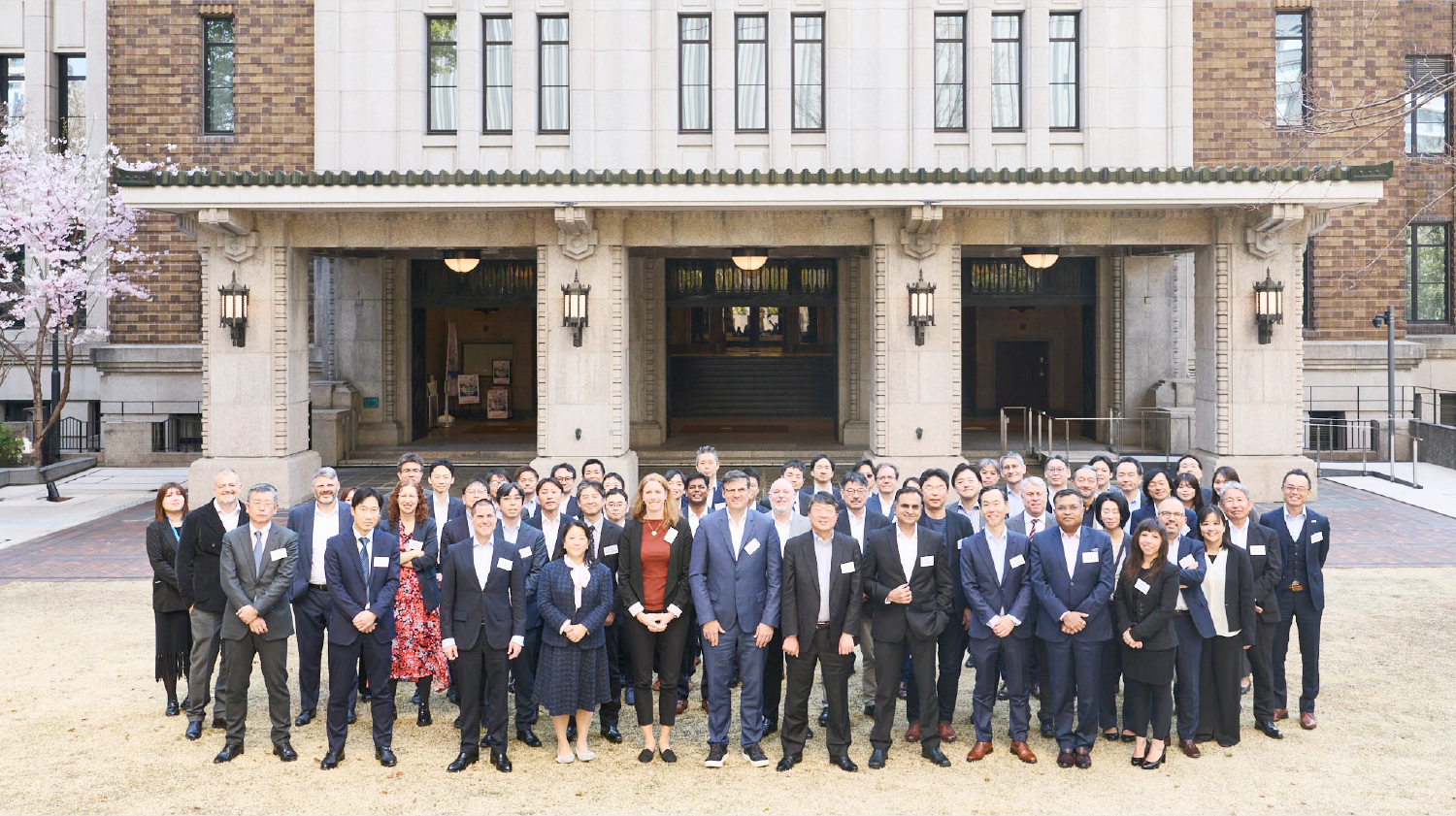
The regional heads of global business and technology services innovator NTT DATA’s Financial Services division gather twice a year for a conference known as the Kin-Yu Summit. (Kinyu means “financial industry” in Japanese). The summit is more than a simple, standalone event. It is an operating mechanism for the ongoing formulation of the shared agendas that support cross-region execution and drive follow-through into regional initiatives.
The cross-regional approach is particularly relevant in financial services because of the industry’s inherent duality. While it is local constraints that shape financial institutions’ priorities−meaning everything from regulatory compliance and security to operating model efficiency and the integration of generative AI−outcomes and speed of execution must be consistent at a global scale.
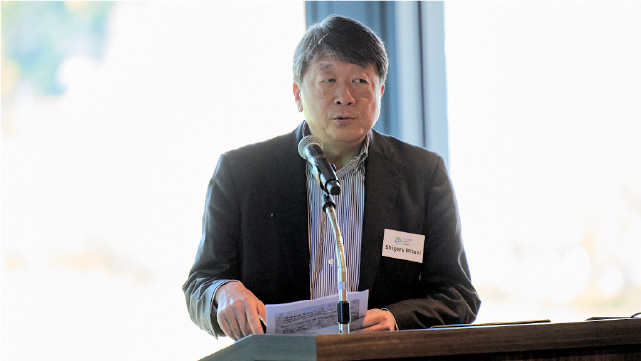
Shigeru Mitani
For multinational clients facing interconnected, cross-border challenges like these, NTT DATA is the ideal partner. The group’s intense focus on collaboration means it acts and delivers as a single coordinated global organization, not separate local entities. Sharing the same priority clients, global agenda, and technological innovations groupwide lets NTT DATA bring the right expertise and capabilities to bear anywhere in the world.
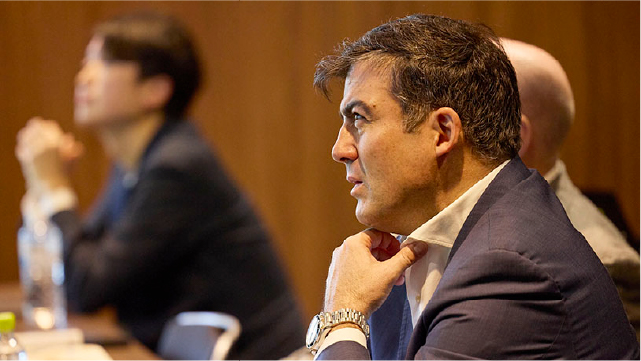
Bruno Abril
NTT DATA’s Global Head of Insurance
The first Kin-Yu Summit was held in Tokyo, where NTT DATA is headquartered, in March 2025; the second in Munich in September 2025 (to coincide with the Sibos international conference in Frankfurt); and the latest iteration was held in March 2026, again in Tokyo. Leadership perspectives, broad company strategy and regional organizational set-ups are presented and discussed. Participants break up into separate workstreams to discuss topical themes driving change in the financial services sector, such as generative AI, client strategy, asset strategy and vendor alliance strategy.
A high-impact case study from insurance
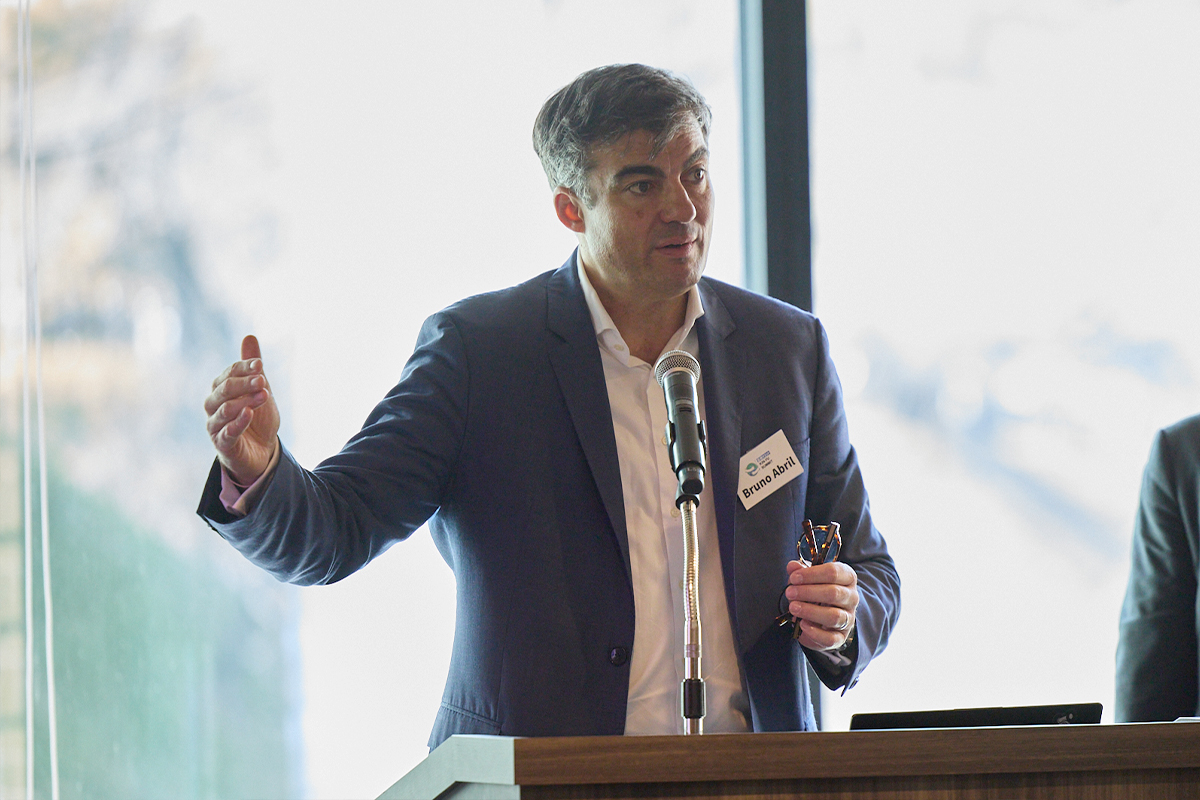
Bruno Abril, NTT DATA’s Global Head of Insurance, was one of the speakers who shared his thoughts at the recent Tokyo summit. Abril’s core message was that AI usage is evolving. “Traditional AI focuses on specific tasks: classification, prediction, content generation, and so on. But agentic AI orchestrates multiple AI agents that can work together. Value now comes not from optimizing single tasks, but from improving the entire workflow and transforming how our clients run their processes,” he said.
Processes in insurance tend to be complex, multi-step, highly regulated and involve multiple stakeholders, making AI even more crucial. And while many industry initiatives remain stuck in proof-of-concept mode, NTT DATA’s are not. Says Abril: “We’re focused on applying agentic AI not as an experiment, but as a true operational capability.”
The case study he shared proves his point. Throughout 2025, NTT DATA worked with a global insurer to develop new underwriting and claims processes for insurance programs targeting multinational clients with factories or hotels distributed worldwide. The insurer was keen to expand the business but wanted to keep a lid on costs. Could agentic AI help streamline existing processes−manual, slow and fragmented across different time zones−and give the business the runway it needed to grow?
Technology + domain expertise = Improved KPIs
NTT DATA listened carefully to what the client wanted and drew on its own technology and domain expertise to propose a transformative set of AI agents integrated into operational workflows. “We reinvented the multinational underwriting process leading to faster policy issuance, and we automated assurance and testing to the tune of over 20,000 internal risk controls,” Abril said.
The project outcomes speak for themselves: manual effort down by 35%; thirty-six days lopped off the underwriting cycle; accuracy levels of 95%; and US$18 million of cash savings in the initial phase alone. These outcomes also underline Abril’s point that agentic AI is not about workforce cuts in the name of efficiency; rather, it augments process handlers’ capacity by leveraging their expertise. In fact, Abril sees the transformation as more cultural than technological, because people are doing the same processes, just in a different way.
For organizations today, the ability to execute at scale and impact the P&L is the most important differentiator. “That’s exactly our focus at NTT DATA,” Abril said. “We combine global collaboration, deep industry expertise, and advanced technologies like AI to turn our clients’ strategies into measurable business outcomes.”
Sharing insights and learning from peers
Abril’s case study is a meaningful one for several reasons. In addition to delivering drastically improved KPIs, it shows that agentic AI is about top-line growth−not workforce reduction−and that it empowers financial institutions to embrace the ever-increasing complexity of processes. It’s important to share stories like these externally, beyond the Kin-Yu Summit, which is why NTT DATA actively participates in industry conferences and events.
The company’s sponsorship of the Qorus Insurance Innovation Awards in Warsaw in June 2025 is a case in point. This event celebrates the people and ideas that are reshaping the future of insurance. Attendees include industry leaders, entrepreneurs, and engineers, making it a vital space for NTT DATA to share its insights and learn from peers.
Prominent themes that emerged included treating AI as an enabler, not a destination−because real innovation is about delivering clarity and value through human-centric solutions; the importance of cultural alignment and mindset and operating model shifts for achieving genuine transformation; and lastly, the key role of collaboration and the need or insurers to work with partners who understand both the technology and the business reality of insurance.
Thought leadership is a year-round endeavor, so NTT DATA also has dedicated thought leadership webpages hosting white papers and video dialogs with leading insurance executives about industry trends, covering everything from Gen AI to quantum computing and satellite tech.
Banking on change
NTT DATA applies the same thought leadership model in the banking sector. The company was a strategic partner of the December 2025 FT Live Banking Summit in London, where over 1,000 banking leaders from 58 countries gathered to discuss how AI and digital assets are changing the industry. David Fearne, NTT DATA’s Vice President of AI, stressed the need to build in governance from day one to ensure speed of execution without loss of control. AI, he argued, must be engineered as a complete system, encompassing both the models and the people, processes, and operational controls around them. Banks will succeed by building workforces that know how to direct AI ethically, confidently, and at scale.
From thought to action
Banking and insurance are both global industries with local realities. Through its collaboration-based operating model, NTT DATA can address cross-border challenges with the appropriate expertise and capabilities, transcending geography. And by sharing insights and engaging in ongoing dialog with the financial services community, NTT DATA is translating global strategy into measurable business impact and real economic value worldwide.