Introducing Visit Japan Web:
Easy Entry to Japan
Visit Japan Web is an online service that allows visitors entering Japan to register the information required for Customs, Immigration and Quarantine (CIQ) procedures in advance. Once registration is completed, the service generates a scannable code that can be used for both immigration inspection and customs declaration, helping simplify arrival procedures at Japanese airports.
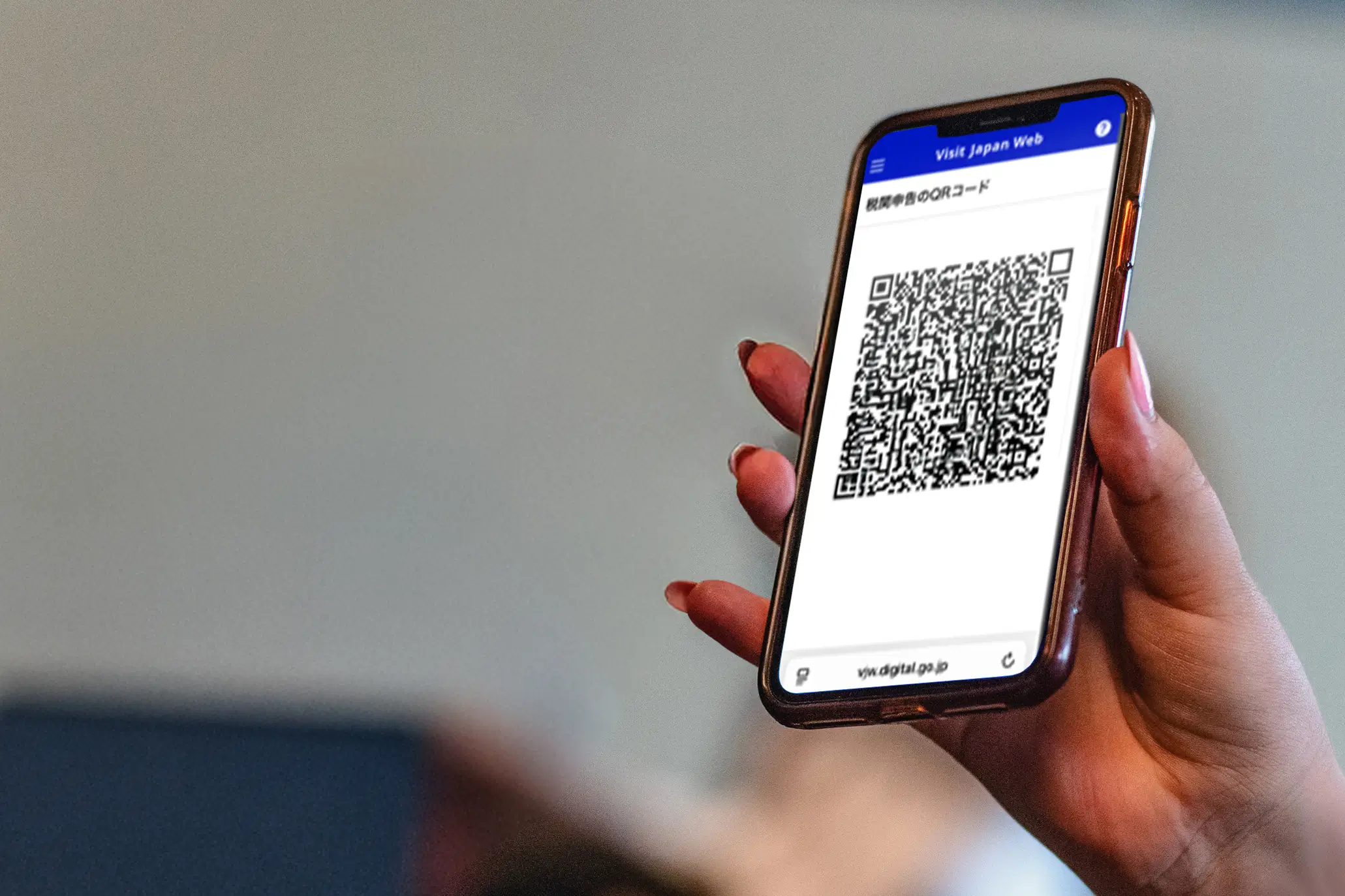
The service was launched in December 2021 by the Digital Agency of the Government of Japan in collaboration with border management authorities, including the Immigration Services Agency of Japan and Japan Customs. At the time of its introduction, Visit Japan Web supported quarantine-related procedures while pandemic-era border controls were still in place.
In the post-pandemic period, its role has evolved, with the primary emphasis shifting from quarantine to immigration and customs procedures.
Today, travelers can complete nearly all CIQ-related steps in advance using Visit Japan Web, which reduces uncertainty and helps them move through the airport more smoothly.
Why a Voluntary System Is Achieving Record Adoption

As international travel resumed after the pandemic, governments worldwide began rethinking how people move across borders. Under the concept of “contactless travel,” many countries accelerated the shift from paper-based processes to digital tools, including electronic arrival cards, automated gates, and online declarations.
While the objective is largely shared, implementation differs by country. “There are two broad approaches,” Kato explains. “One is a mandatory model, where all travelers must use digital tools instead of paper,” he says. Countries such as Singapore and Malaysia have adopted this approach, enabling fully paperless CIQ operations.
“The other model is voluntary,” Kato continues. “Travelers can choose whether to use digital tools or continue with paper forms.” This approach provides greater flexibility for visitors, though it requires authorities to maintain parallel systems. “From an administrative standpoint, that can be more complex,” he says.
Japan chose the voluntary model from the beginning. “The idea was to let travelers decide what works best for them, rather than requiring a single method,” Kato says. Even so, adoption has been strong.
Visit Japan Web has already been used by more than 50 million visitors. “At present, around three million travelers use the service each month, and roughly 60% of visitors register in advance,” Kato says. “That level of usage has remained consistently high since mid-2023.”
This sustained uptake has attracted attention overseas. “Many border authorities are interested in how a voluntary system can still achieve high usage,” Kato adds. “We’ve had study tour delegations from a number of countries come to observe how it works in practice.”
How Trust, Visibility and Diplomacy Drove Widespread Use

Some observers have described the popularity of Visit Japan Web as surprising. Kato points instead to a combination of visibility and practical support.
“A key factor is that travelers understand what they gain from using it,” he says. “When the benefits are clear, people are more willing to use the service voluntarily.” One example came in June 2025, when Visit Japan Web was incorporated into a diplomatic initiative. To mark the 60th anniversary of the normalization of diplomatic relations between Japan and South Korea, the Immigration Services Agency of Japan introduced an exclusive immigration fast-track lane for Korean travelers who had registered through Visit Japan Web.
“That initiative helped many travelers experience firsthand how the service can shorten procedures on arrival,” Kato says. “It also raised awareness beyond a single country.” Recognition has grown among CIQ professionals as well. “At international conferences, many border management officials already know about Visit Japan Web,” Kato says. “Some of them have used it themselves when entering Japan.”
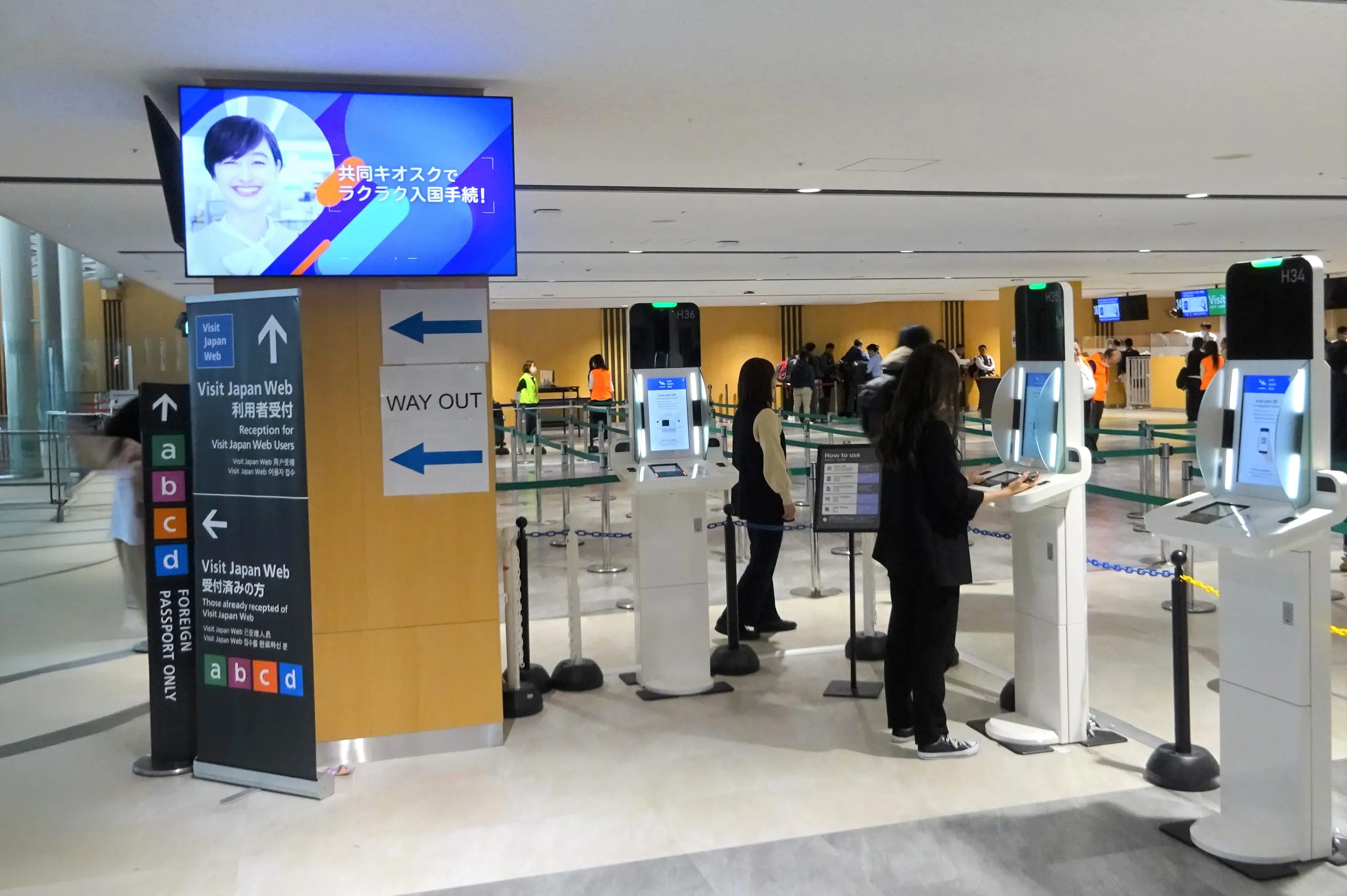
However, awareness alone does not sustain usage. “On-site support is also important,” Kato explains. Border management staff at airports actively assist travelers in CIQ areas, helping them complete procedures smoothly using the service.
Airport operators have also adapted passenger flows to make better use of Visit Japan Web. Kansai Airport (KIX), for example, has revised its arrival processes to prioritize travelers who have completed procedures in advance.
According to the airport operator, processing time per person has been reduced by several minutes. When you look at peak arrival times, even small reductions like that can make a noticeable difference.
Why Airline Partnerships Are Critical to Contactless Travel
Airlines are often the first point of contact for travelers preparing to enter Japan, making their cooperation essential. “Airlines play a key role in ensuring travelers know about Visit Japan Web before they arrive,” Kato says.
For that reason, coordination with airlines has focused on integrating guidance into pre-departure touchpoints, such as online check-in and boarding gates. Many airlines now provide information about the service during these stages. Among them, ANA—All Nippon Airways—has taken a particularly active role.

“We support the Digital Agency’s initiatives and are committed to providing our full cooperation,” says Hiroko Shingo of ANA. ANA has placed promotional banners within its member app, allowing travelers who have booked flights to Japan to access Visit Japan Web more easily. The airline has also discontinued the in-flight distribution of paper CIQ forms on Japan-bound flights.
ANA brings more than 10,000 passengers to Japan each day. When guidance is provided at that scale, it helps reduce paperwork on board and allows travelers to arrive better prepared.
Building the Future of Frictionless Entry to Japan

Despite its widespread use, Visit Japan Web continues to evolve.
We don’t see the current version as a final form. CIQ procedures change globally, and the service needs to keep pace with those changes and with traveler expectations.
For frequent users, those improvements are already noticeable. “Each time I use it, it feels more intuitive,” says a foreign technical expert who regularly relies on the service when entering Japan.
As Japan continues to welcome visitors from around the world, Visit Japan Web is becoming an increasingly familiar part of the journey—an unobtrusive step that allows travelers to spend less time on arrival formalities and more time focusing on what brought them to Japan in the first place.