Every three years, the Organisation for Economic Co-operation and Development (OECD) conducts a test to measure the reading, math, and science literacy of 15-year-olds around the
world. When the first such PISA test—the name is an acronym for Programme for International Student Assessment—was held in 2000, thirty-two countries took part, and the test was paper
based. In 2009, the OECD began a tentative switchover to digital using USB sticks. However, the 2025 iteration of the test, in which over 100 countries participated, was the first to
go completely online. Since the PISA results help shape education policy and national curricula, having a test platform that is guaranteed to perform flawlessly is a matter of real
global significance.
The digital testing platform underpinning the 2009 and 2025 PISA surveys was developed by Luxembourg-based Open Assessment Technologies. The company’s origins date back to 2002, when a
University of Luxembourg professor conceived an all-in-one digital assessment solution covering everything from question creation to test delivery, marking and data analysis.
Luxembourg's strategic position at the heart of Europe proved a competitive advantage, as it is Europe that has spearheaded the switchover from paper-based to computer-based
testing.
“Countries like France and Italy have been pioneers,” says Patrick Plichart, one of Open Assessment Technologies’ co-founders. “They started digital assessments more than 20 years ago
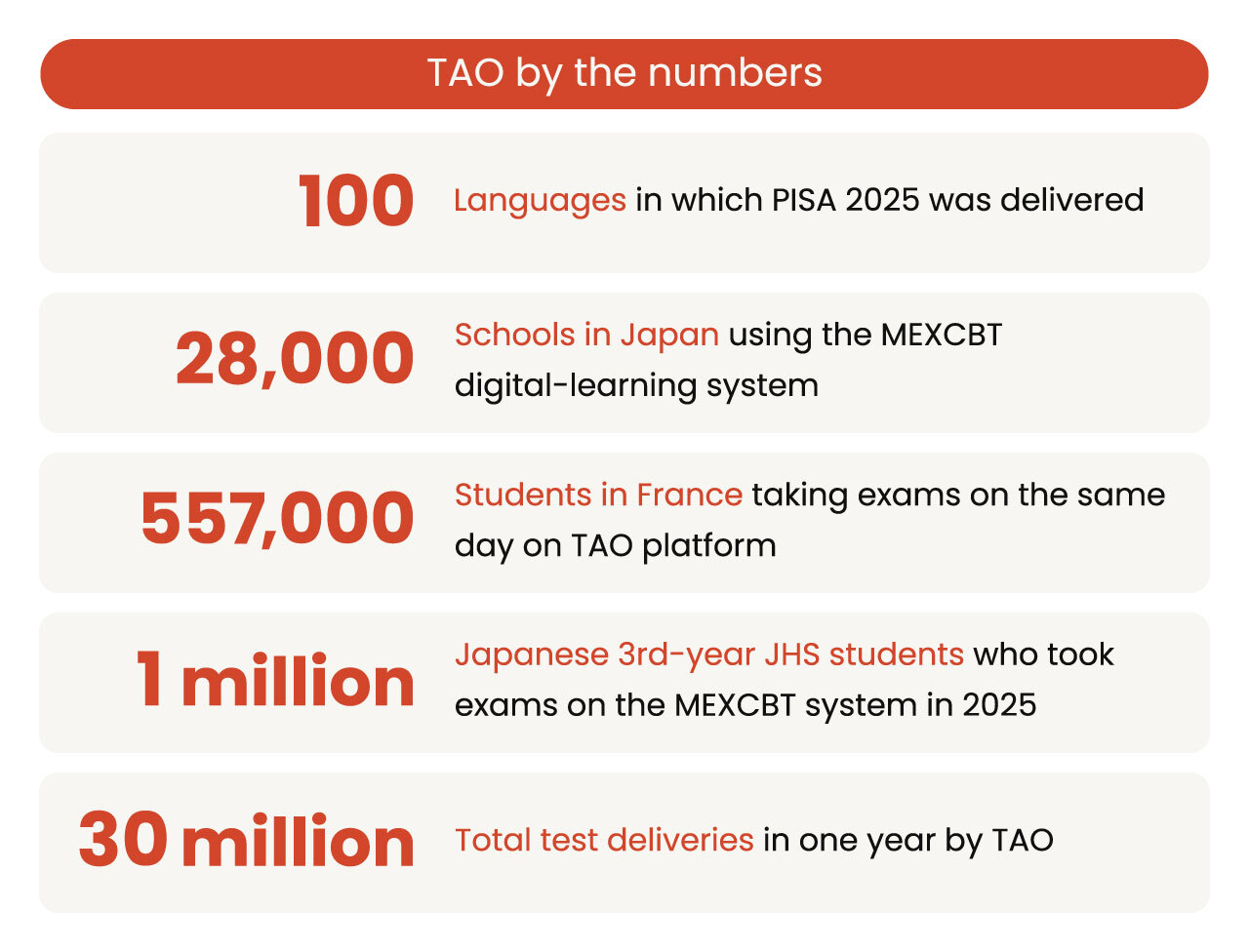
and today do exclusively digital assessments, except for the last grade.” The numbers tell the story. In France, for example, 55,000 schools routinely use the company’s TAO software
(TAO is an acronym for “computer-based testing” in French).

Two paths converge
In 2023, Open Assessment Technologies became a group company of Uchida Yoko, a 116-year-old Japanese company that provides hardware and software solutions to the office and school
markets. A little backstory explains the logic behind the acquisition. In 1998, keen to explore ways in which the fledgling Internet could be applied to education, Uchida Yoko had
established an Institute of Education Research. “We wanted to move beyond offering products and services and help shape the development of the education market itself,” says Noboru
Okubo, Uchida Yoko’s President and CEO.
Drawing on its research arm, Uchida Yoko conducted milestone computer-based assessments for Japan’s Ministry of Education, Culture, Sports Science and Technology (MEXT) in both 2012
and 2015, while its hardware side was part of the GIGA School Program, which aimed to equip Japanese school students with tablets for digital learning. As the company got deeper into
e-learning, Okubo concluded that a standardized interoperable cloud-based testing system was the future of the field. The minute he discovered that Open Assessment Technologies had
already created just such a platform, he reached out and the two companies started working together in 2016.
In 2020, pandemic-induced school closures resulted in the rapid distribution of tablets to 10 million Japanese schoolchildren. Now that a conducive environment was in place, the pace
of collaboration between Uchida Yoko and Open Assessment Technologies went up a notch. Uchida Yoko used TAO technology to create MEXCBT, the digital learning and examination platform
of Japan’s education ministry. The system went into operation in 2020. By 2024, 8.9 million students from around 30,000 schools had registered and the system was used for the 2025
National Achievement Test, taken by almost one million ninth grade students.
What accounts for TAO’s appeal to education ministries around the world? In addition to open-source standards and software which prevent vendor lock-in, pull factors include a
multilingual interface, scalability, enterprise-grade security, and post-exam analytics for fine-tuning national curricula and future examinations.
Meanwhile, from the perspective of the test and item creators, ease of use is probably TAO’s most attractive feature. Installing the whole software suite takes under 30 minutes;
questions made in standard formats, like Word or PowerPoint, can be directly imported and converted; while tests can easily be linked with school information, such as class rosters.
A close relationship gets closer
It was the positive experience of working closely with Open Assessment Technologies to develop MEXCBT that convinced Uchida Yoko to acquire the firm in 2023. But the acquisition was
about more than just the technology. The two companies share a closely aligned vision based on openness, standards commitment, and offering an accessible environment which enables
innovation without imposing a commercial relationship.
When the acquisition went through, Open Assessment Technologies’ management was so focused on developing the next-generation TAO software for the 2025 PISA test that any official
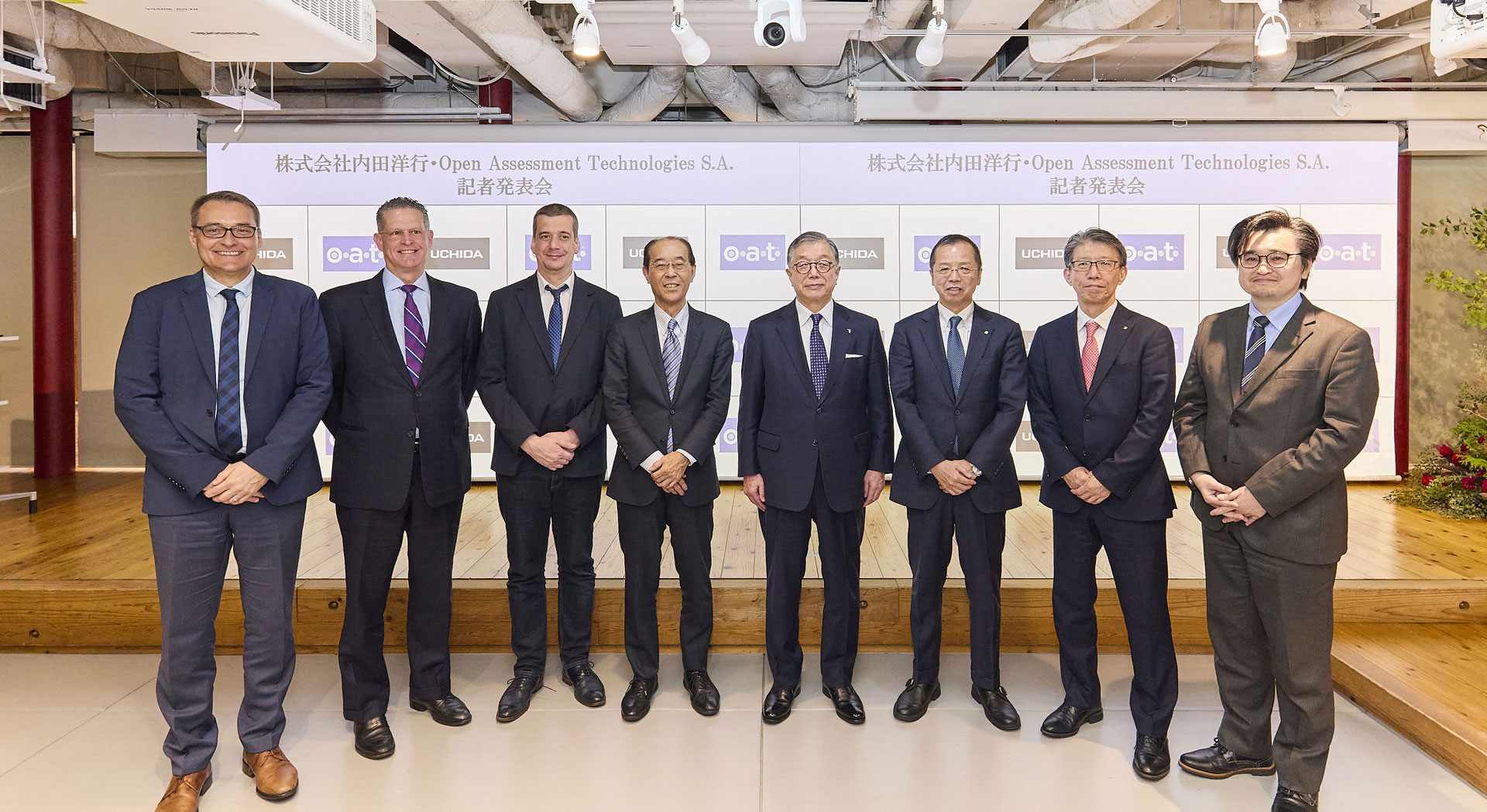
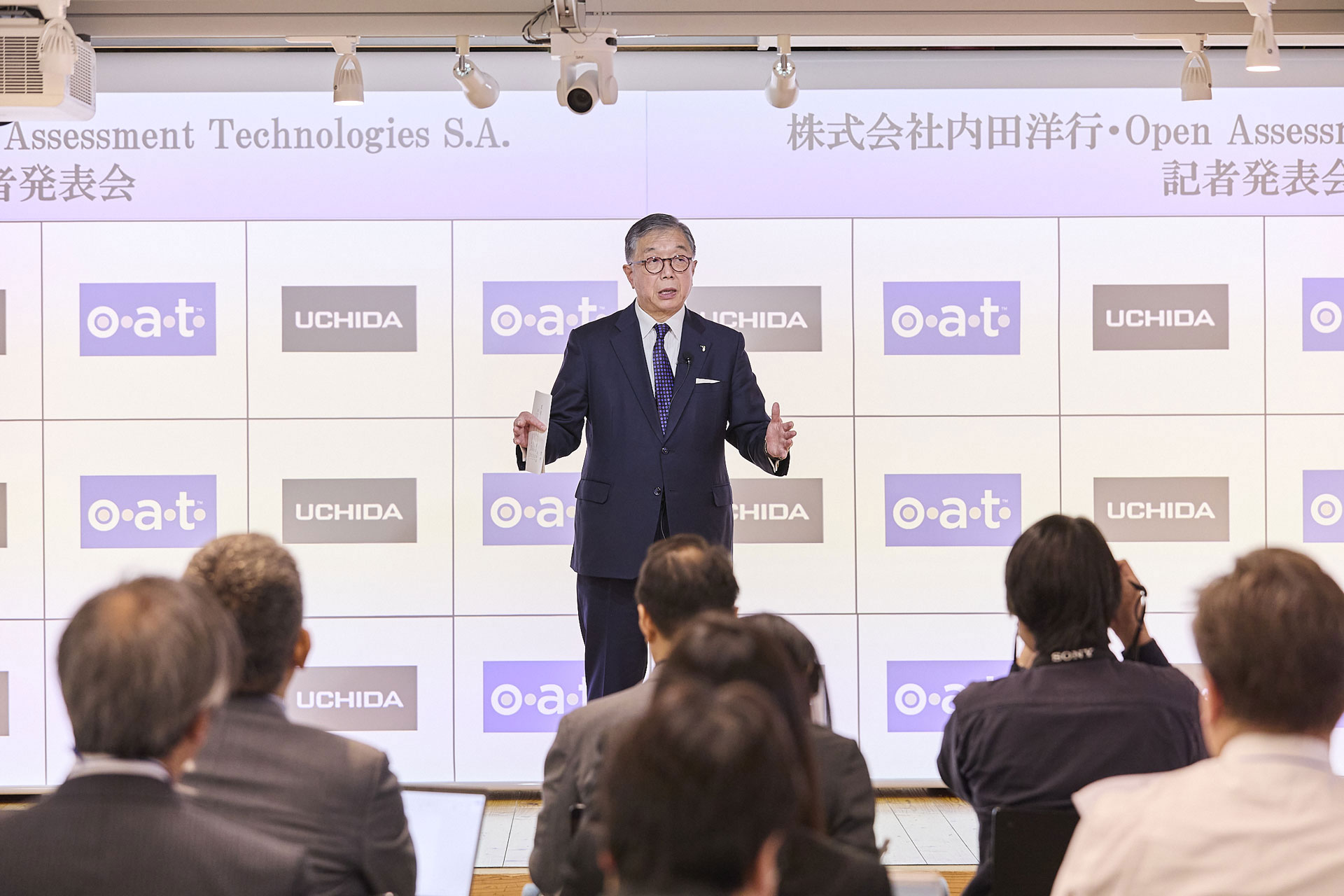
celebration of the event was unfeasible. Now with PISA 2025 safely completed, Uchida Yoko arranged a special “TAO Days” event in Tokyo on December 5, 2025, inviting the management team
from Europe and the United States. The event had a twofold goal: first, to publicly welcome Open Assessment Technologies into the Uchida Yoko fold, and second, to announce the launch
of the full line-up of next-generation TAO software, including a new version of Tao Community Edition (TAO CE), the free, open-source version which became available for download in
January 2026.
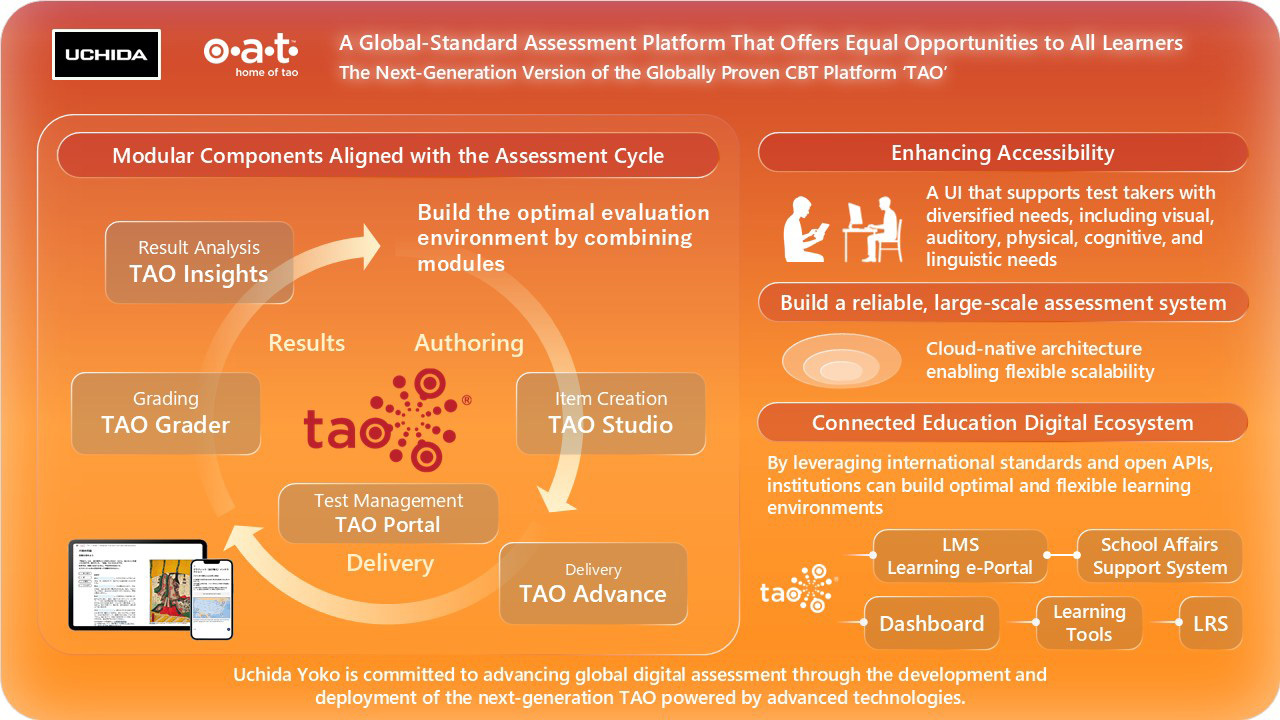
Of the three paid editions of TAO available, TAO Enterprise is the most powerful and the most popular with institutional clients. Why? Because it ensures the smooth administration of
examinations for literally millions of students by delivering a scalable, secure turnkey solution via SaaS, along with access to specialist support services that include real-time
monitoring, instant scaling, and rapid incident response.
TAO CE, meanwhile, includes all the next-generation features developed for PISA 2025, while any additional new features developed for TAO Enterprise in future will be migrated to it at
regular intervals. “We’ve built a complete new suite of software with different modules for grading, analytics and so on, all based on a more modern framework and services. The four
pillars are enhanced functionality, superior authoring tools, a slicker UI and UX, and an AI-first methodology,” says Kiyoshi Machida, Co-CEO of Open Assessment Technologies. In
addition, users, whether developers, assessment experts or institutions, can sign up for the TAO Community Forum where they can contribute to shaping future versions of TAO.
Moving beyond education
As the switch from paper-based to computer-based testing gathers pace, use of TAO is expanding beyond the education sector. Recent new clients include the European Personnel Selection
Office that handles recruiting for the European Union; the United States’ National Center for Construction, Education and Research (NCCER), which certifies construction industry
workers on four continents; and the Norwegian government, which is using TAO to administer nationwide citizenship tests.
It's a similar tale of expansion in Japan, where the success of the MEXCBT system is acting as a strong tailwind to computer-based testing more broadly. Trials are currently underway
to use the TAO platform in national doctors’ examinations and university examinations. Whether in Asia, Europe or the Americas, Uchida Yoko and Open Assessment Technologies are working
to digitally transform education and credentialing ecosystems for the better.
Bridging the edtech divide
Open Assessment Technologies strives to make its TAO testing technology equally accessible to all, whether citizens of resource-poor nations or people with disabilities.
Equity lies at the core of Open Assessment Technologies' mission. The reason the company's TAO CE software suite is open-source, open-standard, and free of charge is precisely to
enable equal access for nations on both sides of the educational technology divide. Given that 55 of the 160 countries where TAO has been downloaded are classified as low-resourced,
this approach seems to be working.
The secret to delivering digital tests as widely as possible is not to ignore the technology divide between rich and poor countries, but to identify any weaknesses and provide tools
to close the gap. A trial project conducted by Open Assessment Technologies' Innovation Lab in Zanzibar, an island off the coast of Tanzania in East Africa, provides an excellent
case study.
Reliant primarily on tourism and spice exports, Zanzibar is not particularly well-off, and the educational infrastructure is somewhat basic. Nevertheless, the trial showed that one
day local schools may be able to conduct online tests by installing the latest TAO software suite on a Raspberry Pi, a compact computer which retails for around $120. The Raspberry
Pi generates its own Wi-Fi hotspot, while the TAO software uses responsive design to automatically configure test layouts for the smartphones which nearly all Zanzibari children
possess. Clearly, advanced online testing and analysis can be made possible even in seemingly challenging environments.
Serving the disabled community
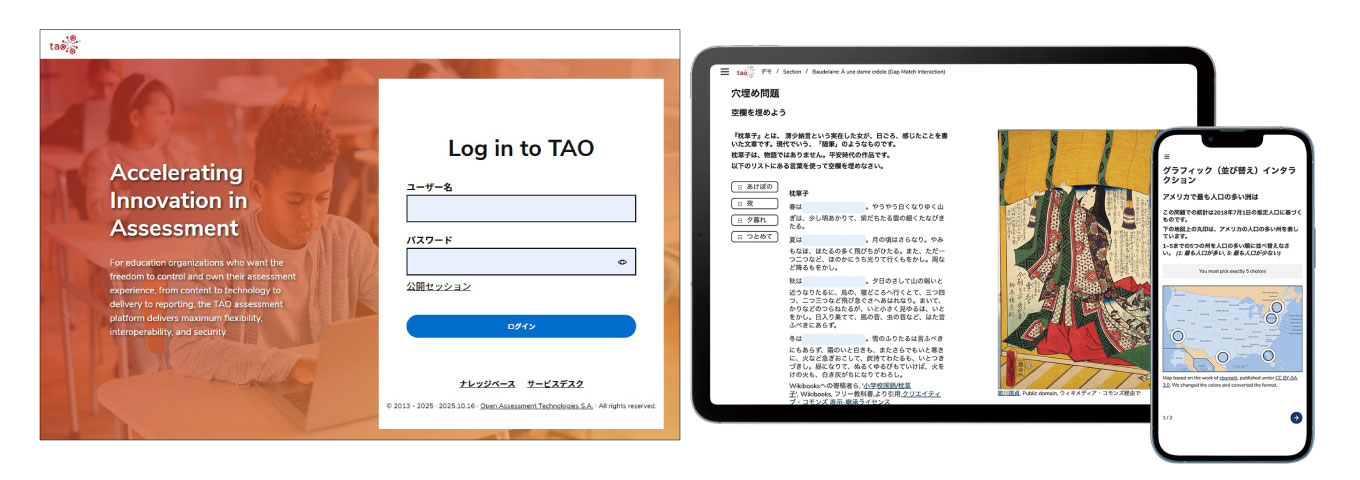
Open Assessment Technologies is also committed to making online testing inclusive at the individual level. In practice, that means accommodating students with impaired sight, cognitive issues or other disabilities. To enable them to take tests on an equal footing with their peers, the new TAO software suite comes with a host of accessibility tools. Examples include a line reader that visually isolates a single line of text, accessibility-friendly test-and-background color combinations and keyboard-only operation for students unable to use a mouse.