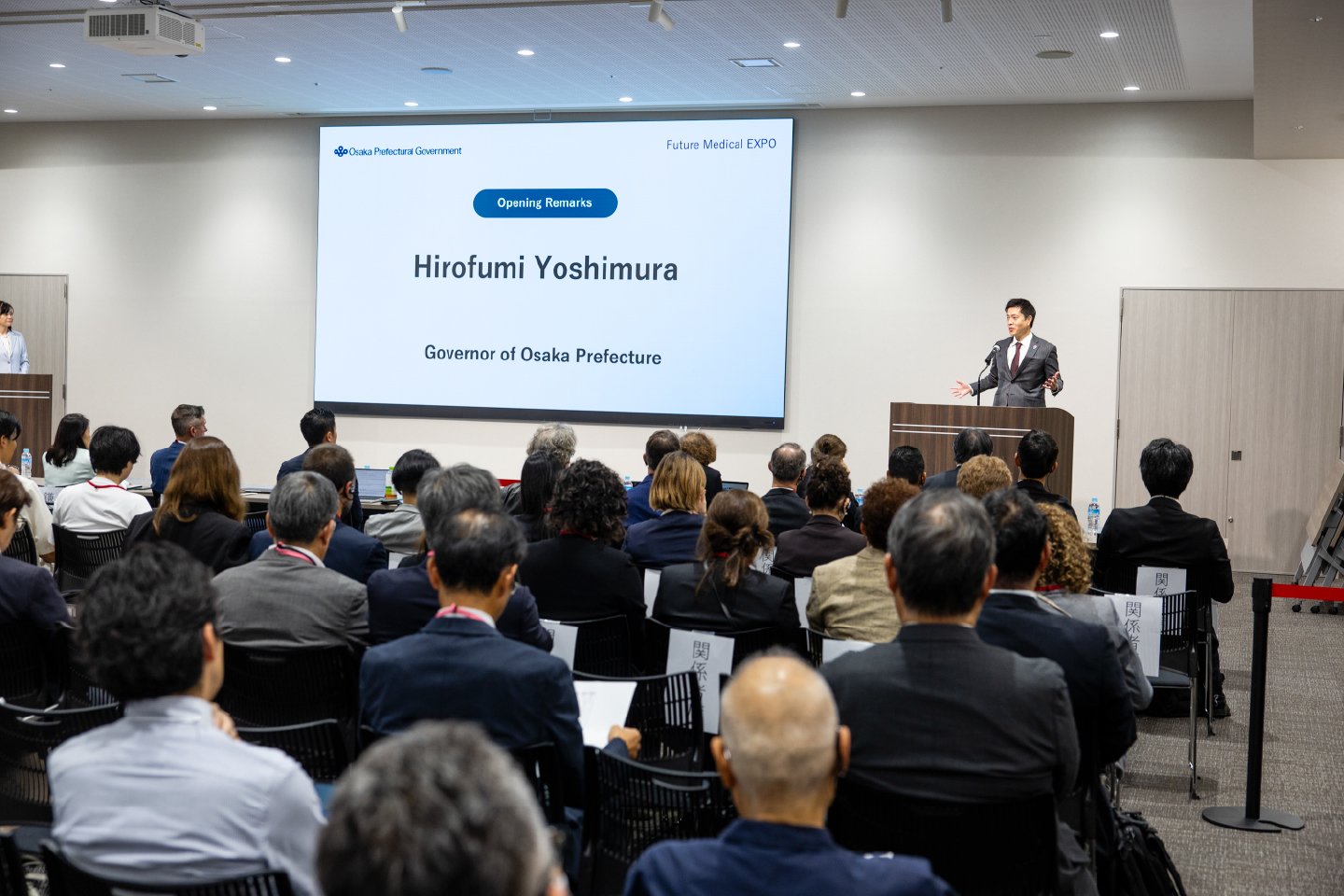
The Osaka Healthcare Pavilion at the Expo 2025 Osaka, Kansai, Japan, which featured an iPS cell-derived cardiac muscle sheet, showcased the possibilities of future healthcare and left a strong impression on visitors. Nakanoshima Qross aims to carry this legacy by establishing a broad, industry-government-academia partnership to co-create future medicine realization on a global scale. During the Expo 2025, approximately 800 international visitors came to observe the initiative. Moving forward, Nakanoshima Qross will continue working to advance the industrialization of future medicine for the benefit of society worldwide.
Nakanoshima Qross has signed partnership agreements with Switzerland Innovation — a network of innovation parks dedicated to supporting cutting-edge scientific research — and the University of Zurich’s Institute for Regenerative Medicine. In 2023, we established the Consulate of Switzerland in Osaka to foster scientific exchange. We aim to develop this site into a hub for promoting new projects between universities, research institutions and startups. Japan and Switzerland, which share similar demographic challenges such as declining birthrates and aging populations, will continue to develop cooperative partnerships in regenerative medicine and other fields.
Nakanoshima Qross is an international hub established to industrialize regenerative medicine. It has established Memorandums of Understanding (MOUs) on the promotion of regenerative medicine with world-leading medical institutions in countries such as Switzerland and the United Kingdom, to create an international ecosystem. It is a place where pharmaceutical companies and investors from both Japan and overseas gather, and also houses an incubation facility for fostering startups. Osaka Prefecture has announced its vision as a “Global Financial City OSAKA.” In line with this vision, we aim to generate a wealth of research outcomes (seeds) in medical technology, develop Osaka as a place to invest in science, create new business models and contribute to the world.
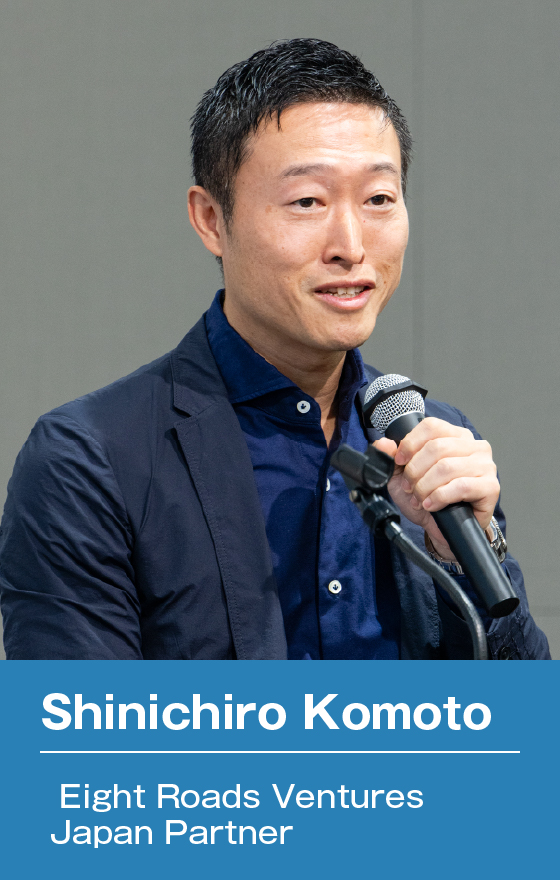
Eight Roads is a global venture capital firm, committed to the life sciences sector. I am primarily responsible for helping Japanese healthcare startups develop to compete on a global scale.
The Japanese healthcare industry has undergone a significant transformation over the past 20 years. The number of academic researchers who build their own companies to solve unmet medical needs has increased drastically. Changes have also occurred in healthcare practice. Doctors are showing greater interest in new technologies and have become more receptive to participating in clinical research.
The Japanese government has also begun to focus efforts on supporting healthcare startups. The Japan Agency for Medical Research and Development (AMED) secured a large budget to strengthen the biotech startup ecosystem. This program offers funding support equivalent to twice the amount invested by certified venture capital firms to biotech startups conducting clinical trials.
Investors should pay attention to Japan. Although the size of the Japanese healthcare sector is 10% that of the United States and the amount invested in biotech startups is only 1% of that invested in the United States, it represents unique investment opportunities to the untapped great science. Furthermore, Japanese biotech startups offer outstanding cost-effectiveness. With Kansai having almost the same number of graduate students involved in drug discovery as Massachusetts, the average wage in Japan for such talents and the cost of living in Kansai is just one-third that of Massachusetts. Hence, Japan’s biotechnology sector has low R&D costs given the quality and the depth of its research infrastructure. Japan should leverage this gap to attract investment and aim for expansion into the global market.
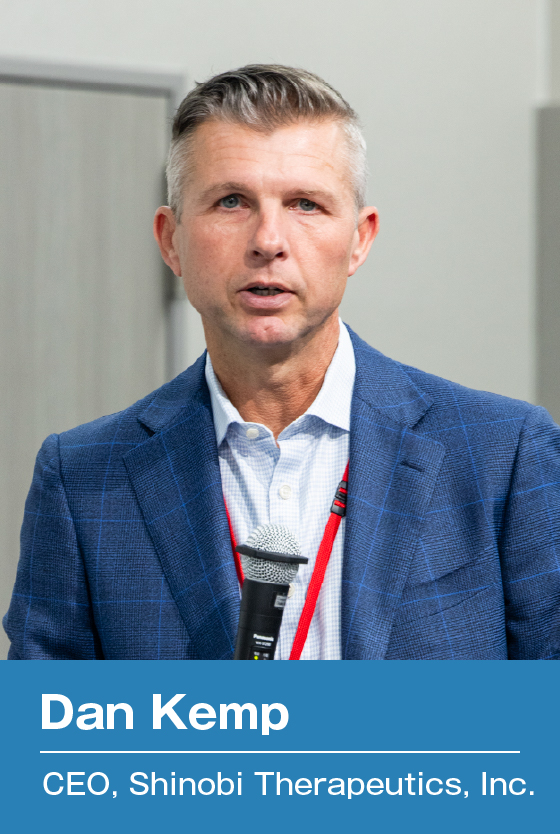
Shinobi Therapeutics is a biotechnology company that originated from Kyoto University and primarily works to develop immune-evasive iPS cell-derived therapies.
While Japan excels at innovation, it struggles to translate these new technologies into therapeutic products. The key challenges it faces in doing so are building experienced teams and attracting sufficient investment. Although Japan has a wealth of research talent, it has a shortage of business-minded personnel capable of effectively navigating the development processes. This leads to a negative spiral where innovative businesses fail to attract funding from investors, making it difficult to secure the talent necessary to succeed.
To rectify this situation, expansion into overseas markets is critical. We expanded into the United States in 2022, relocated our headquarters there in 2023, and subsequently merged with a U.S. biotechnology firm. This enabled us to secure a substantial $51 million investment at a crucial time when we were looking to expand our business.
We are aiming to advance clinical trials and accelerate commercialization by creating conditions that international investors find attractive. We operate our product research and manufacturing under a binational Japan-United States framework, with facilities in Kyoto and Shonan, Japan, and California in the United States. Genetic engineering is conducted in the United States, while discovery, development and manufacturing activities are handled in Japan.
Kansai has an advantage in that all the key players required for biomedical innovation are concentrated in one region, with Kyoto University’s Center for iPS Cell Research and Application (CiRA), cell production facilities, and clinical institutions all within walking distance of each other. Nakanoshima Qross, located in neighboring Osaka, brings together a collective of companies and organizations focused on bringing regenerative medicine to society, and Osaka is also home to the Kansai branch of the Pharmaceuticals and Medical Devices Agency (PMDA). This unique geographic advantage, which enables the entire process from research to clinical trials to be conducted in a single region, enables faster development and greater cost efficiency. Going forward, we will continue to strengthen partnerships with related organizations to promote the practical implementation of regenerative medicine in society.
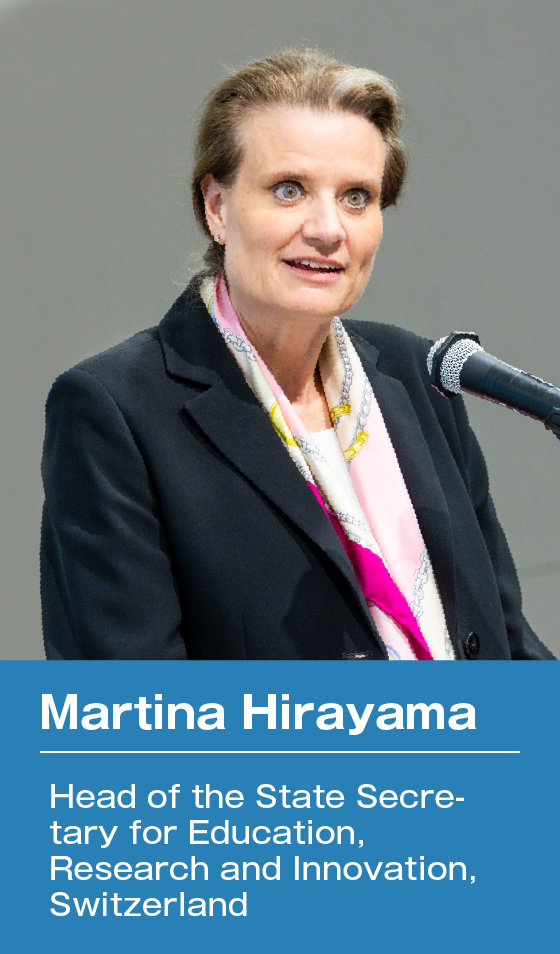
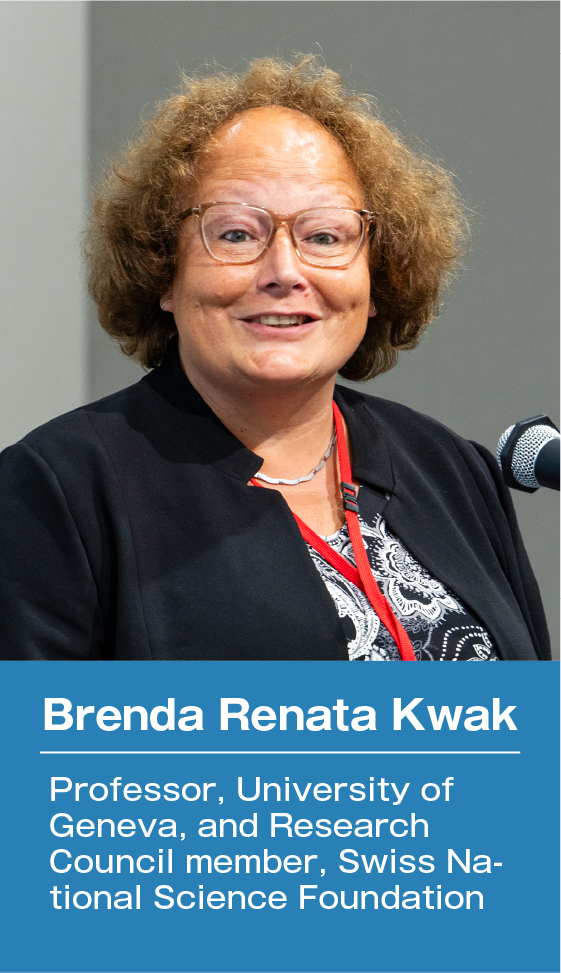
Switzerland has ranked first in the World Intellectual Property Organization’s (WIPO) Global Innovation Index for 15 consecutive years. The government agency supporting the nation’s scientific research is the Swiss National Science Foundation (SNSF).
SNSF plays a wide-ranging role aimed at promoting research efforts across all scientific fields. One part of this role is providing funding, with research excellence as the key criterion for selection. Approximately 80% of funding is allocated to basic research, with 20% directed toward use-inspired research. Research topics are selected by the researchers themselves. SNSF also focuses on the development of young researchers, offering funding schemes tailored to different career stages such as postdoctoral fellowships and assistant professorships in order to create an environment where researchers can pursue independent projects at an early stage.
Another of the SNSF’s key missions is international collaboration. The Foundation offers funding for joint research projects conducted both within Switzerland and abroad, helping researchers to build networks with international research institutions. Sharing cutting-edge knowledge through these channels drives innovations.
Japan is a key partner for SNSF in Asia. We work with organizations such as the Japan Society for the Promotion of Science (JSPS), Japan Science and Technology Agency (JST) and Japan Agency for Medical Research and Development (AMED) to conduct scientific exchanges and bilateral programs. In 2025, we partnered with AMED to invite proposals for research on the mechanisms and control of aging.
With regenerative medicine also attracting growing attention in Switzerland, models such as Nakanoshima Qross — which provides a one-stop hub for basic research, coordination with regulatory authorities toward approval, and the establishment of manufacturing processes — hold considerable appeal. We hope to establish an ecosystem for implementing regenerative medicine in society by strengthening synergistic collaboration with Japan.
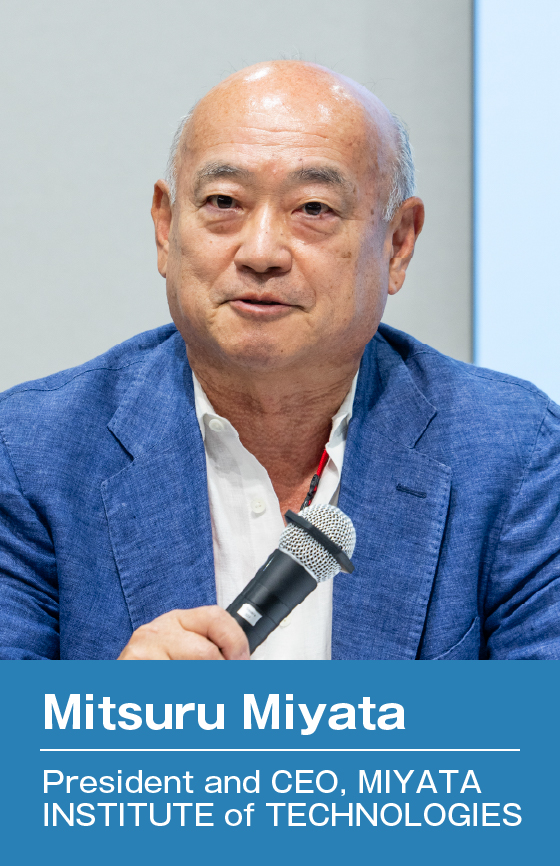
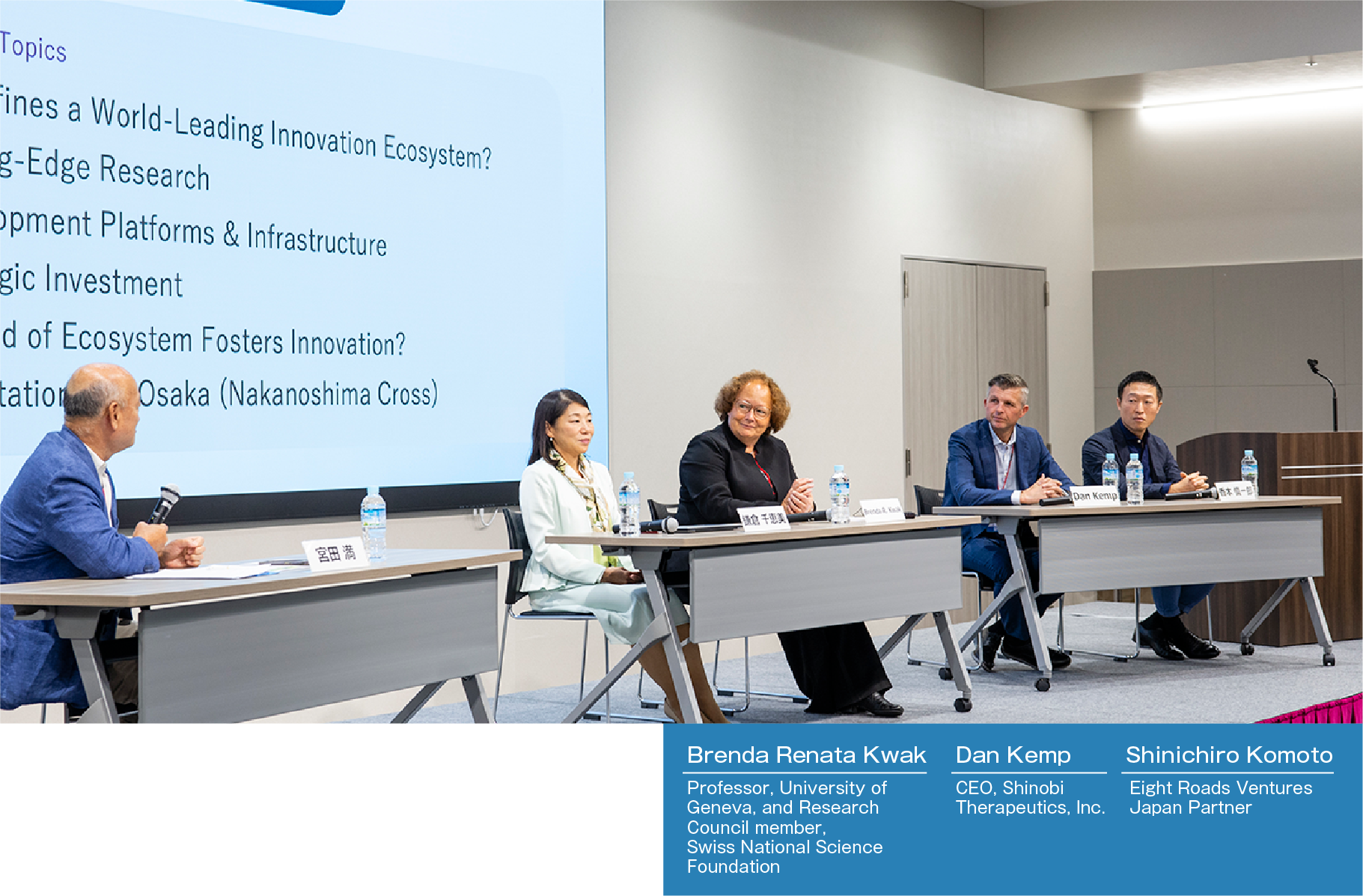
Miyata: Ms. Kamakura, can you start by telling us about your initiatives?
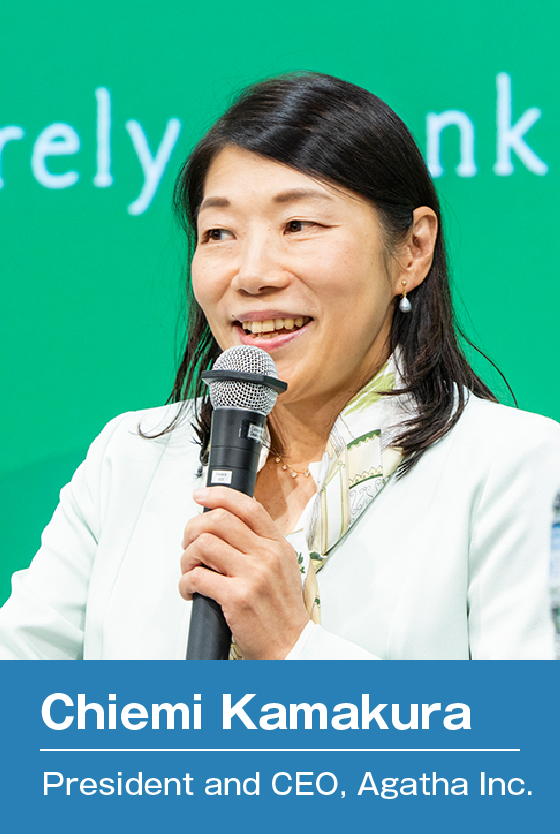
Kamakura: Around 70% of the new drugs sold worldwide fail to reach the Japanese market—a phenomenon known as “drug loss.” The root cause of this problem is Japan’s inefficient clinical trial system. We provide a cloud service that links pharmaceutical companies and medical institutions digitally to streamline the clinical trial process. In addition to resolving the “drug loss” problem, we also aim to shorten the lead time required for the clinical research required to bring cutting-edge medical treatments to society.
Miyata: I’d like to discuss the elements needed to develop an ecosystem for biotechnology startups.
Komoto: Global talent is essential. From an investor perspective, Japan’s single payer healthcare system, which keeps NHI drug prices low, makes investments in companies developing new drugs only in Japan less attractive. Furthermore, professionals with experience in drug approval with European and American regulatory authorities and bringing products to market are essential in order to commercialize Japan-developed products overseas, but this type of talent is rare in Japan’s biotech startup world. We need to develop people who understand both technology and business and can translate good science to great business.
Kwak: I agree. People are the foundation of innovation. Focusing primarily on universities, we need to develop the talent that will comprise such an ecosystem, including researchers and government officials who can connect research and policy.
At the same time, establishing a comprehensive funding mechanism designed to support each stage of research and development is also essential. In Switzerland, the SNSF provides funding for basic research, Innosuisse supports innovation research and development activities, and the BRIDGE funding program serves a “bridge” role between the two. These programs complement each other to provide comprehensive support from the research stage through to practical application.
Kemp: What is needed is an ecosystem that circulates a flow of talent. In the United States, even if a startup fails because the science didn’t work out, good teams will move to another company and continue taking on new challenges because VCs recognize good operating teams and want to invest in them again. In Japan, however, a single failure tends to shut the door to future opportunities, making survival the main goal. Japanese biotech needs a foundation, a critical mass, and mentality that allows people to push forward in pursuit of success with the confidence that the ecosystem is robust.
Kamakura: Regarding the mobility of talent, trends in Japan are changing. I started my own business after having worked in new business development projects for pharmaceutical and medical institutions at a large, traditional Japanese company. Nowadays, more and more people are launching start-ups after leaving major corporations in the same way I did. Large companies are adept at nurturing talent. The fact that more people are leveraging the skills they learned in the corporate world to pursue innovation is a positive trend.
Komoto: Another critical area in the industrialization of biotechnology is manufacturing. At present, Japanese contract development and manufacturing organizations (CDMOs) have a limited presence in the industry. I wish I could see more companies that can meet global demand.
Kemp: High-quality research attracts talent and funding, leading to the creation of an ecosystem. Philadelphia emerged as a hub for cell and gene therapy following Dr. Carl June's development of CAR-T cell therapy and earlier breakthroughs in the gene therapy space from UPenn. As the birthplace of iPS cells, I believe Kansai has the potential to become a global hub for iPSC-derived cell therapy companies.

Miyata: As a hub aiming to bring Japan’s regenerative medicine to society, what challenges does Nakanoshima Qross face and what are your hopes?
Kwak: Nakanoshima Qross has established a solid track record as a “regenerative medicine promotion ecosystem.” Dr. Sawa’s therapeutic approach using iPS cell-derived cardiomyocytes and Sumitomo Pharma’s Parkinson’s disease treatment have both reached the application for manufacturing and marketing authorization phase. There has also been significant progress in achieving therapeutic diversity by using iPS cells as a core component for treating multiple diseases, such as retinal disorders. They will continue to push forward with R&D efforts by studying iPS cells from diverse perspectives.
Kemp: Nakanoshima Qross brings together more than 60 companies and organizations. However, in order to establish a self-sustaining ecosystem, we need to expand our scale further. Although size in itself is not a measure of value, greater scale brings benefits in terms of depth of talent, corporate initiatives and funding.
Inter-regional collaboration is also important. Japan has an amazing rail network, which makes it possible to travel between Tokyo and Osaka in just over two hours. So it’s easier in Japan to connect key hubs where talent can circulate and build a strong national ecosystem.
Komoto: To attract foreign companies, more than just the tangible things such as facilities and equipment are needed. The intangible things — for example, providing support for corporate act such as establishing a legal entity, hiring personnel and contracting with accounting firms — are also essential. Nakanoshima Qross also plays a role in building the networking foundation required to commercialize regenerative medicine, such as connecting key research personnel with clinicians conducting clinical trials for joint research projects.
Kamakura: Although governments and venture capitalists focus on nurturing healthcare technology companies, companies like ours that work to support the healthcare industry as a whole are excluded from this focus. At Nakanoshima Qross, we hope to see future investment directed toward companies working to support an ecosystem of cutting-edge medical treatments.
Miyata: Japan needs to develop a self-sustaining ecosystem while better visualizing and promoting its strengths to international investors.