Top government, academic, and business leaders from India and Japan gathered in New Delhi for the first Nikkei India-Japan Economy & Investment Forum on February 21, 2025. India and Japan are longstanding strategic and economic partners bound by deep ties of national friendship and mutual respect. With India’s GDP soon projected to overtake Japan’s, both countries are seeking new opportunities to further heighten their mutual prosperity. Discussion at the forum ranged from the history of Japanese management systems in India to the impact of bold investments in clean energy and high-speed rail.

Under the visionary leadership of Prime Minister Narendra Modi, the last decade has been one of infrastructural and transformative growth for India. We have constructed over 55,000 km of national highways and 30,000 km of new railway tracks. More than 135 Vande Bharat high-speed trains have been operationalized and our metro rail network expanded from 250 to 1,000 km. The number of airports has more than doubled, and power generation capacity increased by 70%. With initiatives like Startup India and Make in India, the government has also emphasized the importance of digital infrastructure. Our two countries continue to collaborate on various projects to drive economic growth. Japan funded major projects such as the Delhi Metro, the Mumbai-Ahmedabad high-speed train, the Smart City Mission, Ganga Action Plan and dedicated freight corridors. Japanese companies have shown significant interest in the production-linked incentive scheme with companies like Suzuki and Honda establishing manufacturing facilities here in a demonstration of the strong economic ties between India and Japan.
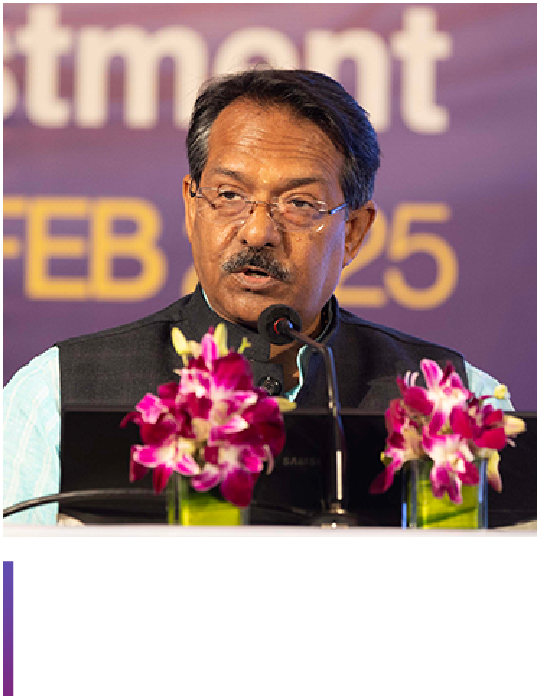
India is a secure partner, has vast potential and is the voice of the Global South. The partnership between our two countries will be mutually beneficial. I invite the Japanese business fraternity to invest in India and most importantly “Make in India.”
The Japan Bank for International Cooperation (JBIC) is a 100% Japan government-owned financial institution that is fully aligned with the economic cooperation initiatives of the Indian and Japanese governments. JBIC has already contributed more than 2 trillion yen out of a targeted 5 trillion yen of public and private investment and financing that India and Japan agreed on at a 2022 summit. JBIC acts as a bridge between the public and private sectors, collaborating with Indian Public Sector Undertakings (PSUs), Indian private companies, and Japanese companies.
JBIC has multiple roles. As an industrial incubator, for instance, it has a 26% stake in the National Industrial Corridor Development Corporation (NICDC) which is developing industrial corridors across India, including Dholera, aka “Semicon City,” and Shendra Bidkin, a futuristic smart city and EV manufacturing hub.
Being a synergy catalyst is another of JBIC’s aims. To this end, it has established an India-Japan Fund with the National Investment Infrastructure Fund (NIIF) to inject Japanese risk money into critical emerging sectors. As a policy setter, JBIC is supporting waste-to-energy and biomass ethanol projects to change the landscape of India’s import-dependent energy policy and accelerate its energy transition. As an investment motivator, JBIC provides financial support for the establishment of Japanese manufacturing clusters in India, a US$5 billion loan for ArcelorMittal Nippon Steel being one example.
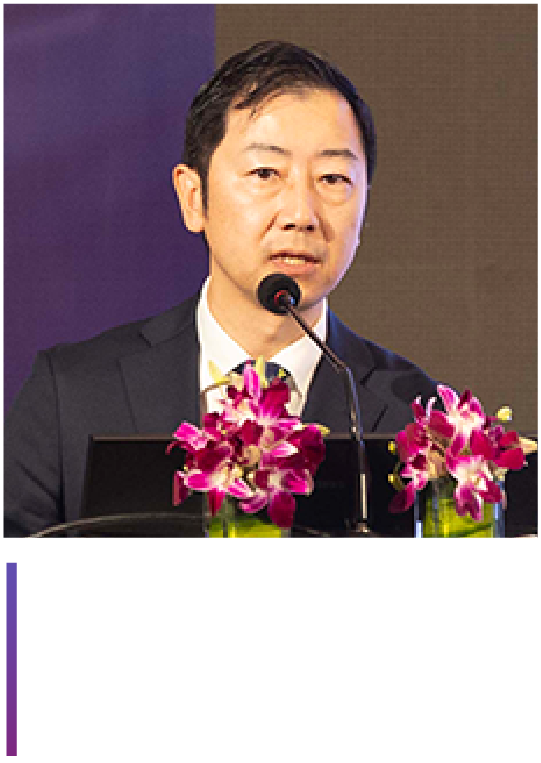
Semiconductors and hydrogen are two sectors key to establishing the infrastructure of “Self-Reliant India.” Japan can contribute here because it has a huge presence in the semiconductor ecosystem, accounting for some 30% (cost-based) of components in setting up a fab. Hydrogen is another key theme for India’s green transition. With its abundant solar power, India can become a hydrogen exporter, including to Japan.
JBIC is ready to start discussions for any potential project with Indian or Japanese companies. We would like to be the hub, enabler and co-creation partner.
How are Japanese B2C companies faring in India? It’s a mixed picture. While firms that have had a relatively long presence there such as Unicharm and Daikin are thriving, things are less rosy for aspiring new entrants. Why? First, competition from both Western firms like P&G and Unilever and homegrown players like ITC is intense. Second, logistics are challenging, with most sales still taking place in small family-owned stores. Foreign businesspeople must take care not to see the places they visit like Delhi and Mumbai as representative of India as a whole. Only a small percentage of the population live in India’s seven Tier 1 cities with their proliferating shopping malls and supermarkets.
Japanese firms could do a better job communicating “Brand Japan.” A surprising number of Indians perceive Maruti Suzuki and even Sony as Indian brands! Advertising is important and Japanese companies should stop thinking that quality products will automatically sell and instead invest more in branding and marketing to compete against megabrands and well-financed startups.
Of course, Japanese companies cannot realistically expect to serve India’s entire population of 1.4 billion. Nonetheless, the country’s roughly 500 million consumers constitute an extremely attractive market. The recent trend to premiumization targeting wealthier city dwellers may well act as a tailwind for new Japanese B2C market entrants.
At the same time, Japanese firms need to be careful not to focus exclusively on the wealthier segments of society who share their thinking about issues like sustainability and compliance, because these are simply not the concerns of the mass of people. To avoid such perceptual mismatch, Japanese firms should work with consultants who know the market and can help them find local partners. In addition, as well as hiring and training Indian interns who understand the complexities of Indian society, they should keep Japanese ex-pat managers in country for longer than the current three years.
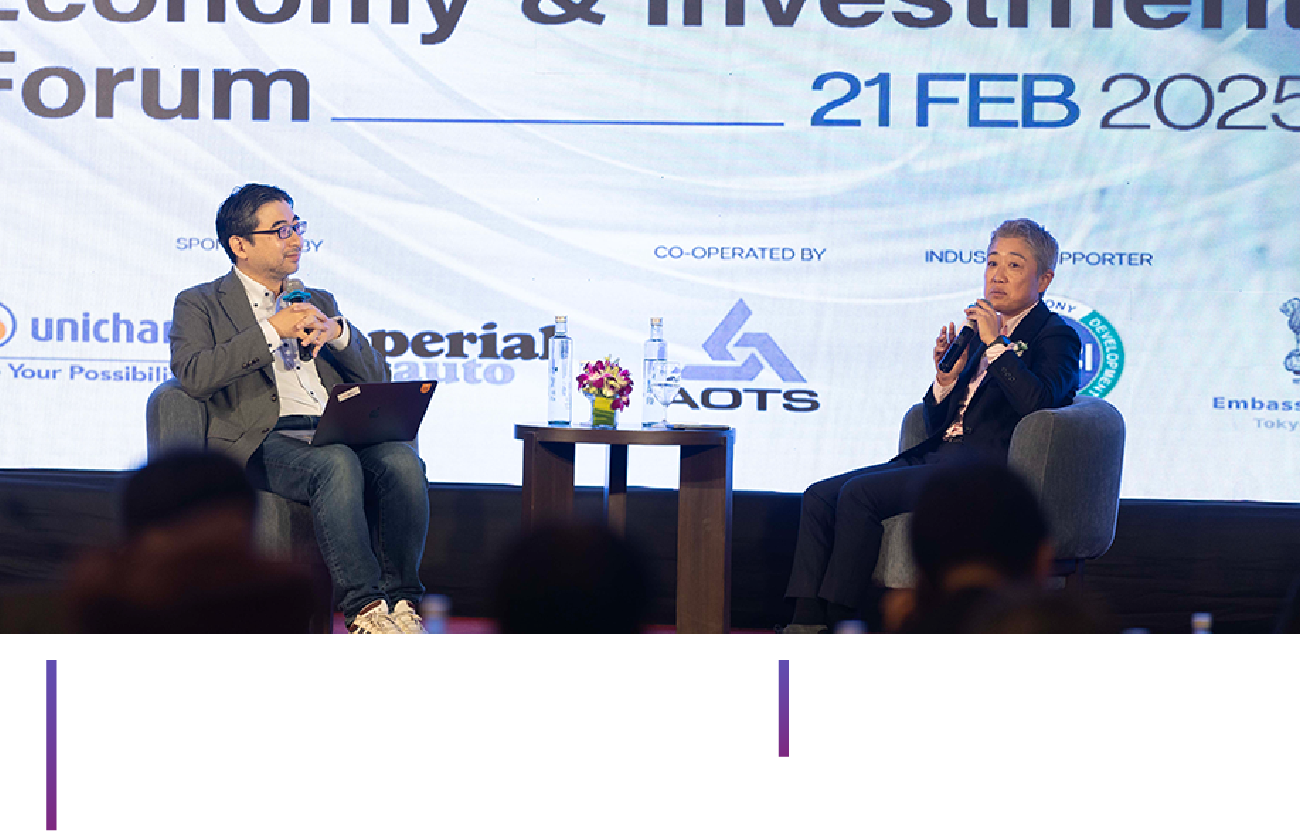
Unicharm produces baby care, feminine care, wellness care and pet care products. Our sales this fiscal year will be around ¥1 trillion. The company entered India in 2009. Our product lines here are baby diapers ー where we just became market leader ー sanitary pads and adult diapers.
We follow three principles of success: Developing products that match Indian consumers’ needs; maximizing in-store visibility; and clearly communicating our product values, stressing both functional and emotional benefits. For example, deeply absorbent diapers let babies sleep through the night, which means parents also get a good night’s sleep and feel more energetic the next day.
We do on-the-ground research into everyday life and childrearing. Based on our surveys of the usage, purchase situation and needs of the urban and rural populations, we have divided the market into five segments and offer high-value-added premium products and more cost-performance-focused standard products in different quantities accordingly.
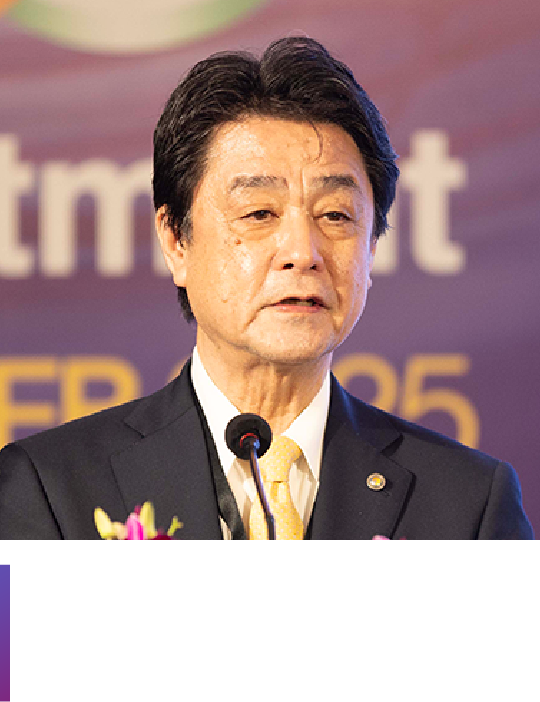
Since our company purpose is to contribute to realizing the SDGs, we take social contribution seriously. Namaste Poko-chan, an event we run with an NGO to promote baby hygiene by explaining the health merits of using disposable diapers over cloth nappies, has reached 200,000 mothers and babies over the last decade. Use of sanitary pads in India is only at 50%, so we launched a menstrual education program in 2014 to help girls gain greater awareness of their bodies. It has reached over 700,000 girls. Meanwhile, Project Jagriti is a startup program that empowers village women to run menstrual education activities and sell Unicharm Sofy products. Its impact is literally lifechanging, increasing family income by half.
Everything we do is based on a management philosophy that encourages the free exchange of ideas between management and frontline staff, enabling every single employee to become a source of innovation.
The friendship between India and Japan is defined by mutual trust, economic cooperation and traditional ties. Our relationship is like a fusion of sushi and spices: two unique elements that combine to create an extraordinary and delicious cuisine.
Between 2000 and 2024, Japan invested $43 billion in India, making it our fifth largest source of foreign direct investment. Japan is India’s partner in progress, and has worked closely with India to support our manufacturing sector since the 2011 signing of our Comprehensive Economic Partnership Agreement. The 1,400 Japanese companies now active in India inspire us to greater quality and excellence as we work to increase the manufacturing share of our GDP to 25%.
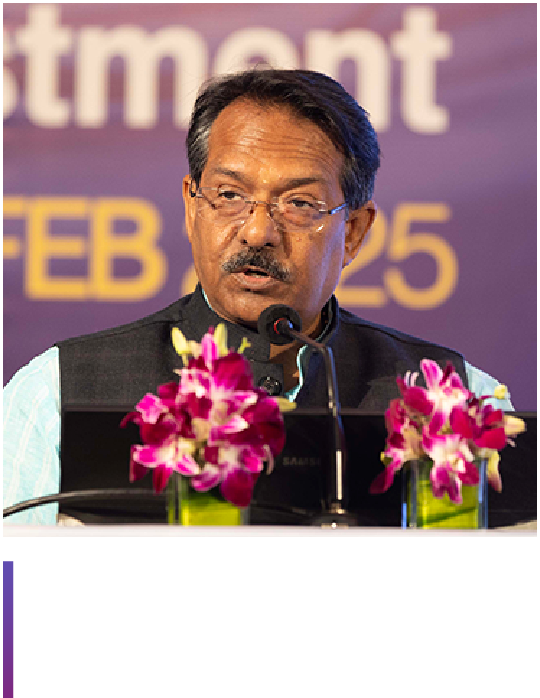
Our “Make In India” program is supported by the world’s largest number of STEM graduates, 43% of whom are women, and significant government support for R&D and innovation ecosystems. As we pursue growth in renewable energy, semiconductor manufacturing and artificial intelligence, we seek a more balanced trade between our two nations. Trade should be a two-way bridge, and more exports to Japan of Indian goods and services will deliver reciprocal benefits to both countries.
I look forward to more Japanese-Indian collaboration on innovation, sustainability and growth for shared prosperity.
The late Osamu Suzuki took a huge leap of faith in 1982 when he decided to partner with the Government of India on a public sector enterprise called Maruti Suzuki India. Everybody thought the project would be a failure, as the annual market for cars in India was just 35,000 to 40,000 units at that time. These people did not understand that committed leaders could use postwar Japanese management practices to make the impossible possible in India.
In the West, labor relations are often adversarial, with little constructive communication between workers and management. Postwar leaders in Japan realized that workers who were willing partners would deliver huge gains in discipline, quality and productivity.
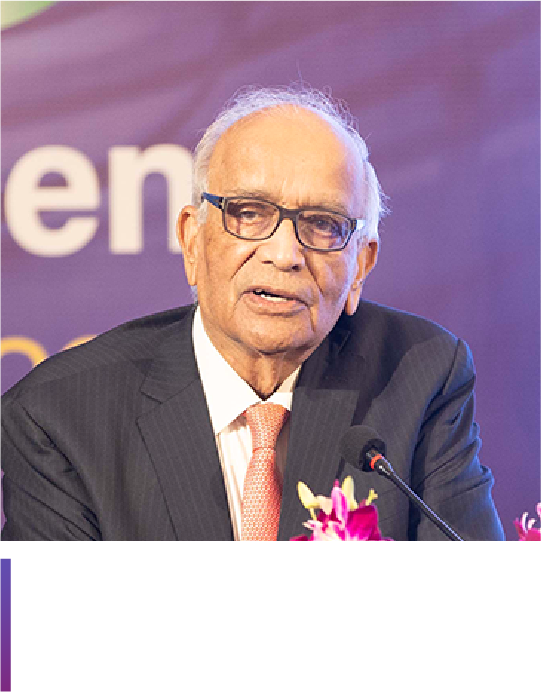
We adopted this approach in Maruti Suzuki, treating workers with respect as equals. We had a common canteen, identical uniforms and common toilets. We introduced a productivity-linked bonus scheme to great success. As in Japan, we also extended the concept of partnership to other associates, including component suppliers. Our results speak for themselves.
Japan has invested in many projects in India. To my knowledge, none have done as well as Maruti Suzuki. How can we bring about the same total teamwork in other Indian companies? As managers, that is the problem that you must solve.
Today, Imperial Auto Industries has a global footprint, but I want to take a step back and talk about 1991. Why 1991? Because that was the first time I went to Japan. We were a supplier to Maruti Suzuki, and they sponsored a trip for me to work in Suzuki’s Iwata factory for almost four months.
I lived in a dormitory, ate Japanese food and absorbed the culture after a six-week orientation program with AOTS in Yokohama. Trust and openness about technology made the system so efficient and lean that it was hard to compete. I realized that a change of mindset was needed in India, too.
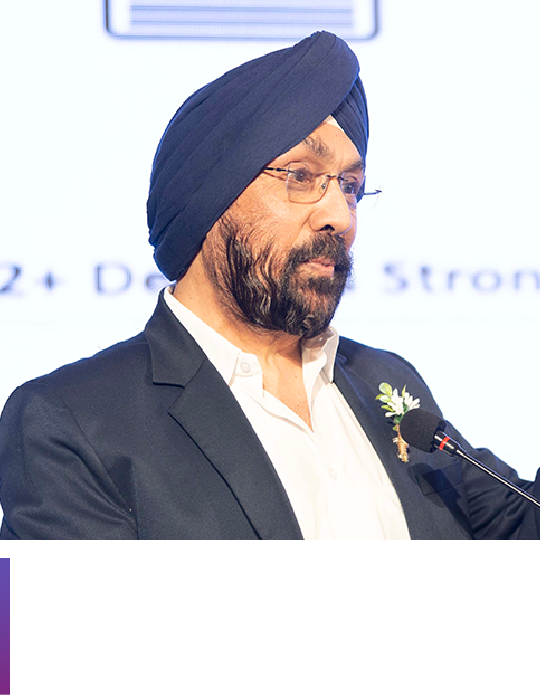
Over the next couple of decades, we founded many joint ventures which exist today. After the Global Financial Crisis, when we needed liquidity, we offered to let one Japanese partner buy out our shares. Rather than taking advantage of the situation, they said, “Let us help you with liquidity another way. We don’t want to dilute this partnership.” Events like this build a great deal of trust and confidence.
Good partnerships help bring success, and Japan has proven to be a great partner for us. I can tell you from my own experience that we will continue working closely with Japan in the future.