




PARTNER CONTENT
Financial Services Agency
JAPAN WEEKS

Multiple Symposium: Driving Investment in Japan Attracting Investments from Overseas

The Japanese government held the third “Japan Weeks” in October, as part of its efforts to establish Japan as an international financial center and a leading asset management center. As one of nearly 90 events, Nikkei Inc. hosted the multiple symposium “Driving Investment in Japan” on October 20. This report covers the special symposium on Direct Investment in Japan, co-hosted by the Japan External Trade Organization (JETRO), as well as panel discussions and dialogues on the theme of “investing in Japan,” presented by sponsoring companies.

Symposium:
Foreign Direct Investment in Japan

Opening Remarks

Actively Promoting the Appeal
of the Japanese Market
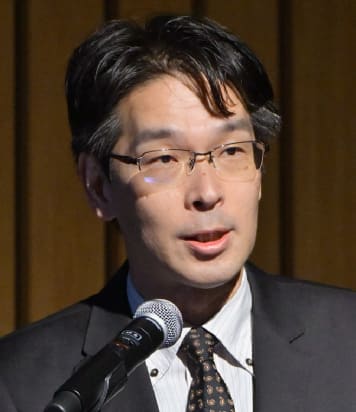
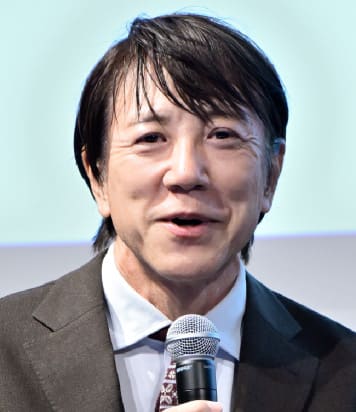
Michinori Haba

Michinori Haba
Deputy Director-General of the Policy and Markets Bureau, Financial Services Agency

Japan Weeks was launched in 2023 as a public-private initiative to actively promote the appeal of the Japanese market both domestically and internationally. It began with 25 events but has expanded to nearly 90 this year, underscoring the growing interest in the Japanese market among investors worldwide.

Amid the growing hopes for achieving a growth-oriented economy, the Financial Services Agency has been driving initiatives to position Japan as a leading asset management center. As a result, a wide range of measures is steadily beginning to bear fruit, including the comprehensive expansion and permanent establishment of the Nippon Individual Savings Account (NISA), as well as reforms in the asset management industry and asset ownership.

It is essential for Japan to further strengthen the virtuous cycle of wage growth and investment that has begun to take hold, while also attracting greater investment from overseas to achieve sustainable economic growth.

Interest in Japanese stocks among foreign investors is higher than ever, and going forward, foreign direct investment in Japan will play a crucial role in further attracting outstanding human resources, technologies, and expertise from abroad and in driving innovation.

Over the past decade, the balance of foreign direct investment in Japan has more than doubled, and the government has set targets of increasing it to 120 trillion yen by 2030 and to 150 trillion yen in the early 2030s, under the Program for Promotion of Foreign Direct Investment in Japan 2025.

To achieve these targets, we are placing a strong focus on promoting collaboration between domestic and international companies, as well as attracting new and follow-on investments through the establishment of factories, data centers, and other strategic facilities. At the same time, we are working on improving the business and living environments that underpin foreign direct investment activities in Japan.

It is our hope that this event will serve as a catalyst for creating new networks and business opportunities, and as a chance for participants to rediscover the appeal of the Japanese market.
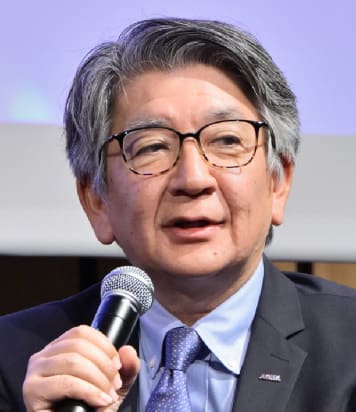
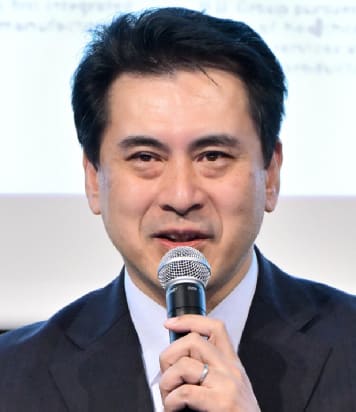
Panel Discussion

Business Opportunities Through Collaboration
with Foreign Companies

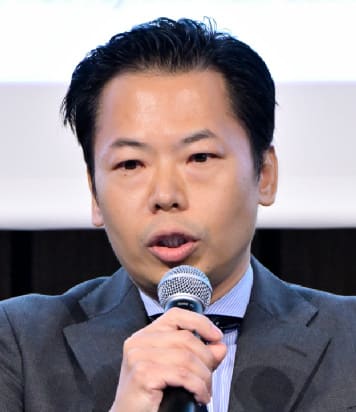
Shojiro Fujiwara

Shojiro Fujiwara
President & Representative Director,
ASML Japan Co., Ltd.

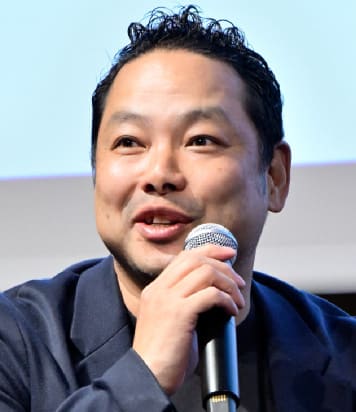
Katsuya Tsuchihara

Katsuya Tsuchihara
Director, Exploratory Oncology Research & Clinical Trial Center,
National Cancer Center

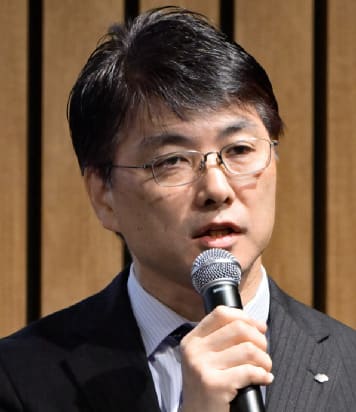
Takeo Nakajima

Takeo Nakajima
Director-General of the Innovation Department,
Japan External Trade Organization (JETRO)

Nakajima: Could you tell us about your business activities?

Fujiwara: ASML, a Dutch company, develops, manufactures, and sells semiconductor manufacturing equipment. We spun off from Philips 40 years ago with a team of 31 employees, and today, we employ approximately 44,000 people from 140 countries and regions.

In Japan, we currently operate eight offices, and expect to have approximately 500 employees by the end of 2025. We expanded our Kumamoto Office to serve TSMC and established a new office in Chitose for Rapidus. We also enlarged our warehouse to 20,000 square meters.

The semiconductor market in Japan is undergoing dynamic, structural change. In particular, advances in AI and digitalization are advancing semiconductor technologies and driving explosive demand. Strategic and sustained support from the Japanese government is providing a strong tailwind for the industry as a whole, and investments from overseas are also intensifying.

Tsuchihara: The mission of the National Cancer Center is to develop innovative pharmaceuticals and medical technologies. At our Kashiwa Campus in Chiba Prefecture, we accumulate data on tens of thousands of cases, including information from major hospitals across Japan.

We work with numerous contract manufacturing companies in the fields of radiopharmaceuticals and regenerative medicine. For instance, Cellares, based in the US, is currently building a plant in Kashiwanoha, which, once completed, will serve as an export hub for the Asia-Pacific region.

Our center is also in a comprehensive partnership with the Texas Medical Center in Houston, working together to support the growth of venture companies. Developing products requires integrating a wide range of technologies, and interest in Japanese technologies remains strong worldwide. It will be essential to make Japan’s outstanding technological capabilities more readily apparent to partners around the world.

Nakajima: Where do Japan’s strengths and challenges lie?

Fujiwara: Japan has a well-developed industrial infrastructure. Service quality is high, and it remains a key market for global expansion. Japanese manufacturing sites place a strong emphasis on precision and high performance, making them well-suited to adopting cutting-edge technologies. The challenge lies in the shortage of personnel, but we expect continued government support.

Tsuchihara: The government and the Japan Agency for Medical Research and Development (AMED) support university spin-off startups. Japan is highly capable of leveraging seeds and providing pharmaceutical expertise, but the country still lacks business management and manufacturing know-how. Although Japan’s venture investment environment is improving, funding remains limited, making it necessary to raise capital internationally.

Nakajima: Which sectors are expected to grow over the next five years?

Fujiwara: AI will be the key driver of the semiconductor industry, a trend that is likely to continue for the next decade. However, there are three major challenges: sustaining technological innovation, developing talent, and strengthening supply chain resilience while addressing sustainability.

Tsuchihara: I agree. In the development of new cancer therapies, so-called game changers—such as regenerative medicine, nuclear medicine, protein engineering, and nucleic acid technologies—will not be able to make any forward progress without the power of engineering. We intend to carefully select investment targets and communicate their value in a clear and compelling way.

Panel Discussion

Overseas Venture Capital Firms are
Also Focused on Japan

Ryan Nakata

Ryan Nakata
Ventures Partner,
Alumni Ventures

Hayata Tokizawa

Hayata Tokizawa
Vice President,
Fin Capital

Noriya Tarutani

Noriya Tarutani
Deputy Director-General, Innovation Department,
Japan External Trade Organization (JETRO)
(Head of JETRO Startup)

Tarutani: What prompted the decision to enter Japan in 2025?

Nakata: Japan scores exceptionally high in terms of talent concentration, technological quality, and geopolitical position. It is the only advanced economy outside the US with a population exceeding 100 million and substantial levels of R&D spending. Government support is also robust, including initiatives such as the Startup Development Five-year Plan. Japan’s ecosystem is at a turning point and will achieve significant growth going forward.

Tokizawa: Private-market investments have overwhelmingly increased. In addition to the weak yen and low interest rates, revisions to the Limited Partnership Act for Investment and the Financial Instruments and Exchange Act have lowered barriers to entry for overseas funds. This has also made it easier to introduce successful overseas models into Japan, including in the B-to-B fintech sector where we invest. We aim to help modernize the legacy systems burdening Japanese financial institutions by leveraging AI and automation technologies from abroad.

Tarutani: What should be done to attract growth capital?

Nakata: On average, startups take about seven years to mature after being launched. Long-term investors and global expansion are the keys to driving this growth. Our core approach is to co-invest with top-tier US venture capital firms, and when a company in Japan that we have invested in becomes ready for global expansion, we bring in US venture capital firms as lead investors. Through this approach, we aim to create momentum that draws in growth capital. We are now in an era when deep-tech companies can increase in value while remaining privately held, as seen with OpenAI and SpaceX. As long as secondary markets (investor-to-investor trading) and M&As remain robust, this will present no problems.

Tokizawa: Our strength lies in our global network of strategic limited partner investors (who invest in investment funds). Firms that become our portfolio companies’ customers are already aligned with us as investors. We are also able to support Japanese companies in their M&A activities in the US when expanding overseas. We aim to ensure exits (investment returns) in a way that benefits all stakeholders, including investors, portfolio companies, and supporting organizations.

Tarutani: Looking ahead, what expectations do you have and what challenges do you see?

Nakata: As a venture capital firm investing in the future, we decided to enter Japan now with a five- to 10-year view of the future in mind. It is striking that Japanese people themselves often seem to have the least confidence in Japan. Even in terms of Nobel Prizes, few countries can match Japan in the scope of its outstanding technological seeds. Japanese people need to believe in Japan and maintain a positive, forward-looking mindset.

Tokizawa: Amid labor shortages resulting from Japan’s declining birthrate and aging population, AI has become indispensable. This is not simply a matter of improving efficiency but of pursuing structural reform. AI is seeing increasing use in all sectors, including automated insurance claims processing, AI-based assessments (risk evaluations and appraisals), and the automatic detection of fraudulent transactions. The global financial system is undergoing a rapid transformation, and companies will need to incorporate new technologies into their businesses and fundamentally redesign their organizational structures.

Tarutani: From the perspective of overseas investors, Japan’s startup ecosystem is extremely attractive. We hope to work together to further energize and bolster this ecosystem.

Symposium:
Foreign Direct Investment in Japan

Panel Discussion

Focusing on Content and Digital Transformation

Shintaro Harada

Shintaro Harada
CIO (Active Japanese Equity),
Nomura Asset Management

Yoshitaka Sakai

Yoshitaka Sakai
Co-Head of Equity Investments Department / CIO of Equity,
Asset Management One

Yukihiro Hattori

Yukihiro Hattori
Portfolio Manager - Japanese Equity Small/Mid Cap Growth strategy,
Invesco Asset Management (Japan)

— How would you describe the current state of Japanese equities in a single phrase?

Harada: It sort of seems like a bubble, but it’s not.

Sakai: A surge with a firm grounding.

Hattori: A concentrated market amid uncertainty.

— And why is that?

Harada: Capital is concentrated in defense- and AI-related sectors, giving rise to some bubble-like elements. However, corporate governance reforms have been progressing steadily following reforms to the Tokyo Stock Exchange, and overall, these corporate reforms are lifting share prices.

Sakai: Some companies with strong positive catalysts are pushing the market higher overall. The increase in book value per share (BPS), rather than in the price-to-book ratio (PBR), is making a larger contribution, indicating that the surge is on solid ground.

Hattori: Investments are currently concentrated in a narrow set of powerful industries such as AI, semiconductors, and defense. While small- and mid-cap stocks remain overlooked, changes in corporations, reforms to the Tokyo Stock Exchange, and shifts in the investor base are likely to broaden the foundations of the Japanese equity market as a whole.

— What potential do Japanese equities possess?

Harada: Return on equity (ROE) has remained stuck just below 10% for some time. If it moves firmly into the 10% range, it would not be surprising for PBR to double. If that were to happen, the TOPIX could reach 4,600 points, and the Nikkei Average could reach 64,000 yen over the medium term.

Sakai: Aggregate market value on the Tokyo Stock Exchange stands at around 1.1 quadrillion yen, with a dividend yield of roughly 1.8% and an earnings-per-share (EPS) uplift from share buybacks of about 1.8%. Assuming corporate earnings growth of 6-8%, we could expect to see an annual return of approximately 10% including dividend, provided PBR remains unchanged.

Hattori: Looking ahead, we can also expect to see increased interest in small- and mid-cap stocks. Real wages tend to correlate with the outperformance of small- and mid-cap stocks, and if real wages rise over 2026, these stocks could outperform.

— Which sectors should we be watching?

Hattori: In terms of industrial policy, detailed measures have been announced not only for AI and semiconductors, but also for energy-related fields such as solar cells and photoelectric convergence technologies, as well as materials, domestic resource development, advanced medical care, and other cutting-edge technologies. The process of enhancing defense capabilities also involves a wide range of fields—including space, cyber, electromagnetic waves, and unmanned aircraft—broadening the foundation for small- and mid-cap stocks as well. As the market shifts from overconcentration to diversification, overall Japanese companies are expected to thrive.

Sakai: We are focusing on defensive sectors, particularly food stocks. As society becomes more accepting of price increases, food companies are raising prices without cutting product volumes. Going forward, appropriate margins will be secured to shed light on sectors that have lagged behind in the past.

Harada: AI and semiconductor stocks may appear overvalued, but sustained growth in demand over the medium to long term will make them difficult to ignore. The automotive sector will demonstrate a high earnings growth rate in the next fiscal period, driven by competitive manufacturers, demand for hybrid vehicles, and declining development costs for electric vehicles. Content and digital transformation-related sectors, in which Japan excels, are also worth paying attention to over the medium to long term.

Panel Discussion

Significant Room for Private Equity Participation

Sebastien Lamy

Sebastien Lamy
Partner,
Bain & Company

Bunsho Kure

Bunsho Kure
Partner,
Bain & Company

Kure: Both the number and value of transactions in the private equity market in Japan have increased over the past several years. The key drivers behind this include sales of non-core businesses by major conglomerates, entry of international private equity firms into Japan, a growing number of business succession challenges facing small and medium-sized enterprises, and an increase in inter-fund transactions. Transaction sizes are also increasing in scale, with a growing number in the 300–500-billion-yen range.

From 2012 to 2024, the entry of international private equity funds and Japan-based private equity firms increased dramatically. Compared with the US, Japan has a larger number of listed companies relative to its gross domestic product (GDP), indicating significant room for private equity participation. We become involved early on, supporting private equity firms from the point at which they begin considering investments, including assessing the viability of potential targets.

Lamy: Creating value through private equity requires more than just reducing costs. We facilitate accelerated corporate growth, commercial excellence, and more effective pricing strategies. It is necessary to engage in strategic spin-offs, and to reassess and restructure the company’s strengths––a process that can take several years. A multifaceted approach is required, including the reallocation of personnel and capital, and improvements to balance sheets. The private equity market in Japan delivers higher returns than those in the US, Europe, and China. In addition to being able to buy and sell at the appropriate time, another appeal is the ability to create operational value by improving a company’s operations to enhance margins and revenue.

We assist in repositioning within the Japanese market as well as in restructuring for the global market, reviewing the company’s footprint, R&D activities, manufacturing bases, and determining the optimal allocation of personnel. We also help Japanese companies leverage their product development expertise and brand strengths to facilitate international expansion. In terms of exit strategies, it is important to demonstrate not only past achievements but also what can be accomplished going forward.

Kure: There are two key factors to effective collaboration with all stakeholders. The first is to align your objectives. It is essential for private equity funds, management teams, and employees to all be in the same boat, working together to create value and generate impact for society.

The second is to build relationships. It is important to spend time with portfolio companies and their employees, listening to what they have to say, and building mutual trust.

JAPAN WEEKS
japan sharing tomorrow
TOP