
The Japan-Gulf Business & Investment Forum 2026 was held on January 14 in the Ritz-Carlton Dubai International Financial Centre. Organized by JETRO and the Japan Exchange Group, the event brought together leading figures from government, central banking, regulators, financial institutions and startups to highlight the many positive changes underway in Japan’s booming equity markets and economy, as well as the deep and growing links between Japan and the Gulf states.
Wide-ranging discussions covered everything from geopolitical risks and the macroeconomic environment to equity market reform and specific equity investing strategies, while bidirectional foreign direct investment was also a major theme. As the partnership between Japan and the Middle East expands beyond energy into new, cutting-edge technologies, exciting new avenues of collaboration are opening up.
Japan: Gateway to the potential of Asia
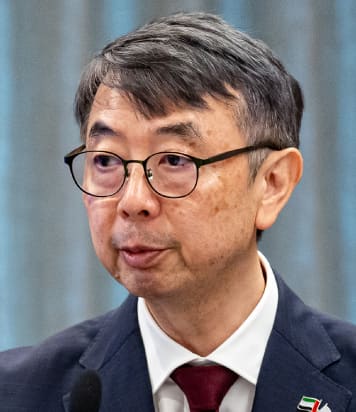
Mr. Jun Imanishi,
Consul General, Consulate-General of Japan in Dubai
There are so many reasons to hold this forum here in Dubai, but the main factor is Dubai’s many forward-looking initiatives, including income tax exemption, economic free zones and low-cost economic growth.
We hope that today’s event will provide key reasons for investing in Japan. Three months ago, Japan’s first-ever female prime minister took office. One of her goals is to build an economy that inspires confidence among global investors. Japan is the gateway to the vast potential of Asia. Its foreign direct investment target for 2030 is ¥120 trillion — about US$800 billion — and the country is making investment simpler, faster and safer. Investors can count on a legal framework, strong intellectual property protections and transparent regulation.
Japan and Dubai, the UAE and the Middle East all share the same long-term perspective. Together, we can cooperate on projects in strategic sectors such as digital transformation, green transformation and life sciences.
Building a more dynamic future together
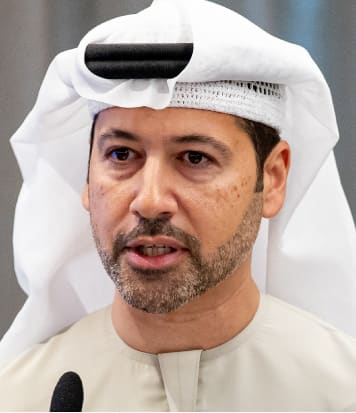
H.E. Arif Amiri,
Chief Executive Officer, Dubai International Financial Centre (DIFC) Authority
Today, the partnership between the UAE and Japan is stronger than ever. The UAE is Japan’s leading trade partner in the Arab world with bilateral trade exceeding US$50 billion annually, spanning energy, manufacturing, infrastructure, technology, finance and logistics. Today, our partnership is expanding into new frontiers, from hydrogen to renewables to artificial intelligence, space and smart cities. The next decade will be shaped by drivers like AI, digital finance and global markets. Whoever leads this transformation will define the future of prosperity. This is where the Japan-UAE partnership has extraordinary potential. Japan’s deep tech and innovation capabilities, combined with the UAE’s regulatory agility, connectivity and access to capital can create global leaders. Together we can shape the next era of global growth through collaboration, trust and vision. Today’s forum is an opportunity to turn this dialogue into action, forge new partnerships and lay the foundation of the next chapter of our relationship.
Bold strategy and policy reforms together unlock growth
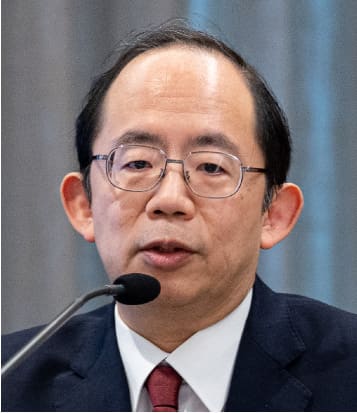
Mr. Hiroshi Okada,
Vice Commissioner for Strategy Development and Evidence-based Policymaking
Financial Services Agency (JFSA)
Today, I hope to strengthen the bridge between Japan and the Middle East by sharing Japan's latest policy direction, the progress and future direction of the “Japan as a leading asset management center” initiative, and the opportunities that international investors and financial firms can capture in our market.
The new Takaichi administration has set out a growth strategy by advancing cutting-edge technology and making bold strategic investments in 17 key sectors including AI and semiconductors. To promote Japan as a leading asset management center, the government has been working on reforms across the investment chain, promoting the shift from savings to investment, including the launch of the revamped new NISA. As PM Takaichi stresses that finance is the key driver of the growth strategy, the government will further promote this initiative, focusing on corporate governance reform.
Dubai and Japan share a common ambition of connecting capital to innovation and finance to resilience. I invite you to work with us. Let’s unlock the next chapter of growth together.
Japan welcomes international capital with clarity and open arms
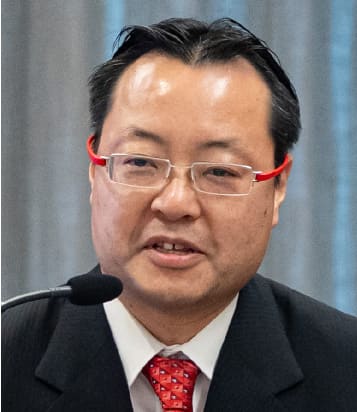
Mr. Shinichi Kihara,
Director General for Energy and Environmental Policy, Ministry of Economy, Trade and Industry
Japan is a compelling destination for global capital. The new prime minister has positioned strategic investment in 17 resilience-enhancing sectors as the cornerstone of Japan’s growth strategy. In addition, Japan has a solid foundation to attract investment: strong rule of law, reliable enforcement of contracts, robust intellectual property protection and transparent regulations. The ambitious FDI targets which Japan has set for itself are backed by KPIs, timelines and continuous review at the highest levels.
Specific economic incentives and policy frameworks: first, a comprehensive tax incentive framework with credits for capital expenditure and immediate depreciation of new assets, including business expansion, digital transformation and productivity upgrades; second, a huge variety of targeted programs to support R&D, startup acceleration, workforce training, regulatory sandboxing for emerging technologies and tailored regional packages for site development and infrastructure support; and third, generous incentives and subsidies for green transformation projects. (These incentives in fiscal year 2026 are subject to parliamentary approval.)
When you invest in Japan, you are associating your brand with a global standard of excellence — a standard that opens doors across Asia and beyond.
Progress in Corporate Governance Reform in Japan and the Next Catalysts
Now is an opportune time to come to Japan
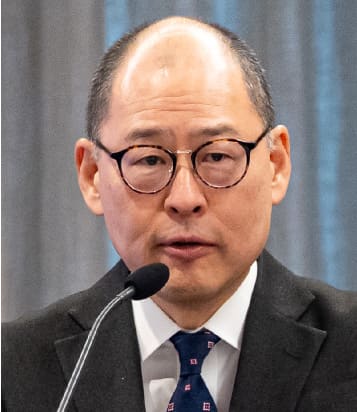
Mr. Masanori Yoshida,
Executive Officer, Global Chief, Japan Exchange Group
The biggest recent development in Japan is the country’s emergence from decades-long deflation. For almost four years, headline inflation has been hovering over 2%. Companies are increasing wages, triggering a virtuous cycle of wage and price dynamics. Net profits have hit record highs for four consecutive years.
The transformation of the Japanese market is another important story. Activists and Japanese investors are engaged in active dialogue with companies, while retail investors are shifting their savings to investment, encouraged by the revamped NISA. Foreign investors are major buyers, and their interest is growing, as U.S. investors start to diversify. The increase of share buybacks and decrease in cross-shareholdings testify to the market’s dynamism.
In April 2022, the Tokyo Stock Exchange reorganized the market into Prime, Standard and Growth segments. We have requested Prime and Standard listed companies to think about their cost of capital and share price. The corporate mindset is gradually changing.
Case studies are a tool we provide to facilitate company-investor dialogue. The changes I have discussed are very visible in the studies. Nevertheless, room for improvement remains. That’s why now is an opportune time to come to Japan.
Investor Panel: Macro Environment in the Japanese Market and the Impact of Shifting Global Geopolitical Risks
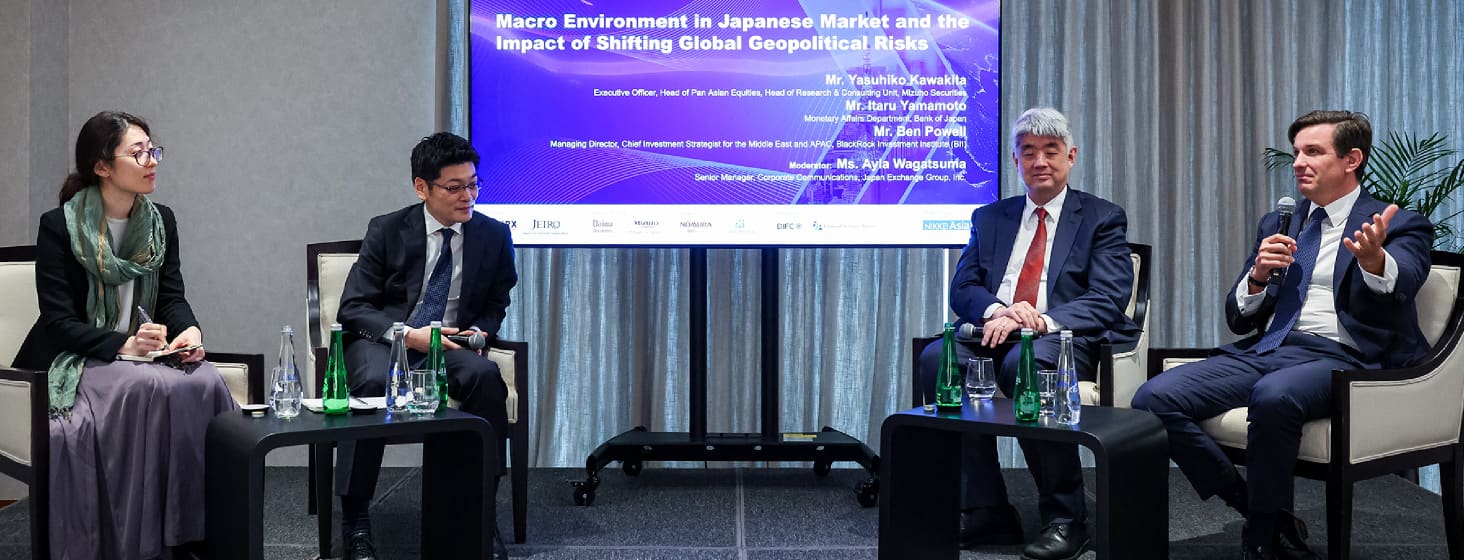
The whole atmosphere of equity investing has changed
One recent major change in Japan’s economic landscape was the Bank of Japan raising the policy interest rate to 0.75%, the highest level in 30 years. A combination of unconventional monetary policy measures, pandemic-induced inflation and labor force tightening due to ageing finally put upward pressure on wages and pushed Japan out of the deflationary mindset. While there was a risk of tariffs derailing progress, the downside turned out to be less than predicted. Expectations that Japan’s economy would grow somewhat faster than the potential growth rate eventually persuaded the Bank of Japan to raise rates.
Brokers today are overwhelmingly bullish on the stock market. Japan combines great fundamentals, including sustainable inflation replacing 30 years of stagnation and the decentering of the United States, with great positioning. Japanese markets have been seriously outperforming global peers in recent months and attracting increasing inflows from international investors. People used to associate holding Japanese stocks with pain. Now, however, not holding them is far more painful!
In fact, the whole atmosphere of equity investing has changed. Japanese corporates are now more open to dialogue with activist or engagement investors, while the behavior of Japanese long-only investors has also changed as a result of the stewardship code. The new corporate governance code and the stewardship code work in tandem, making good chemistry for the sound development of capital markets.
Many analysts feel that something profound is going on — something which goes well beyond a tactical asset allocation call. Why has Japan suddenly decided to become more productive? Some point to the population crisis as the answer. GDP is the labor force times productivity, so if the labor force is shrinking, simple math dictates that boosting productivity is the only viable solution. Societal need is driving deep reforms, which are in turn driving a more productive economy and market.
But what about geopolitical risks? The case can even be made that the new blending of foreign and economic policy is a return to the historical norm, while the globalization and relative harmony of the last 50 years were an aberration, albeit a positive one. Straddling the United States and China, Japan is working to balance its strategic partnership with Washington while managing its deep economic ties with Beijing.
Investor Panel: Focus Sectors in the Japanese Market, Specific Strategies, and Private Assets
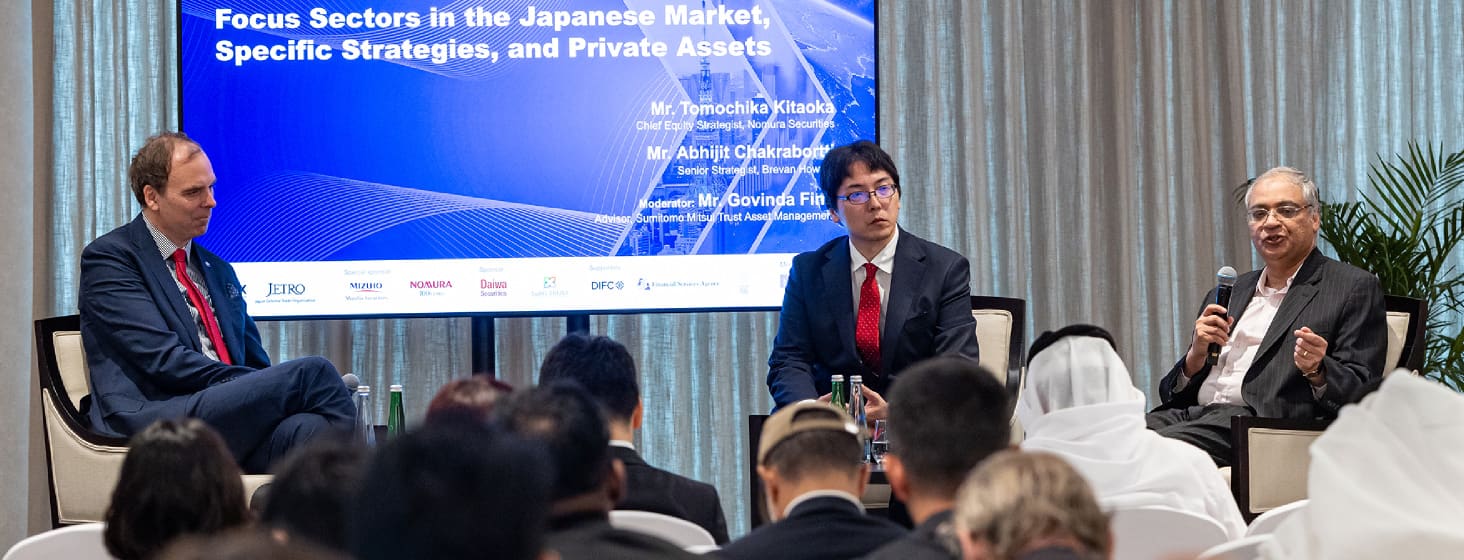
From left: Dr. Govinda Finn, Mr. Tomochika Kitaoka, Mr. Abhijit Chakrabortti
Mr. Tomochika Kitaoka,
Chief Equity Strategist, Nomura Securities
Mr. Abhijit Chakrabortti,
Senior Strategist, Brevan Howard
<Moderator>Dr. Govinda Finn,
Advisor, Sumitomo Mitsui Trust Asset Management
A new Japan steps onto the world stage
American exceptionalism is being questioned, global supply chains are fragmenting and a breakthrough technology with transformational implications is just around the corner. Against this interesting backdrop, a new Japan steps up — one that is inflationary, has a revitalized corporate sector with technological leadership in certain areas and is led by its first-ever female prime minister. Meanwhile, as the yen tests new lows, the Nikkei and TOPIX are touching record highs. What signals are financial markets sending out?
Tomochika Kitaoka was excited about the positive synergies between corporate governance reform and the labor shortage. As he sees it, the labor shortage is a good opportunity for Japan’s corporate sector to overhaul its business model by cutting costs, raising prices and improving productivity through AI functionality.
On the corporate governance side, Kitaoka was positive about the number of companies that have hired independent external directors and embraced the Western-style corporate governance format. At the same time, around 11% of the total assets for non-financial corporations are still in cash and deposits, roughly twice the ratio in the United States or Europe, which suggests that the deflationary mindset lingers.
Abhijit Chakrabortti countered that independent directors do not necessarily have much actual control. He hopes to see more Japanese companies run by foreigners. While shareholder value is increasing, and buybacks and dividend payouts have gone up, for Chakrabortti the really big forward step will be when Japanese management abandons its home bias and becomes a pure meritocracy like the U.S. tech sector.
The next discussion topic was the multi-year thematic investment opportunity represented by AI and AI infrastructure. “AI and semiconductors” is topmost of the 17 designated strategic fields in the new government’s growth strategy. Japan, Chakrabortti pointed out, has carved out a successful niche in AI infrastructure through its semiconductor capital equipment companies, while one of the only three firms worldwide that make the turbines required to provide power to electricity-hungry data centers is Japanese. Kitaoka noted that the government was doing a good job supporting both Japanese and non-Japanese semiconductor companies in Japan, with numerous beneficial spillover effects.
When, though, will the Japanese start buying in their own equity market? While moderator Govinda Finn felt that was already happening, with 1 in 4 people in Japan over-18s having a NISA account, Chakrabortti suggested that, for all the talk about NISA accounts, most Japanese investors only used them to buy on the NASDAQ and NYSE. “When are we going to see 1989 again?” he asked.
Industry Panel: Industrial Policy, Domestic Business Environment, Corporate Management Perspectives, Innovation and Engagement with the Middle East
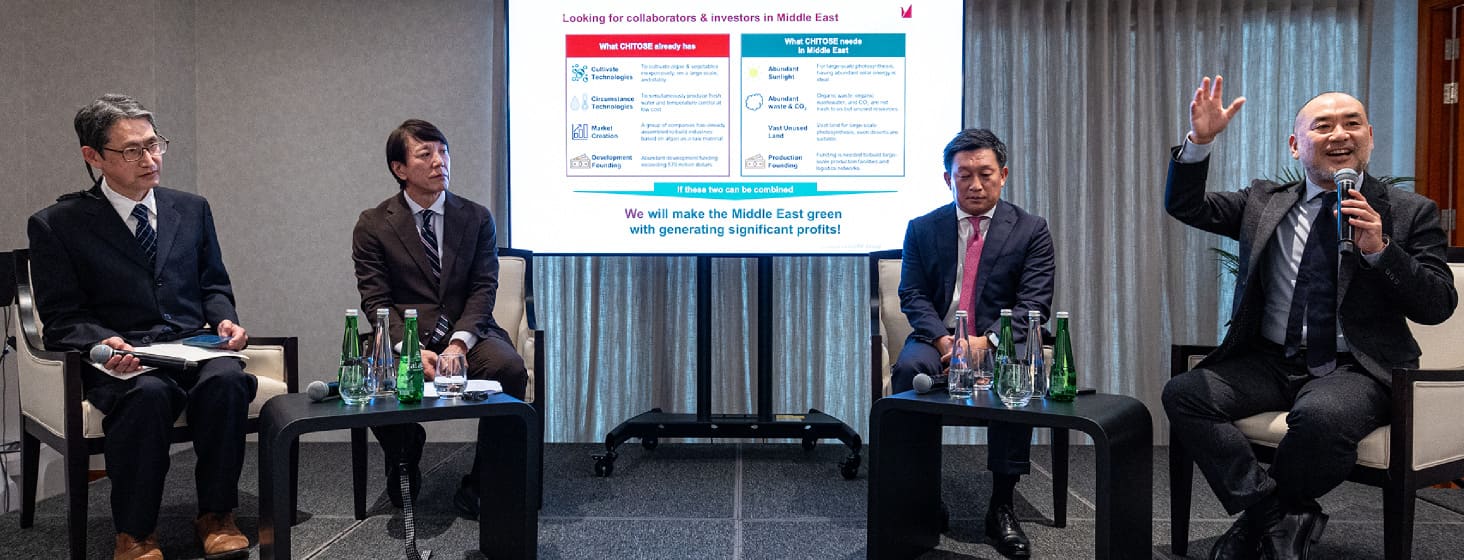
From left: Mr. Mitsuru Obe, Mr. Takeo Nakajima, Mr. Yoshihiko Katsuda, Dr. Tomohiro Fujita
Mr. Takeo Nakajima,
Director-General of Innovation Department of JETRO
Mr. Yoshihiko Katsuda,
Managing Director, Regional Head for Middle East, MUFG Bank
Dr. Tomohiro Fujita,
Founder & Chief Executive Officer, CHITOSE BIO EVOLUTION
<Moderator>Mr. Mitsuru Obe,
Japan Editor, Nikkei Asia
Japan is rich in opportunities for Middle Eastern companies
This panel took a deep dive into the world of companies and startups operating between Japan and the Middle East. Panelists pointed out that the upcoming state visit of the UAE president to Japan will underline the two nations’ partnership and show that the relationship has expanded beyond energy to encompass a greater diversity of businesses. As Yoshihiko Katsuda noted, Middle Eastern sovereign wealth funds have recently invested in video gaming and are interested in real estate and LBOs associated with corporate restructuring in Japan. Meanwhile, Japanese manufacturers are making efforts to expanding into the data center eco-system, while startups are also increasing their presence in such areas.
CHITOSE Group is one such startup. A Japanese biotech company that operates a microalgae production facility in Malaysia, CHITOSE Group is looking to expand into the Middle East. Why? Because the region’s expansive deserts and abundant sunlight make it the perfect place for cultivating microalgae that can be turned into products including sustainable jet fuel, plastic, paint and food. “We only have four or five decades of oil left. We simply have to use photosynthesis to make everything,” noted Tomohiro Fujita. Despite being a major fossil fuel exporter, the UAE is mindful of global warming. Rising opportunities in green technology, from carbon capture to ammonia and hydrogen, represent a lucrative business opportunity.
Japan is rich in opportunities for Middle Eastern companies. M&A is thriving as listed Japanese firms shed non-core businesses to raise their PBR and smaller companies seek to solve the succession problem through buyouts. The Japanese real estate market is also booming with particularly strong demand for luxury retail locations, multi-purpose residentials and new-build offices with state-of-the-art IT.
Contrary to outdated stereotypes, Japan is open to FDI. Indeed, FDI has risen consistently despite setbacks like the Global Financial Crisis, the Great East Japan Earthquake and the pandemic, said Takeo Nakajima. Japan wants FDI because it spurs innovation, strengthens supply chain resilience and reinvigorates regional economies; foreign investors are drawn in by the opportunity to engage with Japanese companies and consumers. Incentives, subsidies and deregulation have driven a spike in investment in the semiconductor field, while foreign accelerators, incubators and investors are increasingly interested in Japanese startups. A new circular model is evolving whereby Japanese ventures funded by foreign money become globally competitive businesses as they expand into foreign markets. “There’s a whole ecosystem. When Middle Eastern investors come to Japan, you are not alone,” said moderator Mitsuru Obe, bringing the session to an end.
Re-evaluating Japan as an investment destination
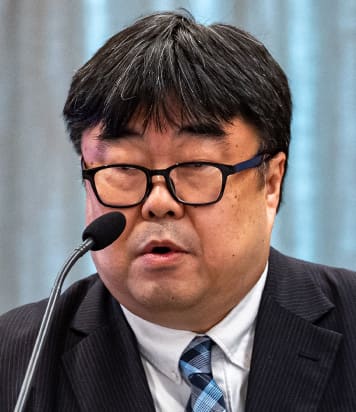
Mr. Nobuyuki Nakajima,
Managing Director JETRO DUBAI
This forum brought together speakers from the Japanese government and financial sector in an “all-Japan” approach to provide a better understanding of the current state of Japan’s economy and positive shift it is experiencing. JETRO is dedicated to promoting trade and investment. We sincerely hope this forum will give investors in the Middle East the opportunity to re-evaluate Japan’s potential as an investment destination. As JETRO always says, “Talk to JETRO first.” We hope that this forum will lead to deeper exchanges with Japanese government officials and financial institutions.