
World’s top EMS provider:
Key strengths of speed, reliability and creativity
Jun Seki
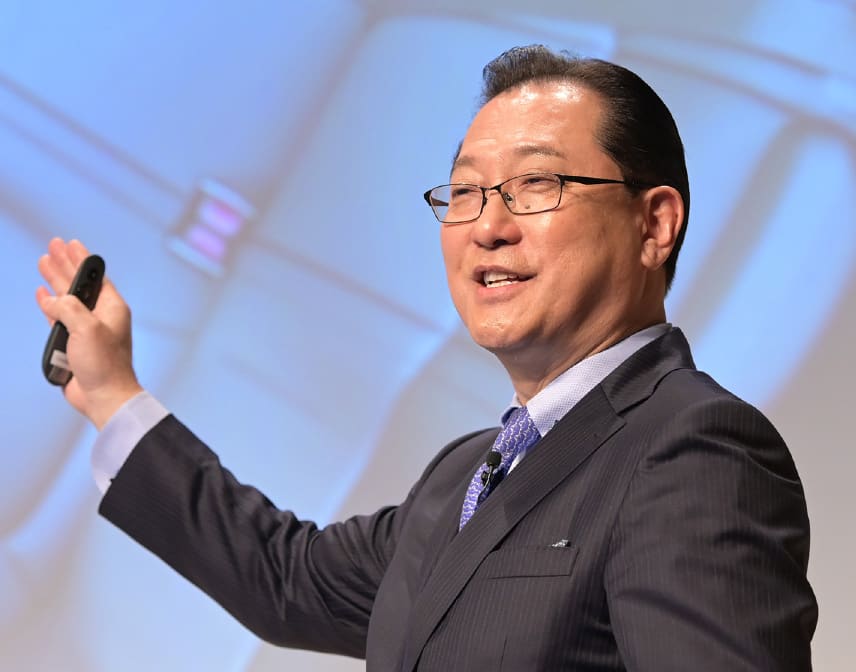
Born in Sasebo City, Nagasaki Prefecture, Japan. In 1986, he joined Nissan Motor, reaching the post of Deputy COO. After serving as Representative Director & CEO of Nidec, in February 2023, he was appointed Chief Strategy Officer (CSO) for EV of Hon Hai Technology Group (Foxconn).
With a global market share of 46.1% (in FY2023), Hon Hai Technology Group (Foxconn) is the world’s No. 1 provider of electronics manufacturing services (EMS). It manufactures smartphones, tablets, PCs, servers, game consoles and other products on contract. The company also holds more than 40% of the rapidly growing market for AI servers. In calendar year FY2024, its gross sales and market capitalization in USD terms stood at $208.0 billion and $160.0 billion, respectively. This corresponds to gross sales of approximately 32 trillion in JPY. Foxconn takes pride in the scale of its sales, regarding it as proof that its clients recognize it as a trusted and reliable EMS partner that never leaks their confidential information.
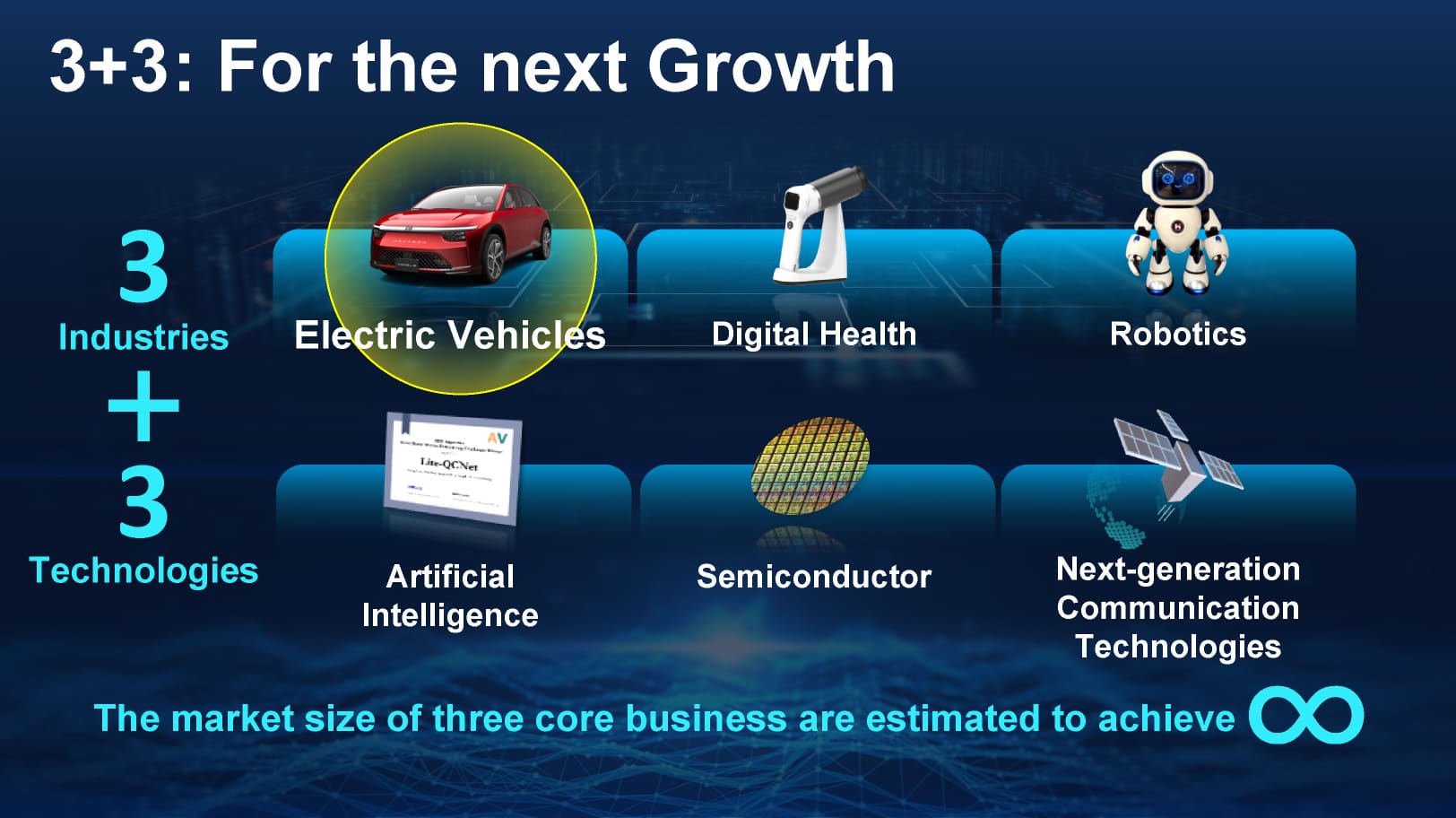
The company started out in 1974 as a manufacturer of connectors. The name Foxconn, by which it is best known in Europe and the United States, is a reference to founder Terry Gou’s ambition to become the world’s most agile (“like a fox”) connector maker. In 2019, when Chairman Young Liu became the group’s CEO, Foxconn has continued its commitment to further business growth. It is pursuing this by what it calls a 3+3 strategy. It is pushing forward to expand its EMS business by applying three new technologies — AI, semiconductors and next-generation communications technologies — in three core industries—EVs, digital health and robotics.
Taiwanese people feel a lot of affection for Japan. Taiwan has also developed a smart culture with a good balance between the speed of China, the reliability of Japan and the innovation of the United States. Like Japan, Taiwan is experiencing a declining birthrate, but its economy continues to grow. Although its GDP is one-fifth of Japan’s, it has caught up in terms of GDP per capita. The source of Taiwan’s growth is its secondary industry, which makes up 37% of GDP, compared to 30%, 25% and 20%, respectively, in the major developed economies of Germany, Japan and the United States. Taiwan’s university enrollment rate of 84.2% is also surprisingly high compared to Japan’s 57.7%. The proportion of students who go on to master’s and PhD programs is also high, serving as a source of talented personnel that feeds the growth of secondary industry. At the same time, overseas workers make up 6.1% of the workforce, compared to just 1.1% in Japan. This is a distinctive feature that helps to create a well-balanced work environment in Taiwan.
Maximizing the benefits of contract manufacturing:
Fast sales, low cost, low investment
The EV market, which Foxconn is positioning as a pillar of its 3+3 strategy, is currently beset by three key difficulties — high cost, inconvenience and lack of profitability. Although the shift to EVs will gradually progress, these three issues are not easy to resolve. One reason is batteries. Delays in the development of recharging facilities make it necessary to equip EVs with huge batteries, keeping costs high. Another weak point is long charging times. Driver assistance systems, which have limited application, and excessive connectivity, are also contributing to higher costs.
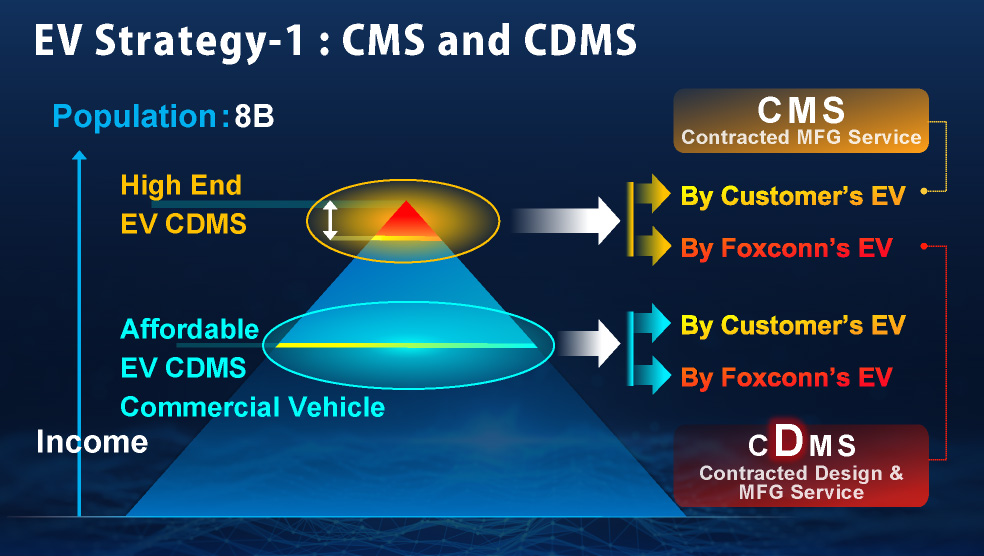
As long as EV prices remain high, the market will not expand. For this reason, Foxconn believes that it is vital to lower the cost and price of EVs to make them affordable to a wider range of people. It is therefore working to develop low-priced EVs as well as high-end models. It is also developing minibuses, taxis and other commercial vehicles that benefit from the economic efficiencies of EVs. Foxconn’s EV strategy, however, does not aim at capturing market share under its own brand.
Foxconn is seeking to secure a sizable slice of the EV market by manufacturing under contract, mirroring its success in electronics. To this end, it is offering two kinds of production services — contract manufacturing service (CMS), which provides only manufacturing, and contract design and manufacturing service (CDMS), which provides both design and manufacturing. The main focus of its efforts will be CMS for automakers. CMS offers clients the advantages of short development time, low manufacturing costs and minimal investment. On the other hand, CDMS is intended to help non-automotive industries enter the market by providing EV reference models, and to generate economies of scale. It also aims at demonstrating Foxconn’s capacity to design and manufacture EVs.
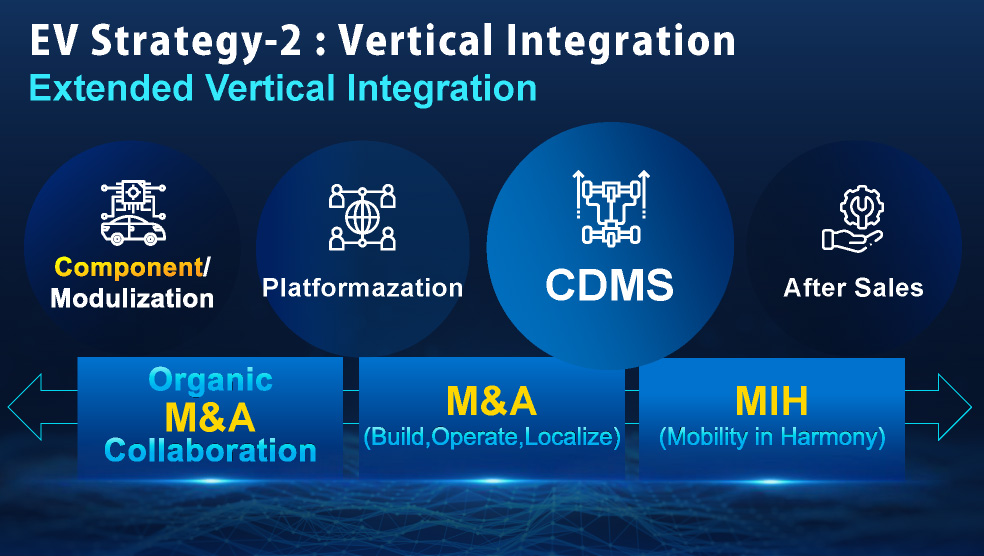
Vertical integration is another feature of Foxconn’s EV strategy. While focused on CMS and CDMS, the company also plans to stabilize its EV business by handling components and modules, platforms and after-sales. It is not intending to go it alone, however. To pursue its EV business efficiently, it wants to team up with strong partners, including through M&As.
A range of EV models from SUVs to minibuses:
Quickly developing a market in Japan
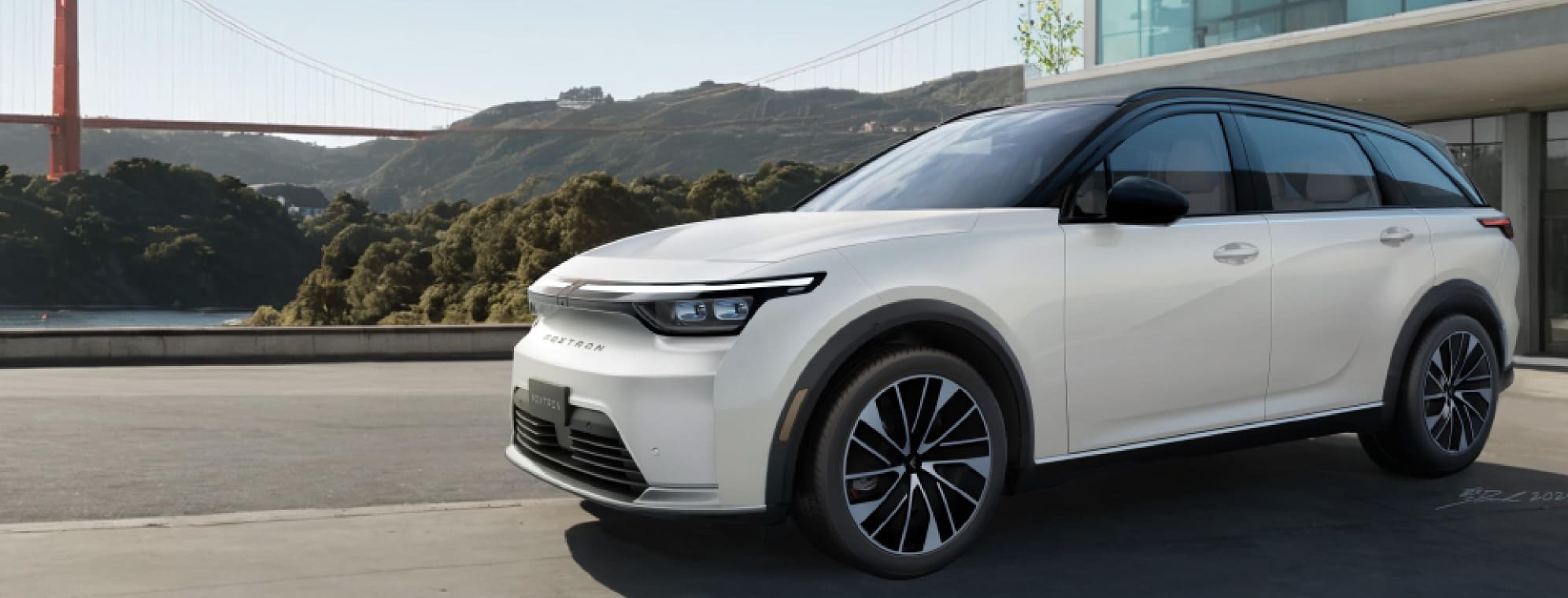
Foxconn’s current EV lineup consists of nine models. Its Model C multi-purpose sport utility vehicle (SUV) is already on sale in Taiwan. It boasts a powerful motor and long wheelbase to ensure a roomy interior. It is expected to enter the U.S. market by the second half of 2025. The Model B SUV designed by Pininfarina of Italy is set to be released in Taiwan by the end of 2025. In the second half of 2026, it will also be supplied to Japanese automakers on an OEM basis for the Oceania market. The advantages of the SUV and MPV segments combined Model D is scheduled for a U.S. launch in the second half of 2027. Model A, in B and C-segment MPV formats, will be out in Japan in the first half of 2027. This model is expected to be adopted by up to 20 companies, with exterior designs tailored to their individual requirements. Model E is an attractive sedan with sports car-like power performance. Once adopted by automakers, it will appear on the market within two years. This is definitely an EV to keep an eye on.
For the commercial vehicle market, Foxconn offers the Model T, launched three years ago in Taiwan, where it is employed as a route bus and shuttle bus. It is slated for release in Japan in 2027. The Model U minibus will also be available in Japan in 2027. For short-distance applications, such as picking up and dropping off children at kindergartens, EVs are ideal. The Model U is also well suited for use as a city bus in depopulated regional cities.
How was Foxconn able to put together such a varied range of vehicles in such a short time? It is simple because they are EVs. In the past, the complex construction of engines, transmissions and other ICE vehicle parts presented a very high barrier to market entry. Thanks to their relative simplicity, EVs are not subject to this hurdle. Another significant point is that EVs do not carry any negative legacy from the past.
Foxconn has also accumulated a vast store of experience and expertise in information and communications technology, enabling the development of intelligent and sophisticated vehicles. Japanese automakers that have test driven its reference EV models have given them a thumbs up. While Japan’s EV market is still in the early stages of development, this offers substantial potential to Foxconn. Right now, the company is striving to take up the challenges of its EV business with partners it can work with speedily and synergetically.