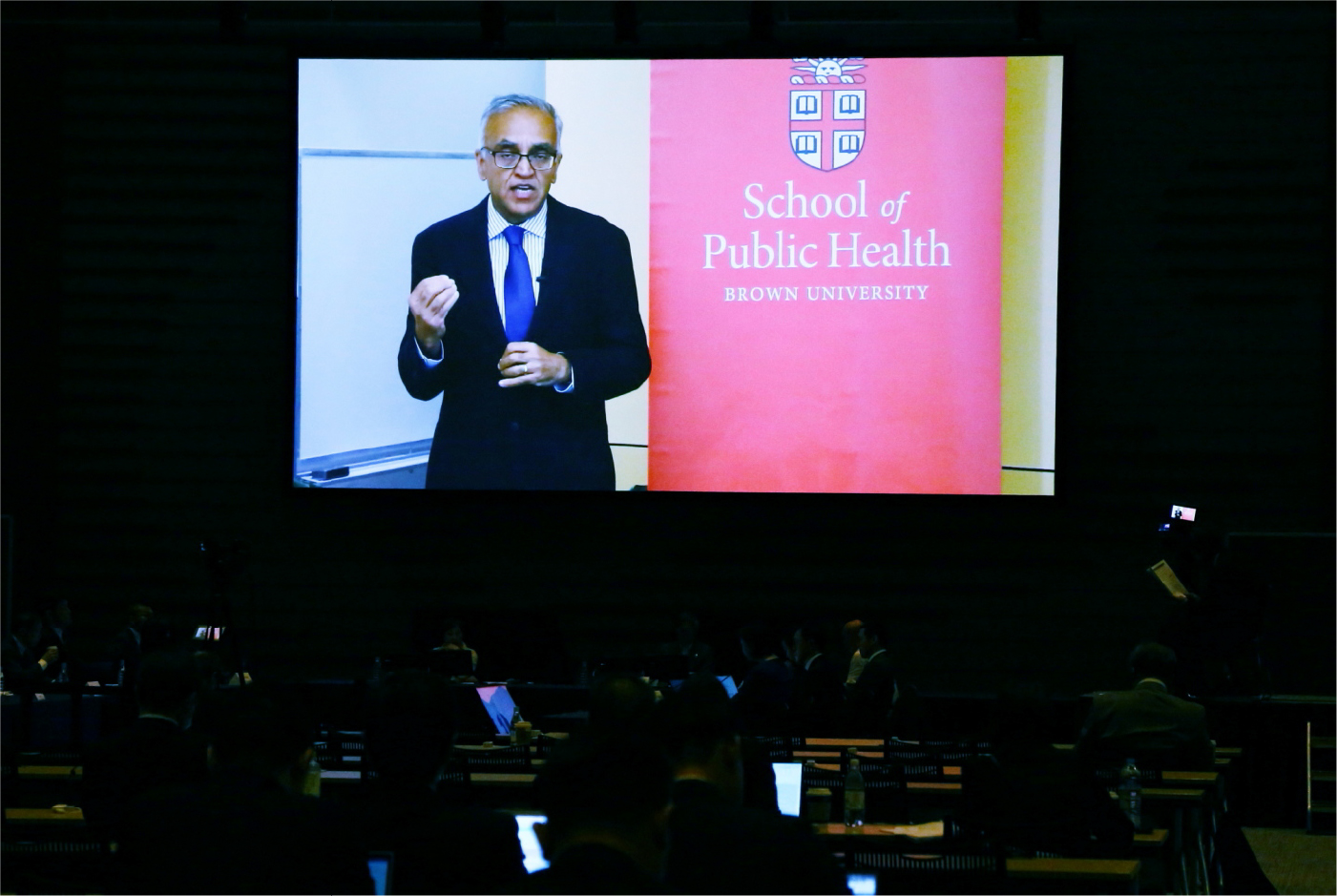
Dr. Ashish K. JHA, MD, MPH Dean, Brown University School of Public Health
Biological risks — naturally occurring, manmade and accidental — have risen in the last few years. We have entered an age of pandemics with novel infections increasing due to deforestation and spreading further due to globalization and urbanization. Lab-leak risk has also gone up, while state and non-state actors are developing bioweapons using new technologies such as CRISPR, synthetic biology and AI.
We must prepare by using the same tools ourselves. Biosurveillance and attribution constitute deterrence. To support our response, we should invest in three medical countermeasures: diagnostics, therapeutics and vaccines. Vaccines represent the path out of a pandemic. With COVID-19, we got lucky. Next time, we may not. We must invest in vaccines for viruses and pathogens with pandemic potential.
Better science communication to address loss of trust is important. International cooperation also matters. There are substantial threats, but science can see us through. I am hopeful — assuming we can build the political will.
COVID-19 proved that pandemics afflict rich Western nations as well as faraway developing countries, clearly revealing the links between global and national health security. COVID-19 also showed that a whole-of-government approach is needed to tackle pandemics, with the defense ministry detecting threats, the health ministry leading the response and the foreign ministry handling international coordination. The Japan Institute for Health Security (JIHS) epitomizes Japan’s whole-of-government approach. Aiming to be an integrated science hub for infectious diseases, it collaborates with central government, local government, funding bodies and foreign governments, functioning as both a hub and a bridge.
The military — with its personnel, technology and logistics — must be part of any such broad-based solution. Frequent military deployments put the United States at an advantage in readiness terms. Even though Japan’s Self-Defense Forces (SDF) are typically deployed to tackle natural disasters, they have nonetheless played their part tackling infectious diseases, from avian flu and H1N1 to COVID-19, when the SDF flew Japanese civilians back from Wuhan on chartered flights, sent personnel to the quarantined Diamond Princess cruise ship in Yokohama and set up large-scale vaccination centers in Tokyo and Osaka.
In Asia, the Armed Forces Research Institute of Medical Sciences, a US Army-Royal Thai Army collaboration, is an example of an institution rooted in war that delivers tangible civilian benefits, such as surveilling remote areas for swine fever. Intelligence agencies are also an important information source. After all, traditional intelligence agencies spotted COVID-19 before anyone else. With biosecurity problems, both accidental and deliberate, on the rise, surveillance for emerging threats must be upgraded. Wastewater surveillance is one innovative, efficient and non-invasive way to identify emerging infections, infection clusters and even bioweapons coming in via airports.
Although civil-military collaboration is an essential part of protecting citizens’ lives, it is not something that can be realized overnight. Despite its troubled history with the military, Japan needs to break from convention, change its mindset and establish civil-military coordination on a firm foundation. Semantic interoperability, frank discussions and day-to-day interactions in peacetime are required to ensure a rapid, coherent response in emergencies. Effective civil-military collaboration is part and parcel of Japan becoming a “normal country.” Now is the time for Japan to build on its quiet yet significant contributions to global health, become more vocal and show leadership in a time of international division.
Accelerating innovation is a multidimensional effort, encompassing not only product development but also process, organizational and financial innovation. Speed is crucial when responding to public health emergencies. The WHO’s use of its emergency use listing procedure to fast-track the development of rapid and accurate portable in vitro diagnostic devices for the recent monkeypox outbreaks in the Democratic Republic of Congo illustrates this point. For individual countries, engaging in global health security efforts — such as Japan’s donation of millions of vaccines doses to Congo — can also strengthen their own national health preparedness.
Speed is also central to the 100 Days Mission, an initiative that aims to mitigate the impact of future pandemics by ensuring that diagnostics, therapeutics and vaccines are available within 100 days. The University of Tokyo has established both a new vaccine design center and the UTOPIA Center — a dynamic hub connecting researchers across disciplines — as part of the 100DM initiative.
Globally, the “big three” infectious diseases remain tuberculosis (TB), malaria and HIV/AIDS. Japan’s Global Health Innovative Technology Fund (GHIT), a public-private partnership supporting global health R&D, is investing in new solutions for TB, the most underfunded of the three diseases. Supported projects include computer-assisted diagnostic systems for rapid interpretation of digital screening data and a new FUJIFILM point-of-care test capable of detecting TB-HIV co-infections in under an hour.
Japan is also driving and incentivizing innovation for malaria, a disease which infects more than 200 million people a year. In 2025, Japan’s Hideo Noguchi Africa Prize was awarded to a Malian doctor for his research on chloroquine-resistant malaria. Meanwhile, Japanese startups, companies and universities are collaborating on vaccines, antimalarial drugs, insecticide-treated bed nets, and automated malaria diagnostic technologies. Often, the biggest of the three challenges of product development is overcoming the “valley of death” between commercialization and large-scale implementation.
Domestically, organizations like the Japan Institute for Health Security (JIHS) and Japan Agency for Medical Research and Development (AMED) fund and promote innovations in the infectious disease field, while the Cabinet Agency for Infectious Disease Crisis Management coordinates response during crises.
Japan has world-class technologies and institutions, yet building a coherent and effective national approach requires leveraging digital technologies to strengthen coordination among stakeholders and improve information flow — particularly around the JIHS and the Cabinet Office.
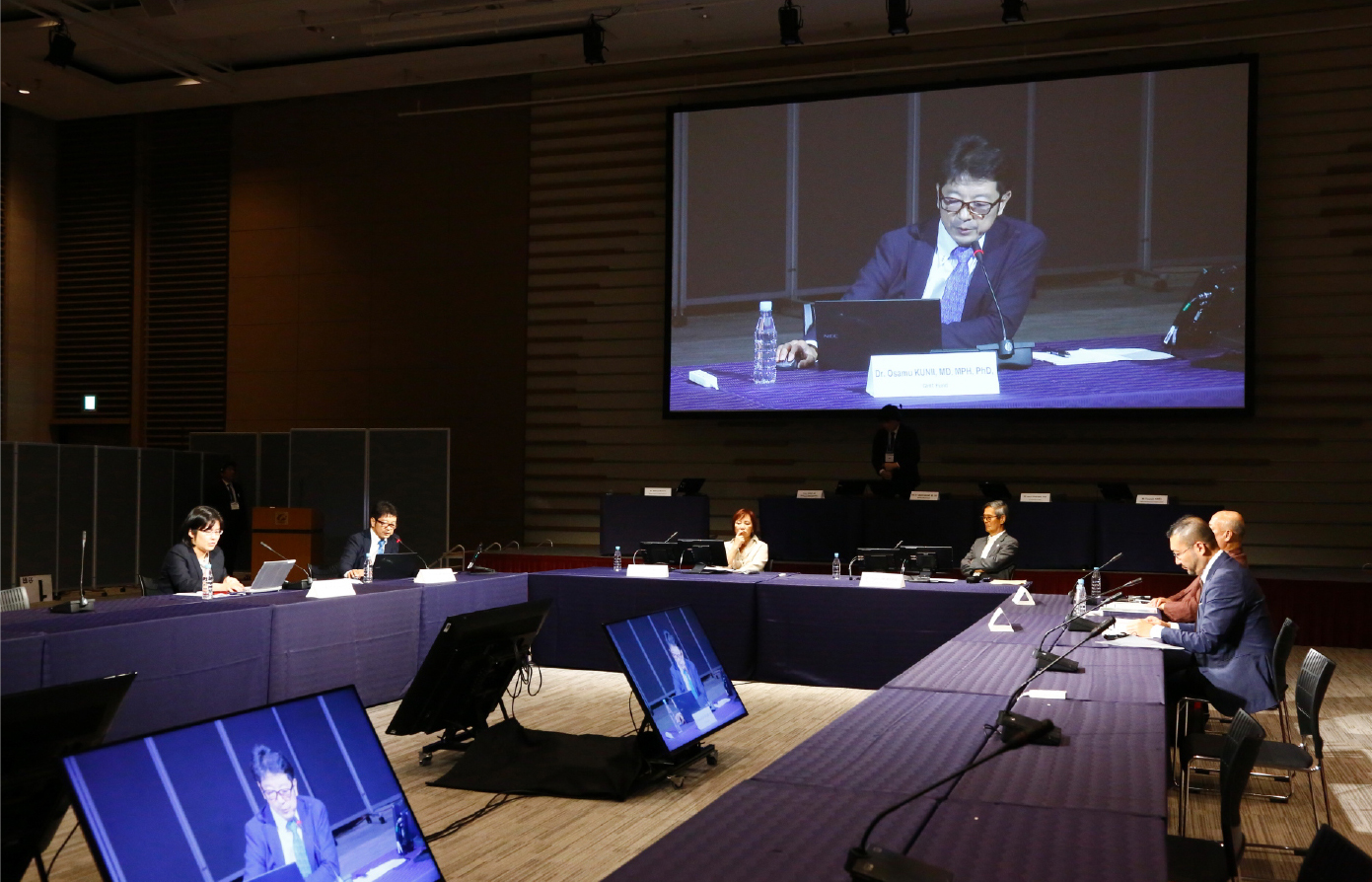
Japan needs to work through the experiences of the last pandemic to ensure that it can get the initial steps right when the next pandemic comes around and avoid “fighting the last war.” Ultimately, the greatest responsibility falls on the central government, which must coordinate between other countries and multilateral institutions on the one hand and domestic local governments and hospitals on the other. Given central government’s inherent organizational complexity, it is crucial to clarify who exactly is responsible for what.
During COVID-19, Japan’s prefectures did not receive clear guidance from central government and focused on different things as a result. Since consistency boosts trust, standardized programs, data sharing and semantic interoperability need to be proactively introduced. Similarly, clear standards need to be set for when and how the Self-Defense Forces can be deployed.
Flexibility is no less important. There is uncertainty at the onset of any pandemic, not least about its duration. Not all resources should be focused solely on healthcare. Negative societal impacts on education, marriage and suicide rates that worsen over time also need to be addressed. Taking the feelings of ordinary citizens into account is essential. Communication too is crucial, for instance when seeking to gain acceptance for vaccines. Finally, the healthcare system itself must be flexible and responsive, able to both scale up and shrink back down as needed.
Basic challenges Japan experienced during COVID-19 included insufficient nurse numbers, too many small to mid-size hospitals lacking critical mass and poor information-sharing resulting in empty beds. On a positive note, the database that Okinawa Prefecture developed for COVID-19 proved so effective that it is now in routine use as the Okinawa Hospital Beds Information Sharing System.
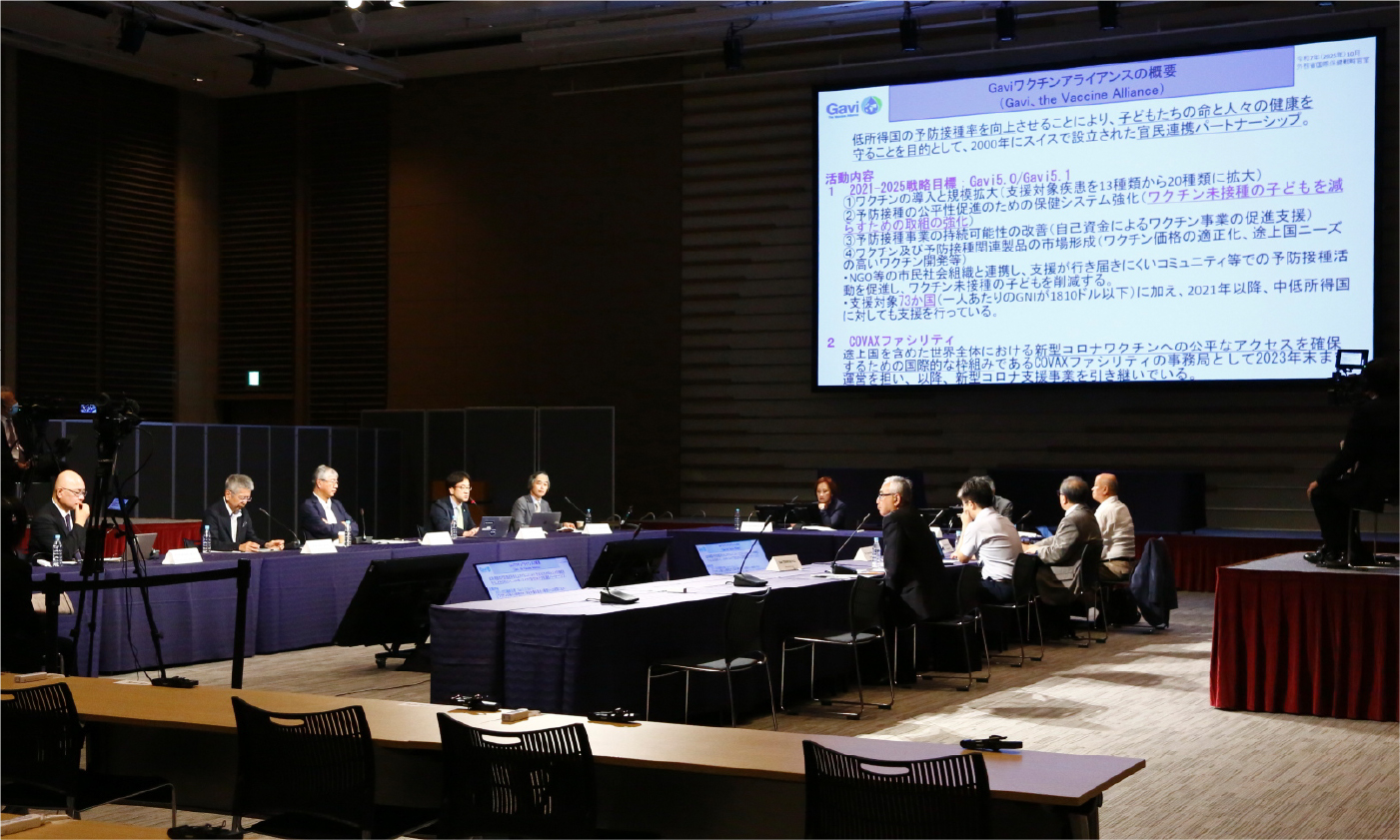
Looking ahead, Japan must work to support its vaccine industry, which has dwindled as childbirths have plummeted. Pharma companies can collaborate with funding bodies like GHIT and with Gavi, the Vaccine Alliance, to achieve scale and to access global markets. Shionogi has set up an Asian infectious disease forum in a bid to counter the lack of interest in infectious diseases from VCs and medical students. JIHS’ iCROWN (Infectious Disease Clinical Research Network with National Repository) is a crucial part of the post-pandemic infectious disease ecosystem.
COVID-19 saw certain developed countries put their own interests first. One way small nations can get better outcomes is by forming regional blocs. In May, the WHO adopted the Pandemic Agreement to ensure a stronger and more equitable response to future pandemics.
The COVID-19 pandemic was a significant and extended challenge for public health communicators, who were charged with finding the best ways to convey information amid uncertain and rapidly evolving circumstances. Reflecting on lessons learned is vital to preparing for the next pandemic. In fact, the need to win the trust of the public in “normal” times is one of those lessons.
The importance of sharing information based on scientific evidence cannot be overstated. Standards for accepting new findings and updating messages should be transparent. Equally important, however, is recognizing that unexpected or undesired behavior in response is not necessarily irrational. People act based on individual interests, values and emotions. Public health communications must move away from the model of top-down pronouncements and toward an approach that respects and empathizes with people, “meeting them where they are,” and even inviting their participation in the process.
The Japan Institute for Health Security (JIHS) has had great success disseminating health information via roundtables, where representatives of various stakeholder groups, including patients, medical researchers and health care companies, each have a chance to speak and listen to each other. Another approach to participation was seen in Finland, where nearly 300 “lockdown dialogues” were held in 2020 and 2021 to foster social inclusion and cohesion amid the COVID-19 lockdowns. When people feel listened to, they listen better to others.
Social networking and digital technology also offer new tools for facilitating multilateral dialogue. That said, communicators must not fall into the trap of thinking that the loudest voices on social media are representative. A “silent majority” exists and is receptive to official communication and expert information — when presented with empathy and respect. This includes being honest about uncertainty and tradeoffs, rather than emphasizing only worst-case scenarios and ignoring issues like the effect of long-term school closures on child development. Questions should be answered rather than ignored, and changes to advice due to new research findings should be explained.
Trust can only be generated over time, and trust does not always constitute acceptance. Communication that is too self-contained and complete, with no “gaps” for questioning and engagement, actually has less power to change behavior. People are highly diverse in their beliefs, values and circumstances, which makes a distributed, participatory approach vital. Acknowledging that there is no magic bullet, the key to creating better communications is to always consider them in light of the question: “What kind of society do we want to live in?”